
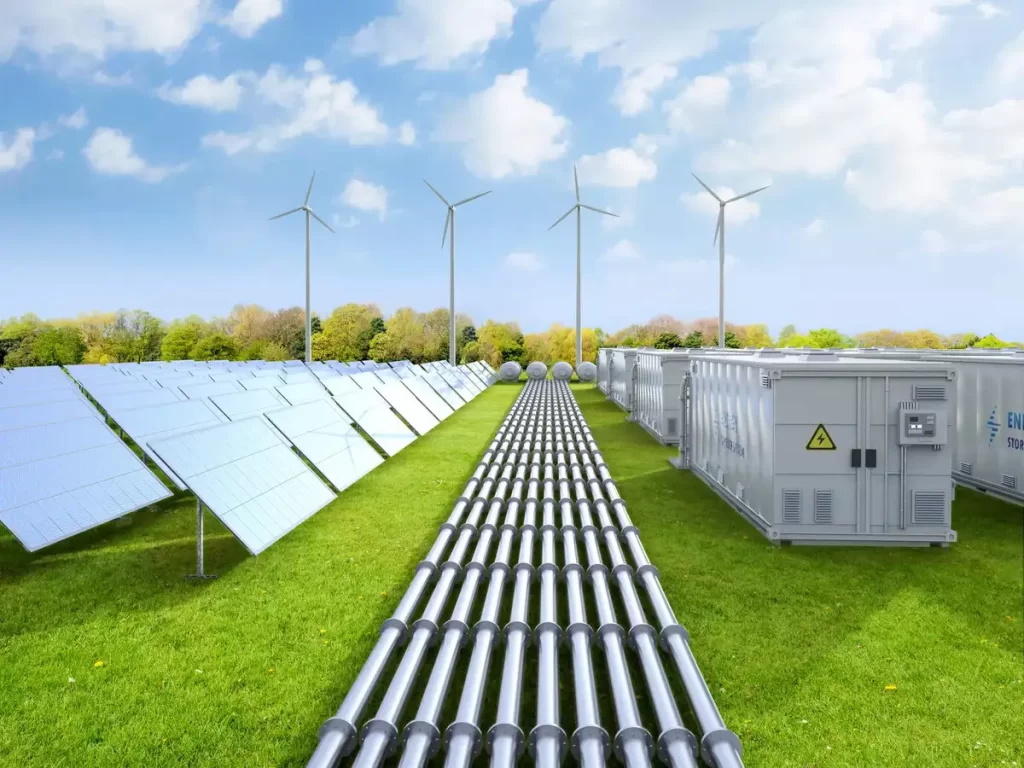
India’s renewable energy ambitions are facing mounting challenges, with a sharp rise in stranded capacity and delays in transmission infrastructure threatening to derail progress. Despite substantial investments and aggressive targets, bottlenecks in project execution are slowing down the country’s clean energy transition.
Ambitious Targets, Rising Setbacks
India has set a target of achieving 500 GW of non-fossil fuel energy capacity by 2030, with renewable sources such as solar and wind playing a key role. As of mid-2025, the country has installed over 180 GW of renewable energy capacity. However, nearly 55 GW of this capacity is stranded or underutilized due to transmission-related issues, according to recent government and industry reports.
The issue of stranded renewable capacity—where power generation is available but cannot be evacuated due to lack of grid infrastructure—is becoming increasingly urgent. Developers are raising concerns over delayed transmission lines, insufficient grid integration, and lack of coordination between central and state-level authorities.
Transmission Infrastructure: A Weak Link
A key challenge lies in the mismatch between the location of renewable energy projects and the existing transmission network. Most large-scale solar and wind farms are located in remote areas with high renewable potential—such as Rajasthan, Gujarat, and Tamil Nadu—but these areas lack adequate high-voltage transmission corridors to deliver power to urban and industrial centers.
The Green Energy Corridor (GEC) initiative, launched to address this gap, has faced repeated delays. Phase-II of the project, which was expected to add 10,750 circuit kilometers of transmission lines, has progressed slower than anticipated. Bureaucratic hurdles, land acquisition issues, and coordination delays have hampered timely execution.
Financial and Operational Impact
These delays are not just technical setbacks—they also carry significant financial consequences. Renewable energy developers are incurring losses due to idle assets and rising operational costs. Independent power producers (IPPs) are urging the government to streamline approvals and enhance grid planning to avoid project uncertainty and investment risk.
The power distribution companies (discoms), many of which are already financially stressed, are also reluctant to procure stranded renewable energy at higher tariffs, exacerbating the situation.
Exploring Solutions and Reforms
To address these challenges, the Indian government is exploring a multipronged approach. The Power Ministry has proposed fast-tracking transmission approvals and prioritizing inter-state grid connectivity. Policy think tanks have recommended integrated planning between the Central Electricity Authority (CEA), states, and renewable developers to ensure synchronized growth of generation and transmission.
Public-private partnerships (PPPs) are also being encouraged to attract investment in transmission infrastructure. Additionally, battery energy storage systems (BESS) and smart grid technologies are being considered to manage peak loads and improve grid reliability.
Conclusion
India’s commitment to a sustainable energy future remains strong, but transmission constraints and stranded capacity pose serious hurdles to achieving its clean energy goals. Bridging this infrastructure gap is critical—not only to meet climate targets but also to ensure energy security, economic growth, and investor confidence. With timely reforms and strategic coordination, India can overcome these challenges and continue to lead the global clean energy transition.

