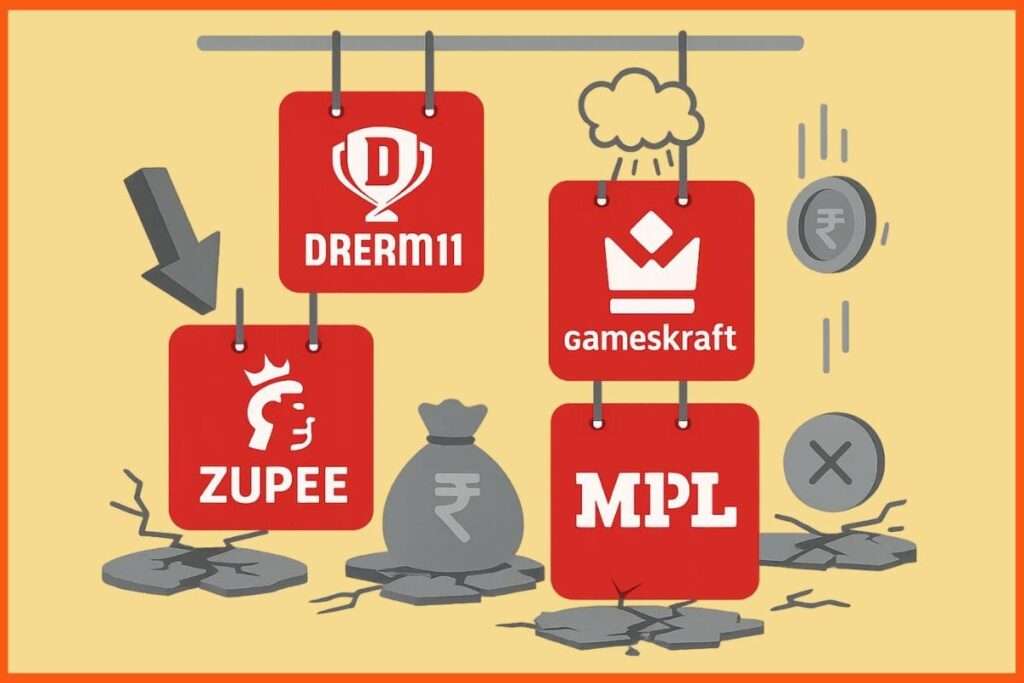
August 22,2025– Following the passage of the Promotion and Regulation of Online Gaming Bill, 2025, leading Indian real-money gaming platforms—including Dream11 (owned by Dream Sports), Mobile Premier League (MPL), Gameskraft, and Zupee—have announced the suspension of cash contests and other paid gaming activities.
The Bill, approved by both Houses of Parliament this week, seeks to regulate online gaming across India, distinguishing games of skill from those involving monetary stakes. It introduces a ban on real-money gaming (RMG) while laying out a framework to promote safe and responsible gaming practices, including licensing, consumer safeguards, and support for e-sports.
Industry Impact
In immediate response, Dream11 suspended all paid contests and temporarily disabled its “Add Cash” feature, while allowing users to withdraw their existing balances. MPL and Zupee also paused cash-based games, and Gameskraft announced a halt on its real-money poker and rummy games.
The sudden suspension affects a sector estimated to generate around ₹23,000 crore annually. Analysts say the legislation could significantly alter revenue streams, investor confidence, and employment in the online gaming industry, which has seen rapid growth over the past decade.
Key Features of the Bill
The Promotion and Regulation of Online Gaming Bill, 2025 is designed to regulate online games while minimizing risks associated with gambling. Key aspects include:
- Prohibition of real-money contests, ensuring players cannot stake money in games of chance.
- Mandatory licensing for operators offering online skill-based games.
- Consumer protection measures, including safeguards against addiction and underage participation.
- Support for e-sports, treating them as legitimate competitive gaming activities.
Government officials have emphasized that the legislation balances consumer protection with industry growth, promoting India as a hub for innovation and digital gaming. Prime Minister Narendra Modi highlighted that the Bill will encourage responsible gaming while fostering a safe environment for players.
Industry Reaction
Industry bodies, including the All India Gaming Federation (AIGF), have expressed concerns regarding the sudden implementation. They warned of potential revenue loss, job impacts, and investor apprehension, advocating for a more gradual transition and regulated frameworks rather than an outright ban.
Experts predict that the new legal environment may accelerate shifts toward free-to-play games and e-sports competitions, reducing reliance on cash-based contests. Companies are expected to explore new models to retain players while complying with the law.
Looking Ahead
Legal challenges are anticipated as gaming firms seek clarity on compliance and constitutional protections. Players, meanwhile, have expressed mixed reactions: some welcome the regulation for curbing gambling risks, while others regret the suspension of popular fantasy sports contests.
The enforcement of the Online Gaming Bill, 2025 represents a major regulatory shift, signaling a transformative moment for India’s digital gaming industry. The future of real-money gaming now hinges on legal developments, corporate adaptation, and regulatory guidance.