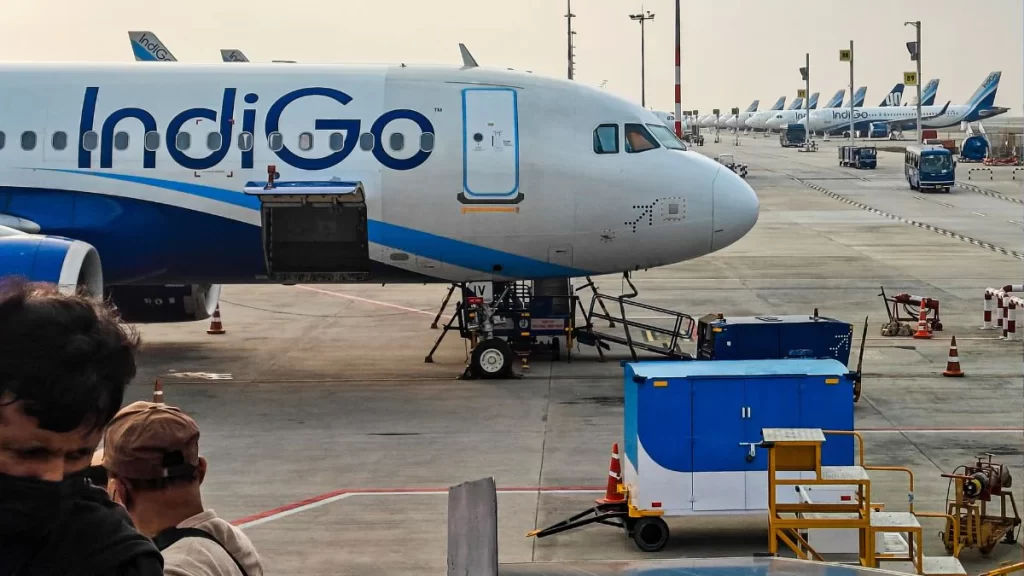
India’s aviation sector is facing heightened turbulence as the Centre intervenes in the ongoing IndiGo aviation crisis, following days of mass flight delays, cancellations, and widespread passenger distress across major airports. The Prime Minister’s Office (PMO) has formally reviewed the situation with senior aviation officials, prompting urgent corrective directives aimed at stabilizing operations and restoring passenger confidence.
PMO Steps In Amid Escalating Chaos
With thousands of passengers stranded and flight schedules in disarray, the PMO’s involvement underscores the severity of the disruption. According to government sources, officials were instructed to examine the root causes behind IndiGo’s large-scale operational collapse and implement immediate measures to prevent recurrence.
The DGCA, after its assessment, directed IndiGo to slash more than 200 flights per day, amounting to nearly 10% of its approved winter schedule. This temporary reduction is expected to ease pressure on the airline’s stressed crew and resources while enabling more realistic scheduling.
Operational Strain and Crew-Related Challenges
Key insiders attribute the crisis to a combination of crew shortages, network strain, and misaligned scheduling practices. A sudden spike in last-minute pilot and cabin crew unavailability reportedly triggered cascading delays, ultimately resulting in hundreds of cancellations.
Despite these challenges, industry experts argue that the depth of disruption indicates deeper structural gaps in resource planning, creating an urgent need for improved workforce management, contingency protocols, and compliance monitoring.
Delhi High Court Questions Government on Pricing Oversight
Even as operational fixes are underway, the crisis has sparked judicial scrutiny. The Delhi High Court, responding to public petitions, questioned the Centre on why airlines—particularly during the peak chaos—were permitted to overcharge passengers amid widespread cancellations and last-minute rebookings.
The bench observed that distress travel pricing should not become an opportunity for airlines to inflate fares, especially when passengers are left with limited alternatives. The government has been asked to clarify its stance and outline steps to prevent fare escalations during operational emergencies.
Passenger Impact and Broader Industry Implications
The disruption has affected thousands across metros, with Delhi, Mumbai, Bengaluru, and Hyderabad witnessing the worst congestion. Airport officials reported extended queues, multi-hour delays, and numerous instances of passengers missing critical connections.
Key passenger concerns:
- Excessively long waiting hours
- Short-notice flight cancellations
- Steep last-minute fare spikes
- Lack of timely communication
What This Means for the Aviation Sector
The IndiGo crisis serves as a wake-up call for India’s aviation ecosystem, especially at a time when air travel demand is at record highs. The episode highlights the vulnerability of airlines to manpower fluctuations, the need for stricter regulatory oversight, and the importance of passenger-centric reforms.
Aviation analysts believe that while IndiGo’s temporary capacity reduction may cause short-term inconvenience, it could lead to more reliable schedules in the coming weeks. Meanwhile, the industry awaits the Centre’s response to the High Court’s concerns, as fare transparency and consumer protection take center stage.