
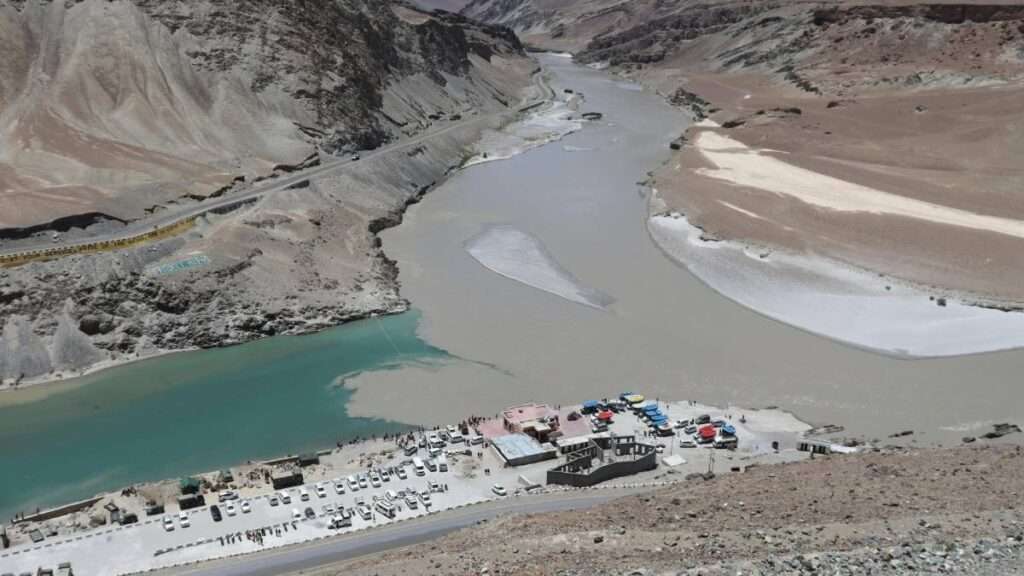
June 17 — A significant 17% decline in water flow from India into Pakistan’s Sindh province has raised alarm among agricultural authorities and farming communities, as per the latest update from the Indus River System Authority (IRSA). The shortfall is also affecting the Punjab province, where water levels have dropped below seasonal expectations.
The “Daily Water Situation” report released by IRSA this week reveals that inflows into the Indus River are notably lower, particularly at critical points such as Tarbela. This reduction is already impacting irrigation schedules and is expected to severely affect crop cultivation across the southern provinces.
Sindh, which heavily depends on Indus water for irrigation, is witnessing early signs of stress in the agricultural cycle. Major crops including cotton, sugarcane, and paddy may suffer yield losses if water shortages persist. Farmers in various districts have reported delayed sowing and inadequate canal water supply, which could directly impact food production and the rural economy.
Punjab, considered Pakistan’s agricultural hub, is also facing a drop in water availability. The province relies on a steady supply from the Indus system to maintain productivity, especially during the ongoing Kharif season.
Officials from IRSA have linked the reduced inflow to lower releases from upstream, including territories controlled by India. While no formal clarification has been issued by New Delhi, the situation has once again brought the Indus Waters Treaty under scrutiny. Signed in 1960 and facilitated by the World Bank, the treaty governs the distribution of the Indus Basin rivers between the two countries.
Under the treaty, India is allowed to utilize the eastern rivers—Ravi, Beas, and Sutlej—while Pakistan has rights over the western rivers—Indus, Jhelum, and Chenab. However, fluctuations in water flow, whether due to climatic conditions or upstream storage, often raise diplomatic concerns in Islamabad.
Experts believe that climate change may also be playing a key role in altering river patterns. Unpredictable glacier melt, shifting monsoon cycles, and rising temperatures are affecting water availability throughout South Asia. Environmental scientists have called for enhanced regional cooperation and updated infrastructure to manage the crisis.
The water shortage comes at a critical time for Pakistan’s agricultural sector, which is already under strain from inflation, input cost hikes, and extreme weather events. Government officials are urging both domestic water efficiency measures and regional diplomatic engagement to ensure stable river flows.
As the situation unfolds, IRSA continues to monitor inflows and releases on a daily basis. Authorities have emphasized the need for coordinated water management strategies and the construction of new reservoirs to reduce dependence on unpredictable river flows.

