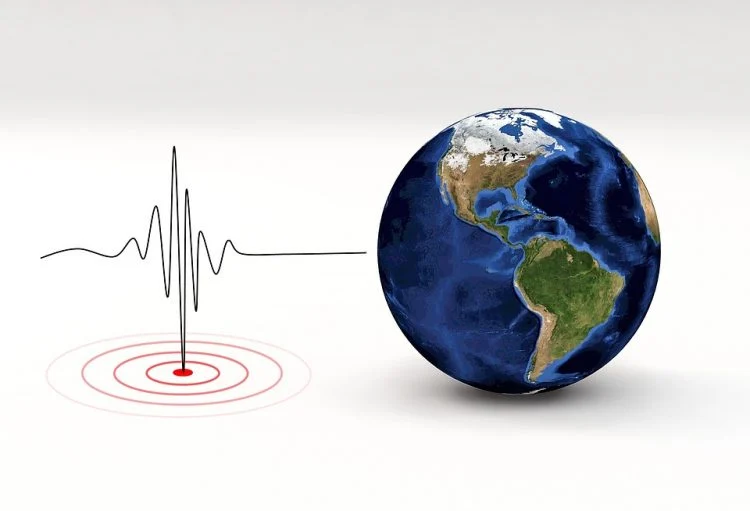
June 17, 2025 — In a groundbreaking discovery, Japan’s Himawari-8 weather satellite has captured a rare and rhythmic 26-second atmospheric pulse, revealing a stunning natural phenomenon that has puzzled scientists for decades. The pulse, consistent and undisturbed, offers new insights into Earth’s lesser-known atmospheric behaviors.
The pulse was observed by the high-resolution sensors aboard Himawari-8, which is primarily used to monitor weather patterns and atmospheric activity across the Asia-Pacific region. The satellite detected the pulse as a rhythmic signal repeating every 26 seconds, continuing steadily over an extended period. Scientists have described it as one of the most intriguing naturally occurring signals ever documented in Earth’s atmosphere.
While similar pulses were first recorded in the 1960s through ground-based seismic instruments, the origin and nature of the signals remained a mystery. This latest detection by satellite, however, provides visual and atmospheric data that confirms the pulse emanates from Earth’s atmosphere rather than from tectonic or oceanic sources alone.
Experts believe the phenomenon may be linked to microseisms—subtle vibrations caused by ocean waves interacting with the ocean floor. These vibrations are believed to travel upward through the Earth’s crust and resonate in the atmosphere, creating a metronome-like signal that can be detected by sensitive instruments. Others suggest the cause might involve atmospheric resonance, in which air pressure waves become trapped and bounce in specific patterns.
“This consistent 26-second pulse is like Earth’s quiet heartbeat,” said Dr. Yuto Nishikawa, an atmospheric scientist leading the analysis at the Japan Meteorological Agency. “It’s not dangerous, but it tells us something profound about the natural processes happening beneath and above the surface.”
The discovery has sparked global scientific interest. Researchers note that while the pulse itself is harmless, studying it could significantly improve our understanding of how Earth’s systems—land, sea, and air—interact with each other. The finding could also contribute to advancements in climate science, seismic forecasting, and atmospheric modeling.
Moreover, the Himawari-8 satellite’s ability to capture such subtle and regular patterns showcases the growing importance of space-based monitoring in understanding the Earth’s environment. As technology evolves, scientists anticipate uncovering even more hidden rhythms and patterns within the planet’s atmosphere.
The 26-second pulse remains under investigation, with collaborative studies planned among geophysicists, meteorologists, and oceanographers worldwide. For now, this fascinating discovery adds yet another layer to the complexity of Earth’s natural dynamics.