
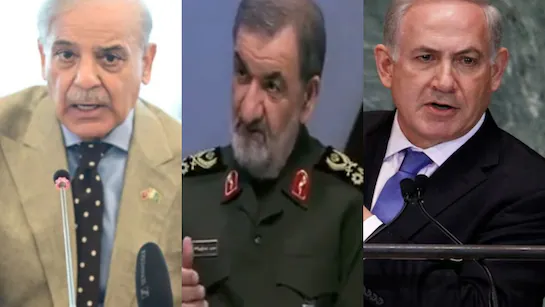
June 17, 2025 — In a provocative development that has raised alarm across diplomatic circles, Iran has claimed that Pakistan will launch a nuclear retaliation against Israel if Tel Aviv uses nuclear weapons against the Islamic Republic. The statement, made by a senior Iranian official during a televised broadcast, has sparked international concern over the escalating nuclear rhetoric in an already volatile region.
The Iranian official warned that any Israeli nuclear aggression would not go unanswered and that Pakistan, as a fellow Muslim-majority nuclear power, would respond forcefully to defend Iran. “If Israel uses nuclear weapons against us, we will not be alone. Pakistan will respond,” the official said, without citing any formal alliance or agreement with Islamabad.
So far, the Pakistani government has not issued any official response to the Iranian claim. Pakistan has traditionally maintained a policy of non-interference in Middle Eastern conflicts and has not publicly aligned itself with Iran on military matters involving Israel.
The statement comes amid heightened tensions between Iran and Israel, particularly following recent Israeli airstrikes targeting Iranian military infrastructure in Syria and other regional theaters. Iran has consistently accused Israel of destabilizing the region and has vowed to respond to any acts of aggression.
Analysts have warned that invoking nuclear threats, especially involving third-party nations, could lead to dangerous miscalculations. “Such declarations, especially without formal backing, risk dragging uninvolved nations into conflict and inflaming regional hostilities,” said a senior geopolitical analyst at the South Asia Strategic Institute.
The United Nations has responded by urging all parties to de-escalate tensions and refrain from provocative language. A spokesperson for the UN Secretary-General emphasized that “the use or threat of use of nuclear weapons poses an unacceptable risk to humanity and must be avoided under all circumstances.”
Meanwhile, regional powers and global stakeholders are closely monitoring the situation, wary of further deterioration. The potential inclusion of Pakistan in a nuclear standoff between Iran and Israel would represent a significant expansion of the conflict, with dire consequences for global security.
Israel, which has maintained a policy of ambiguity regarding its nuclear arsenal, has not responded to Iran’s latest warning. However, the country has repeatedly stated it will act decisively to prevent Iran from obtaining nuclear weapons.
The Iranian claim is seen by some experts as a strategic move to build deterrence by projecting a broader Muslim alliance. However, without confirmation from Pakistan, the statement remains diplomatically ambiguous and highly contentious.
As the situation evolves, international actors are calling for renewed diplomatic engagement to prevent the outbreak of a wider conflict. The stakes, analysts say, are too high for rhetoric to replace reasoned negotiation.

