
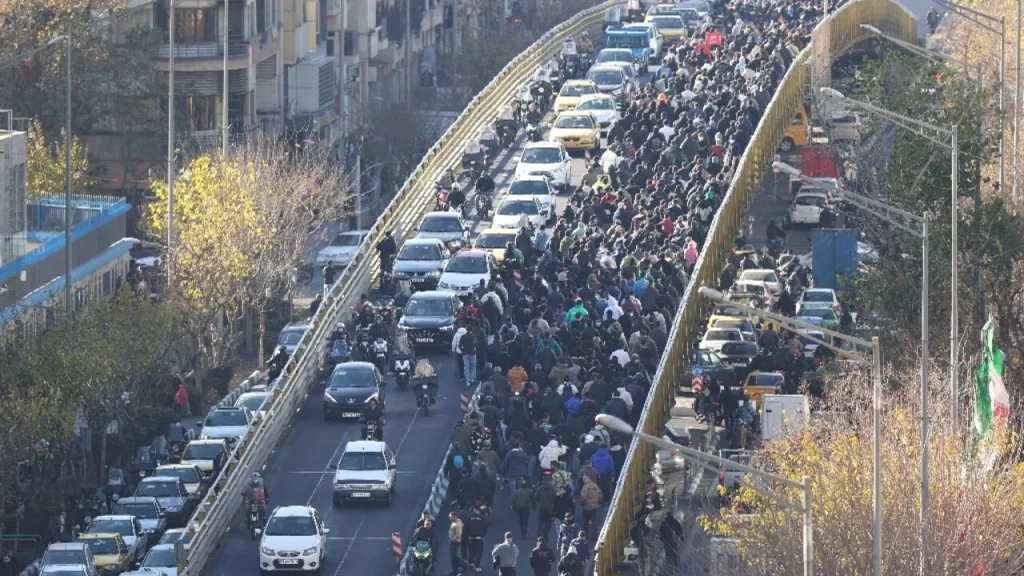
Iran has entered its seventh consecutive day of nationwide protests, as mounting public anger over a deepening economic collapse and a historic plunge in the value of the national currency, the rial, pushes the country into one of its most volatile moments in recent years. Demonstrations have spread across major cities and provincial towns, reflecting widespread frustration with soaring inflation, unemployment, and declining living standards.
Economic Collapse Fuels Public Outrage
At the heart of the unrest lies Iran’s rapidly deteriorating economy. The Iranian rial has hit a record low against foreign currencies, eroding purchasing power and intensifying the cost-of-living crisis. Essential goods, including food, fuel, and medicine, have become increasingly unaffordable for large segments of the population, triggering anger among workers, students, and small business owners alike.
Key economic stressors driving the protests include:
- Record inflation affecting basic commodities
- Sharp devaluation of the rial, wiping out household savings
- Rising unemployment, particularly among youth
- Delayed wages and pension payments for public-sector workers
These factors have combined to create what many analysts describe as a full-scale economic emergency, pushing citizens to take to the streets despite heightened security measures.
Protests Spread Nationwide
Reports indicate that protests have erupted in Tehran, Mashhad, Isfahan, Shiraz, and several industrial hubs, signaling a broad-based movement rather than isolated unrest. Demonstrators have reportedly targeted symbols of economic authority, chanting slogans against mismanagement and corruption. While protests remain largely driven by economic grievances, they increasingly reflect broader dissatisfaction with governance and economic policy.
Authorities have responded with a visible security presence, including riot police in major urban centers. Internet disruptions and restrictions on communication platforms have also been reported, measures often associated with efforts to contain the spread of unrest.
Currency Crisis at the Core
The collapse of the rial has emerged as a central symbol of Iran’s economic distress. Currency traders and ordinary citizens alike have expressed alarm over the speed of the decline, which has accelerated inflation and destabilized markets.
Impact of the Rial’s Decline
| Area Affected | Consequence |
|---|---|
| Household income | Reduced purchasing power |
| Imports | Higher costs for food and medicine |
| Businesses | Increased operational expenses |
| Public confidence | Growing economic anxiety |
The currency crisis has also undermined public trust in economic institutions, further fueling protests.
Broader Implications and Outlook
As protests enter a second week, the situation poses significant challenges for Iran’s leadership. Sustained demonstrations risk disrupting economic activity, deterring investment, and exacerbating existing fiscal pressures. The government faces growing pressure to stabilize the currency, curb inflation, and present a credible economic recovery plan.
Observers note that without swift and tangible economic reforms, public unrest is likely to persist. The protests underscore not only immediate economic pain but also deeper structural issues within Iran’s economy. How authorities respond in the coming days may determine whether the crisis eases or escalates further, shaping Iran’s political and economic trajectory in 2026.

