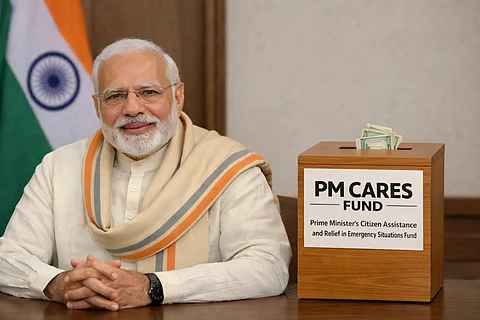
The PM CARES Fund, which originated during the COVID-19 issue, has gotten billions of dollars in donations from the public. However, there are still questions about how open it is, why RTI requests are not allowed, and why finances are not made public. The Prime Minister’s Office (PMO) has given orders that make it impossible for Parliament to check into matters. Critics claim that this lack of openness makes people less likely to trust projects that are tied to the government.
Where it came from and how it got so big so fast
On March 28, 2020, the Prime Minister’s Citizen Assistance and Relief in Emergency Situations Fund was created up to support people promptly during national disasters, like the pandemic. The National Disaster Response Fund (NDRF) is a normal fund that the Comptroller and Auditor General (CAG) checks. On the other hand, the Prime Minister and senior cabinet members oversee PM CARES, which is a private trust.
Donations came in quickly, and over 60% of the first money came from public sector companies. People were worried that taxpayer money would go to a private group. By 2022–23, the fund had received more than Rs 13,605 crore in voluntary and foreign donations, as well as Rs 565 crore in interest. This scale needs to be held to a high standard, yet there isn’t much information accessible.
Key Financial Figures
Audited statements show big inflows and planned spending, but others disagree since they don’t have all the information. For instance, from 2019-20 to 2021-22, voluntary donations were about Rs 12,693 crore, plus Rs 535 crore from outside the country. Spending on migrant assistance, COVID hospitals, and ventilators was more than Rs 1,000 crore. In 2022–23, voluntary donations totaled Rs 909.64 crore, while international donations totaled Rs 2.57 crore. The total sum given out was Rs 439 crore. This includes Rs 346 crore for PM CARES for Children, Rs 91.87 crore for oxygen concentrators, and Rs 202 crore in refunds. These initiatives assisted with critical needs after COVID, but the fact that people are having trouble obtaining money back for ventilators shows that some things need to be made clearer, since the public can’t see full vendor or outcome breakdowns.
Exceptions to RTI and Legal Protections
One of the primary reasons of disagreement is that the Right to Information (RTI) Act does not encompass PM CARES. Even though it is linked to the PMO, courts have concluded that it is not a “public authority” under Section 2(h) since the government does not have enough control over it. In January 2024, the Delhi High Court threw out a Central Information Commission decision to give tax advantages because the third-party notification process wasn’t followed appropriately.
The Supreme Court said no to pleas for CAG audits, which meant that trustees might choose their own independent auditors. Activists argue this keeps things from being looked at, especially since donations to the public sector don’t have to go through a parliamentary review. The official site contains FAQs and audited statements up to 2022-23, but it doesn’t have real-time dashboards or lists of donors.
Recent PMO Orders Make People Angry
In February 2026, the PMO advised the Lok Sabha Secretariat that questions about the PM CARES, the PM National Relief Fund (PMNRF), and the National Defence Fund were not authorized because they came from voluntary sources outside the Consolidated Fund.
People who were against it called it an attempt to hide the facts, and debates used terms like “dictatorial secrecy.” People are calling for a full white paper after six years, yet there are still no accounts for 2023-24 or 2024-25.
Criticism from Experts and the Other Side
Legal experts, such as Congress member Abhishek Manu Singhvi, are angry that the CAG or RTI don’t cover money that was raised in a legal way. If they win, they pledge to check the money. The Foreign Contribution Regulation Act permits money from other countries come in without being recorded.
During the epidemic, there was no apparent way to bid on things like 99,986 oxygen concentrators at the same time. People who don’t like PM CARES say that its checks are just independent, but PMNRF and NDRF are subject to CAG audits and RTI.
Government defenses and counterarguments
Supporters say that PM CARES works rapidly in emergencies and doesn’t require any red tape. They also say that trustworthy trustees can opt to make audits public. The PMO says that donor privacy is normal in trusts.
People who don’t like PSU donations say they make it hard to tell the difference between public and private, and they want to keep an eye on flows of Rs 13,000 crore or more, especially those that aren’t recorded beyond 2023. Models from all over the world, including U.S. humanitarian initiatives, need to be honest about what they do.
Broader impacts on trust in the public
PM CARES shows how hard it is for India to give in a hybrid way. A lot of individuals are worried about “PM CARES Fund transparency” and “CAG audit demands.” Adding Rs 912 crore in 2022–23 makes things less clear, which could harm the credibility of the help.
Here are some crucial things to consider about:
Donors don’t have to give their names, even if huge companies do.
Spending rules that aren’t obvious beyond groups.
It’s not clear what will happen after the outbreak.
2026 regulations for parliament that make it difficult to keep an eye on things.
Is the PM CARES Fund fully responsible? People are questioning transparency