
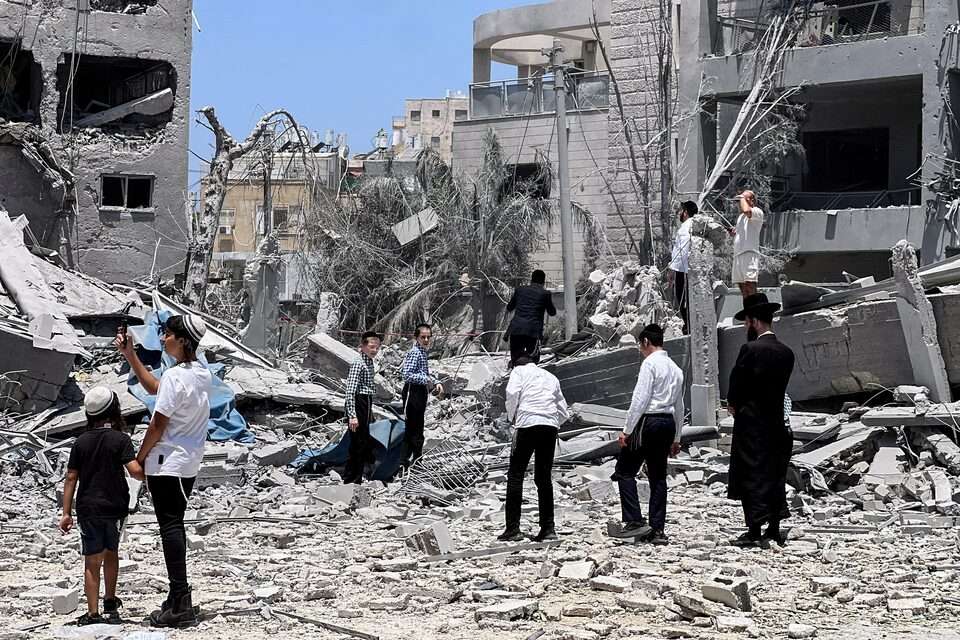
June 17 — Hostilities between Israel and Iran have intensified as the conflict entered its third consecutive day on Monday, resulting in a significant loss of life and widespread destruction. According to official reports, at least 224 people have been killed and more than 1,200 injured following Israeli airstrikes on multiple locations across Tehran and nearby areas.
Iranian authorities confirmed that densely populated neighborhoods, administrative zones, and strategic infrastructure in the capital were targeted in what they describe as “indiscriminate and hostile attacks.” Emergency teams continue to operate under immense pressure, with hospitals and trauma centers overwhelmed by the volume of casualties.
“The attacks on Tehran are unjustified and will be met with decisive retaliation,” said Iranian Defense Minister Mohammad Reza Ashtiani in a televised statement. He also accused Israel of deliberately striking civilian zones, a claim that Israel has denied.
In response, Israeli officials stated that the strikes were directed at critical military sites believed to be associated with Iran’s intelligence networks and missile development facilities. Israeli Prime Minister Benjamin Netanyahu asserted that the military operation was intended to prevent planned attacks on Israeli soil. “We are acting to protect our people and neutralize active threats from Iranian-backed operatives,” he said during a press conference on Monday morning.
The escalation follows a series of cross-border exchanges last week, which many analysts now view as the tipping point in a long-simmering rivalry. Tensions have been rising for months, but the recent round of direct strikes marks one of the most dangerous confrontations between the two nations in recent years.
International Response and Regional Impact
Global powers have expressed growing alarm at the situation. The United Nations has called for an immediate cessation of hostilities, with Secretary-General António Guterres urging both sides to prioritize dialogue over warfare. The European Union has also appealed for restraint and proposed emergency diplomatic engagement to de-escalate the situation.
The United States, while reaffirming Israel’s right to defend itself, has encouraged both nations to avoid actions that could ignite a larger regional war. Meanwhile, Russia and China issued strong condemnations of the Israeli air campaign, warning that further conflict could destabilize the entire Middle East.
In the region, several countries, including Iraq and Lebanon, have placed their armed forces on heightened alert amid fears that the violence could spill across borders. Commercial flights over Iranian airspace have been largely suspended, and global oil prices surged in response to concerns over energy supply disruptions.
Ongoing Crisis and Outlook
With hundreds dead and injured, and infrastructure across Tehran badly damaged, humanitarian needs are growing rapidly. Relief organizations have called for urgent international assistance to support emergency medical care and the relocation of displaced families.
Despite calls for calm, both governments have shown no signs of backing down. Iranian leaders have warned of a “powerful and strategic” response, while Israel has vowed to continue its military campaign until “all hostile threats” are neutralized.
As the conflict deepens, the risk of wider regional involvement grows. The coming days are expected to be pivotal, as global efforts to mediate a truce face serious challenges amid intensifying rhetoric and ongoing military operations.

