In the fast-paced realm of space endeavors, an ISRO launch commands significant interest within India. The Indian Space Research Organisation is currently finalizing preparations for a key satellite mission, slated for the end of April 2026.
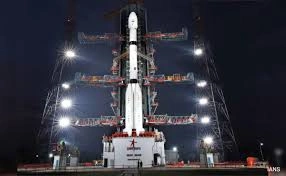
The NVS-02, a new type of navigation satellite, is set to launch later this month from Sriharikota on the reliable GSLV-F15 rocket. This isn’t just another launch; it’s a big step toward making India’s own NavIC system stronger so that everything from fishing boats in the Arabian Sea to urban ride-sharing applications stays on track with perfect accuracy.
ISRO is keeping up its pace, even with a full slate of missions planned for 2026.
As the countdowns approach, the question lingers: Can ISRO replicate its earlier success, and what implications does this have for Indians who depend on precise location data?
The NVS-02 satellite’s primary objective is to enhance NavIC, India’s Regional Navigation Satellite System. This satellite, with an estimated mass of 2,300 kg, will become part of the constellation currently circling the Earth at an altitude of roughly 36,000 km.
NVS-02 is different from other INSAT navigation satellites since it has native atomic clocks and supports L1 and L5 bands. This means that it will have superior signal power and coverage across India and up to 1,500 km outside its borders.
Imagine a farmer in rural Maharashtra using his smartphone to keep an eye on the moisture in the soil in real time, or disaster responders in flood-hit Kerala finding rescue areas without any problems. That’s the real deal. In recent updates, ISRO Chairman V. Narayanan said that this launch will make NavIC’s accuracy better than GPS standards for civilian use, bringing it down to less than a meter.
There has been a lot of work to get ready. The GSLV-F15, ISRO’s 16th mission of the Geosynchronous Satellite Launch Vehicle, went through a lot of tests at the Satish Dhawan Space Centre. Last week, cryogenic engine firings went off without a hitch, and the satellite passed thermal vacuum chamber tests with flying colors. People are keeping a close eye on the weather. The winds around the coast of Sriharikota can be challenging, but the forecasts look good for a time in mid- to late-April.
Here are some important mission highlights at a glance:
Orbit: 55° East, geostationary.
Lifespan: more than 12 years, with navigation signals on two frequencies.
Payload: advanced rubidium atomic clocks that keep time very well.
Importance: Fills a gap created by NVS-01 (released in 2023), which makes redundancy better.
ISRO has flown GSLV 19 times out of 21, thus this isn’t their first time. However, the stakes seem bigger now that NavIC is growing.
ISRO doesn’t rest on its past successes. It is building on them with the LVM3 M6 and a great lineup for 2026. The LVM3 M6 win in December 2025 was a great example of how to do it. That mission sent EOS-08 into low Earth orbit, where it used synthetic aperture radar to take pictures in all kinds of weather. It kept an eye on cyclones off the coast of Odisha, watched urban growth in Mumbai, and even helped protect wildlife in the Sundarbans. Apps that more than 50 million Indians use are already getting data from it.
The first quarter of 2026 has been a frenzy. The PSLV-C60 launched XPoSat in January. It was India’s first satellite made just for X-ray polarimetry, and it looked into the secrets of black holes. The EOS-09 mission on SSLV-D3 in February showed that the small launcher could be used for business. NVS-02 ends this craziness, but it’s just the beginning.
People who work for ISRO say that there will be roughly a dozen additional satellite launches this year. The SpaDeX docking test in the second quarter will test technology for space rendezvous, which is important for the future of the Bharatiya Antariksh Station. NISAR, the NASA-ISRO radar spacecraft, is also getting ready for 2027. And don’t forget the next crew module testing for Gaganyaan. We’re getting closer to human spaceflight.
This frenzy means jobs and tech spillover for India. Startups in Bengaluru are already making drones that work with NavIC for farming in Punjab. India’s space budget of ₹13,000 crore for 2026 is a statement on the world stage. It has launched more than 100 foreign satellites since 1999.
Problems on the Launch Pad: Weather, Tech Issues, and Big Dreams
There is always drama during a launch. Do you remember the GSLV-F10 failure in 2020? It was grounded because of problems with the cryo stage. ISRO learned quickly and made changes to the indigenous engine to make it more reliable. This time, integration checks showed small changes to the vibration that have now been fixed.
The weather is the unknown. April monsoons tease at first, but projections say the skies will be clean. Then there’s the human side, with more than 1,000 engineers working all night, from payload directors to telemetry teams. If one thing goes wrong, everything else goes wrong.
Bigger problems are on the way. Global approval is needed for NavIC band spectrum allotment, especially as it overlaps with GPS. Funding is also getting tighter, and private companies like Skyroot and Agnikul are getting closer, which means ISRO has to come up with new ideas faster. But accomplishments like the reusable tech testing after LVM3 M6 indicate that they are strong.
What if NavIC starts working all the time? Could it power smart cities from Nagpur to New Delhi, cutting down on traffic problems? Or let UPI payments go through without a hitch by checking the location? These things aren’t just dreams; they’re coming up soon.
India’s Space Surge: A Global Player with an Impact at Home
If you look at the big picture, ISRO’s tale is India’s. It has changed from a ₹900 crore budget in 2000 to being in charge of commercial launches. By 2030, NavIC will be able to serve 2 billion phones on its own, which will reduce the need to import phones. Nagpur’s new space hub in Maharashtra is training young people for these missions, combining local pride with national ambition.
It’s chess throughout the world. As China’s BeiDou and Europe’s Galileo get stronger, India’s NavIC finds its place as a disaster-proof, SAARC-focused satellite. Partnerships without strings are shown by ties with the UAE for joint satellites and the US for NISAR.
Each launch has an effect on the economy. Last year, the space industry made $8 billion and is hoping to make $44 billion by 2033. Farmers get more crops by planting them in the right places; fisherman avoid storms; and logistics companies in Mumbai ports save gasoline.
Looking Up: What Comes Next After NVS-02
While NVS-02 gets ready for the skies, ISRO’s eyes are on the future. This launch makes NavIC a competitor to GPS, powers services tied to Aadhaar, and helps private businesses grow. After the launch, expect apps to quickly add data—like Google Maps hybrids.
But space doesn’t care. If you do well here, you’ll be ready for the big events in 2026, like Shukrayaan-1 to Venus and maybe even a lunar sample return tease. For Indians, it’s personal—seeing that plume rise from Sriharikota seems like a group rise.
ISRO reminds us that in a world full of unknowns, accuracy and hard work pay off. Will NVS-02 be the thing that makes India genuinely independent when it comes to navigation? It looks like the stars are lining up.
ISRO readies itself for a crucial satellite launch: NVS-02, poised to enhance India’s NavIC, is scheduled for April 2026.