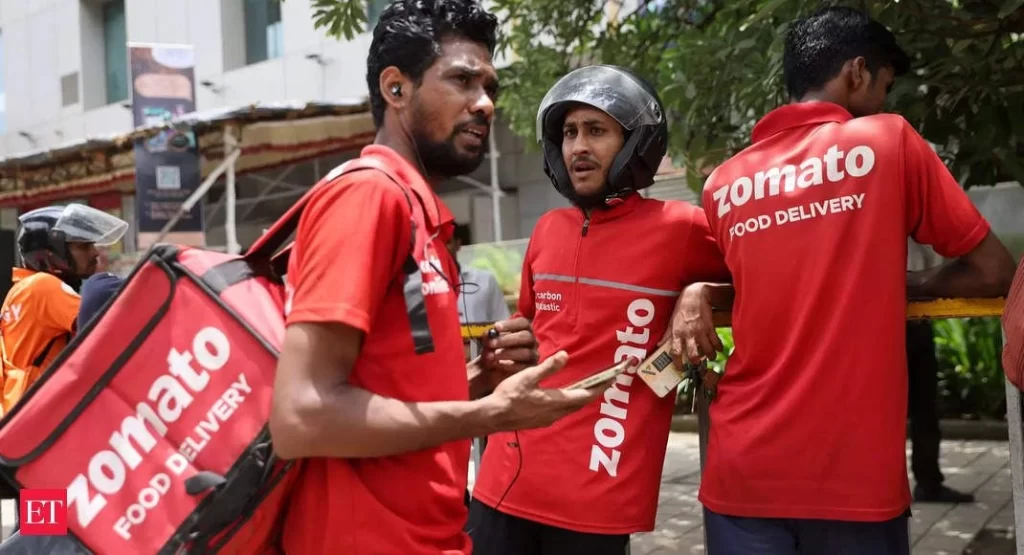
In a brave move to defend the rights of the digital age workforce, Karnataka has developed India’s first specialized digital grievance redressal mechanism for gig workers. The new system, launched under the Karnataka Platform-based Gig Workers Board and the Department of e-Governance, will give ride-hailing drivers, food-delivery riders and other app-based workers a formal platform to air grievances on wages, working conditions and disputes with aggregators. This move is a big step towards reforming India’s labor rules for the fast-growing gig economy, where millions of workers operate without formal employment contracts or defined avenues of appeal.
What this means for India’s labour market
India’s gig economy has risen at a rapid speed in the last decade. Food delivery apps, ride-hailing services and on-demand service markets now link tens of millions of consumers to workers who depend on their smartphones to earn a living each day. But many of these workers remain invisible in legal and social terms, often labelled as “independent contractors” rather than employees, which denies them basic protections such as set salary, paid leave and social security.
Karnataka’s action is being monitored by everybody because it reflects a willingness to view gig workers not as transient anomalies but as a key part of the current labour system. The state’s new digital grievance redressal system is designed on the Karnataka Platform-Based Gig Workers (Social Security and Welfare) Act and Rules which makes it mandatory for every aggregator with more than 50 registered gig workers to join an Internal Dispute Resolution Committee (IDRC). Complaints can be filed by workers on the Integrated Public Grievance Redressal System (IPGRS) portal and will be sent to the relevant IDRC or a nominated grievance redressal officer in the labour department.
This is not just a bureaucratic fix. For a delivery rider in Bengaluru who has had his incentives unexpectedly curtailed or his account summarily canceled, the IPGRS portal gives a formal means to dispute the decision instead of being left at the whim of opaque software algorithms.
How the New System Operates
Under the new structure, a gig worker can sign on to the IPGRS platform — typically using a mobile-friendly interface — and lodge a complaint pertaining to salaries, delays in payments, unfair terminations or unsafe working conditions. The platform enables real-time tracking of the status of complaint, giving a dimension of transparency that has long been missing in the gig industry.
The system is designed to coerce responsiveness from both the platforms and the government in the background. Once a complaint is lodged, the aggregator’s IDRC is expected to act within a stipulated time-frame — usually 30 days as envisioned in the state’s proposed legislation. If the worker is not pleased with the judgment of the IDRC or if the committee does not act properly, the case can be escalated to a grievance redressal officer designated by the government. In some cases, workers may also pursue dispute resolution through processes available under the Industrial Disputes Act, 1947, mixing old labour rules with contemporary digital‑era frameworks.
The Karnataka Platform-based Gig Workers Board is already talking to platforms such as Namma Yatri and Yulu to put up their IDRC details on the government portal so that workers can know who is supposed to resolve their complaints. Around 12 lakh gig workers have been tentatively identified in the state and officials are also working on a unique identification system to weed out duplicate entries and set the ground for welfare packages that will take into consideration sort of employment, hours worked and contribution.
Why workers need a channel for grievances
Anyone who has spent time on the streets of Bengaluru or other big Indian cities has experienced the inconsistencies of the gig economy. On the one hand, these platforms provide flexible employment and immediate revenue prospects, especially for migrants and young people who may not have access to formal sector jobs. On the flip side, workers report gruelling schedules, uncertain pay, and the continual anxiety of being ‘deactivated’ by an app without any clear explanation.
Until now, the lack of a formal grievance process has made it very difficult for gig workers to dispute unethical practices. There is no collective bargaining and many workers are afraid to speak out, fearing blacklisting or account suspension. In such a setting, a simple complaint about a delayed payment or a cancelled incentive can seem like a risk that is not worth the benefit.
The new system in Karnataka is an attempt to redress this balance. In building an institutional link between gig workers, aggregators and government authorities, it sends a clear message: platform-based work may be digital, but the rights of the people behind the screens are not virtual. It also provides a way for the labor department to track grievance trends, including mass wage delays or sudden policy changes, so regulators can get involved before problems snowball into larger disputes.
Social Security and Welfare
Apart from conflict resolution, there is a considerable focus on social security of gig workers in the overall policy framework of Karnataka. Under the Karnataka Platform‑Based Gig Workers (Social Security and benefit) Act and Rules, the state is preparing the ground for benefit policies to be customised to the reality of gig employment. These could include health care coverage, accident insurance and even pension-like contributions based on the volume and duration of labor.
Welfare schemes would be based on practical characteristics – the sort of work done, the amount of hours worked and the contribution provided by the worker and in some circumstances the platform, officials have said. This deviates from the old employer-employee model where social security is coupled to a set compensation structure. Rather, it represents the flexible, project-based nature of gig employment, where a worker could flit between different apps in one day.
The unique identification system being designed for gig workers will also help in spreading out these benefits more quickly. By tying a worker’s identification to their transaction history across platforms, the state may start to get a more accurate picture of who’s doing what kind of work, for how long, and under what conditions. And this data can in turn feed into future policy decisions – not just in Karnataka, but perhaps across India.
What This Means for the Larger Digital Economy
Karnataka’s debut is not only a state-specific policy story, but an indication of how India’s labour regime is beginning to come to terms with the reality of the digital economy. In recent years, the federal government has established the Code on Social Security, 2020 and efforts such as the e-Shram portal for registration of unorganised workers. Think-tanks such as NITI Aayog have come out with frameworks such as RAISE to increase the rights for gig-workers. Karnataka’s grievance system offers a practical, on-the-ground dimension to these national efforts.
The ramifications are real for workers. Now, riders who’ve had their account suspended for a reason they don’t understand can file a complaint that can’t be disregarded, knowing the state is watching. If a delivery worker feels insecure because they do not have proper insurance coverage, they can refer to the state’s developing welfare framework and demand better. For platforms, the system is a wake-up call: opaque algorithms and unilateral judgments will no longer suffice to govern a workforce that is growing increasingly organized and aware of its rights.
Karnataka rolls out India’s first digital grievance redressal system for gig workers, sets new benchmark for labour rights