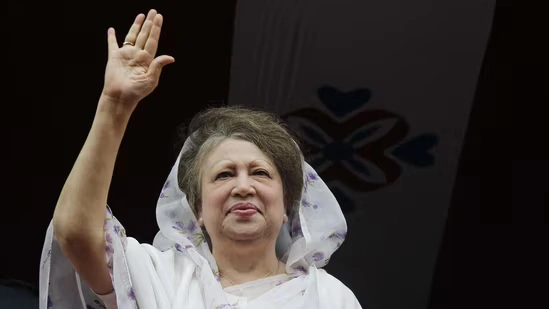
Khaleda Zia death, Bangladesh politics, BNP chairperson, former Bangladesh Prime Minister, Khaleda Zia legacy
Khaleda Zia, the first female Prime Minister of Bangladesh and long-serving chairperson of the Bangladesh Nationalist Party (BNP), passed away on Tuesday, December 30, 2025, at the age of 80. She breathed her last at around 6:00 a.m. local time at Evercare Hospital in Dhaka, following a prolonged battle with multiple health complications. Her death marks the end of an era in Bangladesh’s political history, closing a chapter defined by intense rivalry, democratic transitions, and enduring public influence.
According to family sources and party officials, Khaleda Zia had been suffering from advanced liver cirrhosis for several years, along with chronic heart and kidney ailments and diabetes. Her condition deteriorated steadily in recent weeks despite intensive medical care. The news of her demise triggered an outpouring of grief across the country, with political leaders, supporters, and citizens paying tribute to one of Bangladesh’s most influential and controversial political figures.
Khaleda Zia rose to prominence in the aftermath of the assassination of her husband, President Ziaur Rahman, in 1981. Entering politics amid national turmoil, she assumed leadership of the BNP and quickly emerged as a formidable force. In 1991, she made history by becoming Bangladesh’s first woman Prime Minister, leading the country during its return to parliamentary democracy after years of military rule. She served two non-consecutive terms as Prime Minister, from 1991 to 1996 and again from 2001 to 2006.
Her tenure was marked by significant political milestones as well as deep polarization. Supporters credit her with strengthening democratic institutions, promoting a multiparty system, and steering economic reforms during critical periods. Critics, however, often pointed to governance challenges, allegations of corruption, and confrontational politics that contributed to prolonged political instability. The fierce rivalry between Khaleda Zia and Sheikh Hasina, another former Prime Minister, came to define Bangladesh politics for more than three decades and shaped the nation’s political discourse.
Beyond electoral politics, Khaleda Zia remained a powerful symbol of opposition leadership. Even during periods of imprisonment and serious illness, she retained significant influence within the BNP and among its grassroots supporters. Her resilience, particularly in the face of legal battles and declining health, reinforced her stature as a central figure in the country’s opposition movement.
Key highlights of Khaleda Zia’s political life include:
- First woman Prime Minister of Bangladesh (1991)
- Chairperson of the Bangladesh Nationalist Party for over three decades
- Two-time Prime Minister with a lasting impact on democratic politics
- Central figure in shaping modern Bangladesh’s political landscape
Following her death, the BNP announced nationwide prayers and memorial events to honor her legacy. Flags were flown at half-mast at party offices, and senior leaders described her as a “pillar of democracy” and a “leader of the masses.” Political observers note that her passing may significantly reshape the future trajectory of opposition politics in Bangladesh.
As Bangladesh reflects on Khaleda Zia’s life and legacy, her influence on the nation’s political evolution remains undeniable. Revered by supporters and debated by critics, she leaves behind a complex but indelible imprint on the country’s democratic journey.