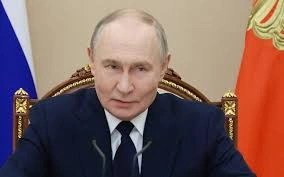
Russia has accused Ukraine of attempting a drone attack on President Vladimir Putin’s alleged residence in the Novgorod region during the night of December 28–29, 2025, a claim that Ukrainian officials have firmly rejected as a fabrication designed to derail fragile peace efforts. The allegation has added a new layer of tension to the ongoing Russia-Ukraine conflict, raising concerns about escalation and the future of diplomatic negotiations.
According to Russian authorities, air defense systems intercepted and neutralized multiple unmanned aerial vehicles near a secured property believed to be associated with the Russian president. Kremlin-linked officials described the incident as a “direct provocation” and alleged it was aimed at undermining Russia’s internal security. While no casualties or damage were officially reported, Moscow emphasized that such actions cross a “red line” and would have consequences for ongoing talks.
Ukraine swiftly denied any involvement in the alleged drone attack. Senior Ukrainian officials dismissed the accusations as “political theater,” asserting that Kyiv had no operational or strategic reason to target a presidential residence far from active combat zones. Ukrainian statements suggested the claim was intended to justify a harder Russian stance and shift attention away from battlefield developments and diplomatic pressures.
The incident has reportedly prompted Russia to reassess its negotiating position. Kremlin spokespersons indicated that Moscow would “review its approach” to any peace discussions in light of what it called an escalation by Ukraine. This statement has fueled speculation that Russia may adopt tougher preconditions or suspend engagement in confidence-building measures.
Key Points of the Alleged Incident
- Date of alleged attack: December 28–29, 2025
- Location: Novgorod region, northwestern Russia
- Weapon involved: Unmanned aerial vehicles (drones)
- Russia’s claim: Attempted strike near President Putin’s residence
- Ukraine’s response: Complete denial, calling the claim fabricated
Security analysts note that accusations involving attacks on high-profile leadership targets carry significant symbolic weight. Even unverified claims can influence public opinion, harden negotiating positions, and increase the risk of miscalculation. The use of drones, already a defining feature of the Russia-Ukraine war, has further blurred lines between frontline combat and strategic signaling.
From a geopolitical perspective, the allegation comes at a sensitive moment. Diplomatic backchannels had reportedly been exploring limited de-escalation measures amid mounting economic and military pressures on both sides. Any perception of targeting national leadership could severely undermine trust and stall progress toward negotiations.
Broader Implications
- Potential escalation of military rhetoric and retaliatory threats
- Increased strain on peace negotiations and diplomatic efforts
- Greater focus on internal security within Russia
- Intensified information warfare between Moscow and Kyiv
In the absence of independent verification, the competing narratives highlight the deep mistrust defining the conflict. While Russia frames the alleged drone attack as a serious security breach, Ukraine maintains that such claims are part of an information strategy to justify policy shifts.
As tensions rise, the international community is likely to watch closely for concrete evidence and official moves following Russia’s warning about revising its negotiating stance. Whether this incident proves to be a turning point or another episode in the war of narratives, it underscores how fragile peace efforts remain and how quickly allegations alone can reshape the trajectory of the conflict.