
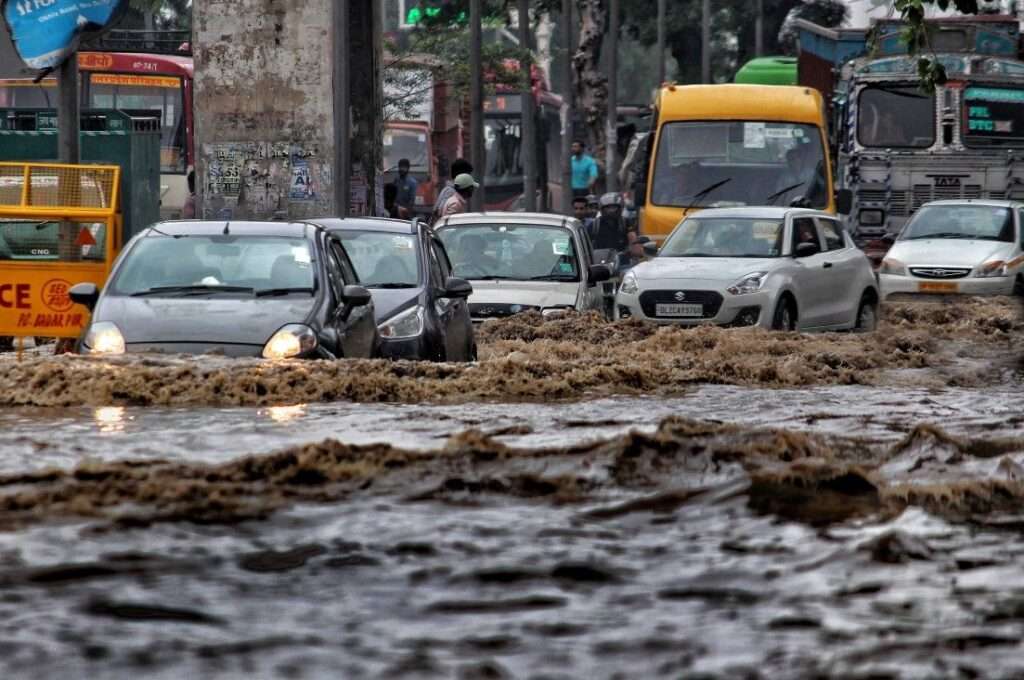
Kolkata witnessed one of its heaviest rainfall events in nearly five decades, recording 251.4 mm of rain within 24 hours, marking the third-wettest September day since 1978. The intense downpour on Tuesday paralyzed normal life across the city and adjoining districts, leading to severe waterlogging, traffic disruptions, and widespread school closures.
The India Meteorological Department (IMD) confirmed that the rainfall figure surpassed most September records in recent years, falling short only of the extreme precipitation events in 1999 and 1978. Officials noted that the heavy showers were caused by a deep depression over the Bay of Bengal, which intensified moisture inflow over southern Bengal.
Several low-lying areas in North and South Kolkata, Howrah, Hooghly, and North 24 Parganas were submerged under knee-to-waist-deep water, forcing residents to remain indoors. Essential services, including public transport, were severely affected as buses and taxis struggled through flooded streets. The Eastern Railway and Metro Railway reported delays due to track inundation in multiple zones. Authorities in Kolkata Municipal Corporation (KMC) and the state disaster management department issued a flood alert, advising residents in vulnerable areas to remain cautious. Pumps were deployed across waterlogged zones, but drainage systems were overwhelmed by the intensity of rainfall.
In light of the severe conditions, the West Bengal government announced the closure of schools across affected districts for two days. Several examinations scheduled in schools and colleges were postponed, with fresh dates to be announced later. Education officials stated that student safety was the primary concern as continuous waterlogging made travel unsafe.
The IMD forecast suggested that heavy to very heavy rainfall could continue in parts of Gangetic West Bengal, though intensity is likely to reduce in the coming 48 hours. Meteorologists have warned of localized flooding and river swelling, urging district administrations to stay on high alert. Neighboring states, including Odisha and Jharkhand, are also expected to experience moderate showers due to the same weather system.
Tuesday’s rainfall has entered the city’s record books, highlighting the growing challenges of extreme weather. According to IMD archives, the wettest September day in Kolkata was recorded in 1978 with 396 mm, followed by 1999 with 318 mm. This year’s 251.4 mm stands as the third-highest in nearly half a century, underscoring the vulnerability of the city’s urban infrastructure to intense monsoon activity.
Chief Minister Mamata Banerjee assured citizens that emergency teams were working round the clock to restore normalcy. “We are monitoring the situation closely. Disaster response units, police, and civic teams are deployed to assist people in affected areas,” she stated. Relief camps have been set up in severely hit neighborhoods, while health authorities have issued advisories to prevent waterborne diseases.
Kolkata’s third-wettest September day since 1978 has once again exposed the fragility of its urban drainage system in coping with extreme rainfall events. With schools closed, transport disrupted, and thousands of residents impacted by flooding, the episode underscores the urgent need for climate-resilient infrastructure and disaster preparedness in one of India’s most densely populated metropolitan regions.

