
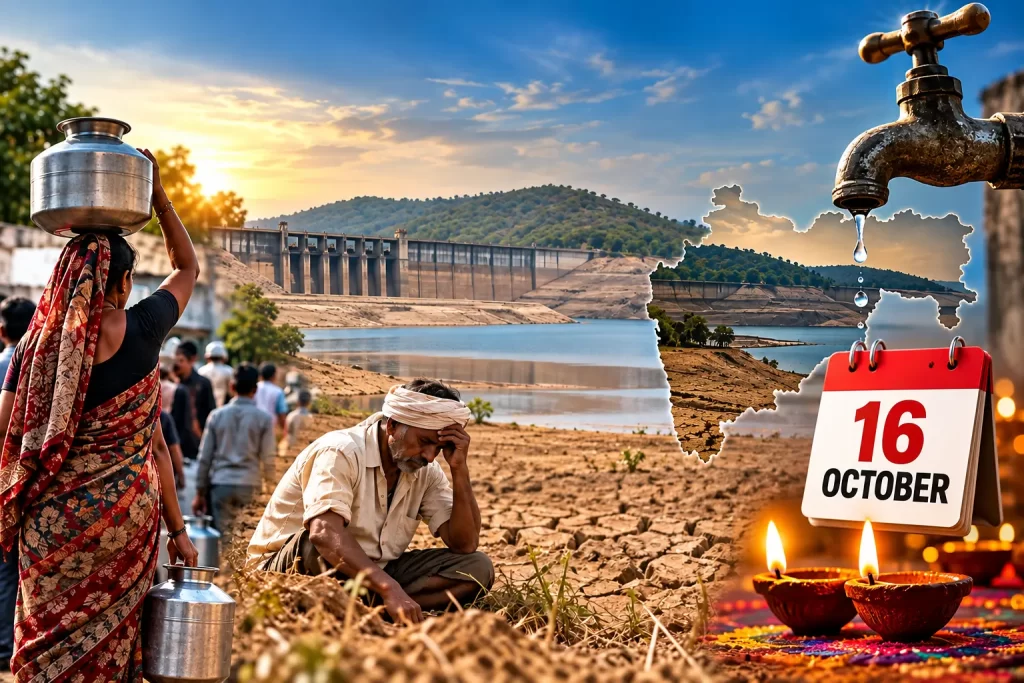
Every year, the weeks before Diwali bring a particular kind of busyness to Maharashtra. Homes get scrubbed, kitchens fill with the smell of frying snacks, and relatives arrive from other cities. All of it needs water, and plenty of it. This year, the state is asking people to prepare for a different reality. Maharashtra will impose water cuts from 16 October amid drought concerns, a announcement that lands right as festival-season demand begins to climb.
The Announcement
On 7 October, state minister Chandrashekhar Bawankule spoke about the drought situation and said aid for drought-hit farmers would be provided before Diwali. The two pieces of news came together, and they tell one story: a state trying to stretch limited water while promising relief to those who have been hurt most by the shortfall.
The details of the cuts will matter enormously to ordinary households. Civic bodies usually publish area-wise supply schedules, which means the timing and duration of the reduction will differ from one neighbourhood to the next. The practical advice is simple, even if it is easy to forget in the rush of daily life: watch for local notices from your municipal corporation or ward office, and plan around them.
Why Festival Season Makes It Harder
Water cuts are never convenient, but timing makes this one especially awkward. Diwali 2026 is approaching and with it the annual boom in household consumption. All this means deep cleaning, cooking extra, guests staying over, washing and redrawing the rangoli. In a normal year, supply systems cope with this bump. In a drought year, the same bump can push stretched networks closer to their limits.
Many families already know the drill from earlier dry spells. Fill buckets and drums when supply is available. Stagger laundry and cleaning. Reuse water where it is safe to do so, for instance using the water that rinsed vegetables to water plants. None of this is glamorous, but small habits, multiplied across millions of homes, genuinely reduce the strain.
Housing societies can help too. Sharing the supply schedule on the society notice board or WhatsApp group, checking for leaking taps and overhead tank overflows, and agreeing on simple conservation rules can make a noticeable difference. Apartment complexes with large tanks often waste more water than they realise through small, unnoticed leaks.
The Farmers at the Centre of It
For all the attention that urban water cuts get, the people carrying the heaviest burden are farmers. When rainfall falls short, the damage shows up in dry fields, stressed crops, and shrinking incomes long before it reaches a city tap. Many farmers in drought-prone parts of the state borrow against the next harvest, so a failed season can turn into a debt problem that lingers for years.
That is why the drought aid farmers have been waiting for matters so much. Bawankule’s assurance that assistance will arrive before Diwali is meant to offer some breathing room during the festival, a time when families traditionally spend on clothes, sweets, and gifts, and when empty pockets feel especially painful.
Promises, of course, are only as good as their delivery. Farmers in Maharashtra have heard timelines before, and what they will look for is the money actually reaching their bank accounts, without long queues, paperwork tangles, or delays at the district level. If the aid arrives on time, it will count as a real source of relief. If it slips past Diwali, the goodwill will fade quickly.
A City Story Running Alongside
Mumbai news today also carried a more sombre note from the protest front. Mumbai police detained tribal students who were protesting at the Congress state headquarters and moved them out of the city for a second consecutive day. The students’ protest and the response to it are a reminder that the city’s streets are often where people bring grievances that feel unheard elsewhere.
Details on the students’ specific demands were limited in the report, so it is best not to read too much into the situation. What can be said is that the repeated detentions and relocations have drawn attention, and that how authorities handle peaceful demonstrations is something residents and rights groups tend to watch closely.
What Residents Can Do Right Now
With the water cuts only days away, a little preparation goes a long way. Here are some sensible steps:
First, find out your area’s schedule as soon as it is published. Don’t believe forwarded messages which might be outdated or wrong, check your civic body’s website, notice boards or official social media pages.
Second, use your water wisely.When kept in clean containers with tight lids and rotated , it is safe to use for drinking and cooking .
Third, plan festival activities in accordance with the availability of supply.“Save a little for the necessities. Plan your heavy cleaning to the days when water is available.”
Fourth, check on neighbours. Elderly residents and families without large storage tanks often struggle most when supply is reduced, and a bit of community help can ease that.
Looking Ahead
Droughts are rarely just a one-season problem. They expose how much the state relies on predictable rains, how unevenly water is distributed, and how thin the margin becomes when monsoons disappoint. The Maharashtra water cuts beginning on 16 October are a short-term response to a longer-term challenge, and the conversation about better storage, smarter irrigation, and fairer distribution will outlast this Diwali.
For now, the message to residents is practical and clear. Expect reduced supply, follow local notices, and use water carefully. For farmers, the focus is on whether Bawankule’s promise turns into money in hand before the festival lights go up.
Diwali is meant to be a celebration of light, warmth, and togetherness. Even in a dry year, that spirit can hold, as long as people look out for one another and the relief that was promised actually arrives.

