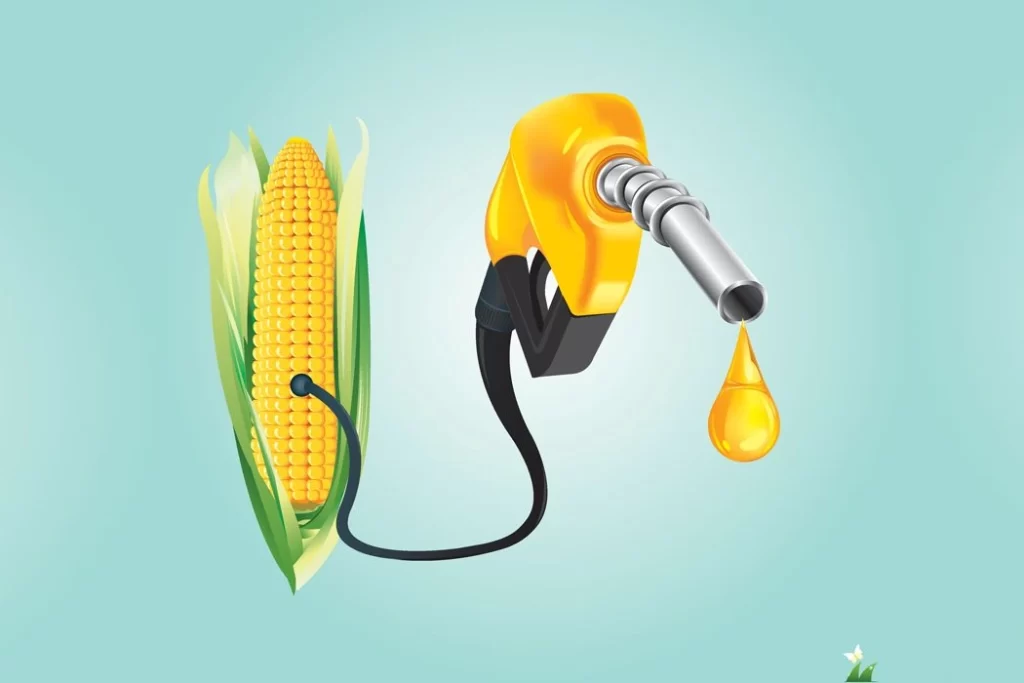
India’s cleaner energy effort just reached a big milestone. According to official agricultural data, ethanol output from maize has surpassed 182 crore litres, officially dethroning sugar derivatives as the country’s principal biofuel source. This is not just a change in numbers on a page, it is a game changer for farmers, distilleries and the fight to break our addiction to fossil fuels. As ethanol blending standards are hiked to 20% by 2025, maize is stepping up at the appropriate time, delivering cheaper gasoline, solid rural incomes and a greener tomorrow. But what does this mean for the crops of Punjab or the refineries of Gujarat?
The Big Switch: From Sugarcane to Maize for Ethanol Production
India’s ethanol game has long been ruled by sugarcane. The blending operation, powered by molasses and cane juice, helped the country to blend ethanol into petrol and reduce oil imports. But recently maize has crept in. Latest data from the National Policy on Biofuels saw maize ethanol production cross the all important 182 crore litre level (about 1.82 billion litres) taking total ethanol supply to new highs.
What the hell? Sugarcane’s water woes, price fluctuations. For instance, for farmers in Maharashtra and Uttar Pradesh, monsoons are typically irregular and therefore cane is not guaranteed. “Maize on the other hand does well in different soils in Bihar, Karnataka and even Rajasthan. It’s less thirsty, matures faster — about 100 days vs cane’s 12 months — and provides more ethanol per tonne. A tonne of maize can yield about 400 litres of ethanol, much more than the 300-odd litres from cane.
This is not hype, it is data based. Government incentives such as interest subventions and set procurement prices have led to a more than 300% surge in maize-based ethanol production in the last two years. Distilleries quickly pivoted to grain-based spirits and more than 50 new distilleries have opened since 2022. The upshot? India achieved 15% ethanol blending last year ahead of schedule saving billions of dollars in foreign cash.
Why Maize is the Right Choice for India’s Ethanol Dreams
Think of India’s power crunch. The country consumes more than 200 million tonnes of crude oil each year, of which 85% is imported. Ethanol blending halves that bill while reducing emissions – every 1% mix saves roughly 40,000 crore rupees every year. Maize is a good choice because it is plentiful. India’s maize production is 35 million tonnes a year, mainly for livestock feed. A mere 10% cut in ethanol use eases supplies without starving livestock.
Government policies set things in motion. The National Policy on Biofuels, 2022 allowed use of maize as a designated feedstock and the procurement price for the 2023-24 season was fixed at Rs 66.52 per litre. For farmers battling drought in Madhya Pradesh or floods in Andhra Pradesh, it is a lifeline. There is also potential for dual use: after distillation, maize stalks can be used as biogas or animal feed.
Here’s a short glance at the production edge:
Yield boost: Corn yields 10-15% more ethanol than broken molasses.
Cost savings: Grain ethanol costs Rs 55-60 a litre, against Rs 65 for cane-based.
Scalability: Last kharif surplus maize reserves were 5 million tonnes.
What if the extra kernels were all fuel? Can this finally make E20 mixing a reality next year?
Farmer Gains: New Cash Crop Emerges in Rural India
In the communities near Indore or Hyderabad, corn is no longer feed. It is money. Farmers like Rajesh Patel of Vidisha, Madhya Pradesh, shifted from soy to hybrid maize types after ethanol contracts. “We used to sell at Rs 18 per kg to the vendors. Now, distilleries pay Rs 22-25 guaranteed,” he says, echoing stories from thousands.
Agriculture ministry stats show area under maize grew 8% to 10 million ha last year. Hybrid seeds from businesses like Syngenta promise 8-10 tonnes a hectare, double the typical yields. For instance, Bihar gives incentives – Rs 5,000 per acre for maize farming – under the PM-KUSUM initiative for solar irrigation.
But there are some bumps in the road. Smallholders are concerned about seed costs and pest assaults such as autumn army worm. Integrated pest management, crop insurance under PMFBY with 80% premium covered, are advocated by experts. But the returns are attractive: a hectare of maize can fetch Rs 1.5 lakh after selling the ethanol, bettering wheat or rice in many places.
This rural wave permeates to women self-help groups. In Uttar Pradesh, they manage tiny distilleries, producing 500 gallons a day, earning regular income. It is a quiet revolution, moving ethanol from metropolitan policy to village life.
Challenges: Water, Waste, and Market Obstacles
No narrative is flawless. Maize gulps water – around 500 mm every crop – and this has led to discussions in water-stressed places like Tamil Nadu. Its critics say it takes food grains from plates to pumps. But drip irrigation and short-duration varieties lower consumption by 30%. And the final use of ethanol as fuel is better than direct consumption.
And waste management bites, too. Untreated distillery effluent/spent wash is a pollutant. New plants use zero-liquid discharge tech mandatorily, recycling 95% of water. Upgrades are being funded by the Centre’s Rs 3,500 crore grain ethanol project.
India eyes exports abroad. Brazil and US as corn ethanol leaders. Indian maize can access ASEAN markets through FTAs. But US tariffs and freight costs are a big factor. Price fluctuation in the country: Last Diwali maize hit Rs 30/kg on export curbs
Fixes and snags:
Water strain: Start trials for drought-resistant GM maize (pending approval).
Pollution: Make biogas plants compulsory from distillers’ dried grains.
Price fluctuations: Buffer stocks through NAFED to sustain farmers’ income.
These are not optional fixes, these are required fixes for sustained scaling.
Booming Industry: More Distilleries and Jobs
Factories fuel ethanol’s rise. Now, more than 300 grain-based units are in operation, from Praj Industries’ mega-plants in Manesar to small units in Punjab. Investment Flows Rs 20,000 crore raised for 2024-25 expansions According to industry estimates, processing, logistics and R&D will create 5 lakh direct jobs.
Uttam Nagar Distillery in Haryana: processes 5 lakh gallons everyday from local corn; uses Danish tech for efficiency. Such hubs are clustered around corn belts reducing transport costs by 20%.
Innovation is brewing too. 2nd-gen maize cob ethanol – cellulosic technology – quadruple production, no grain loss. Indian Oil’s Panipat pilot did 10 million litres last year looking at commercial size.
India’s Green Energy Perspective
This maize increase fits into greater aims. The National Biofuel Policy targets 5% blending from grains by 2030 and achieving net-zero by 2070. It comes with G20 green promises, where India promoted ethanol diplomacy.
It’s clever, in the broadest sense. The US subsidises 15 billion gallons of maize ethanol, India’s paradigm is food security – only surplus goes to fuel. Maize ethanol has 60% lower CO2 emissions than European rapeseed biodiesel.
India-specific wins: stubble burning reduction in Punjab, maize residue powering ethanol plants CPCB data: Delhi air quality improves modestly with higher blends
The Road Ahead Opportunities and Watchpoints
Ethanol feedstock maize: shift from sugar’s throne to grain’s promise Production has crossed 182 crore litres, farmers have become prosperous and companies have blossomed. Water use remains a challenge but good policies, from subsidies to tech, are opening the way.
Can India keep this momentum going ahead to achieve 20% blending? Yes the monsoon projections are decent and the new hybrids are coming out. Next season maize area is expected to increase 15% and ethanol production from grains alone will touch 1,000 crore litres. It’s not only biofuel. It’s a road map to energy independence, rural revitalization and climate solutions.
The true test? Balancing plates & gas pumps & pumps. And if India gets that right, maize might reinvent its fields, for ever.
Maize Emerges as India’s Leading Ethanol Feedstock Transforming the Biofuel Sector