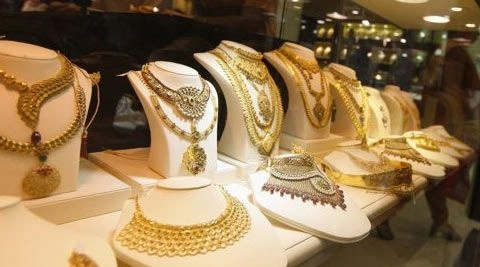
A crushing blow was given to India’s glittering jewellery industry this morning. Shares of significant corporations like Kalyan Jewellers and Titan Company fell by as much as 6 per cent soon after the government imposed a surprise tariff. Gold prices, which have been volatile, soared on concerns of higher import duties and tougher bullion trade procedures. For screen-hugging investors, it was a stinging reminder of how one policy tweak can transform a seasonal favorite into a financial headache overnight.
This is not just a matter of numbers on a stock ticker. Jewellery in India is not just glitter, it is part of weddings, festivals and family savings. Diwali is still months away, and wedding season looms. The timing feels particularly terrible. What was it that made this tariff news so panic-producing? Can these retail giants bounce back? Let’s get into the insanity.
The Tariff Bombshell: What Actually Happened?
The announcement early Wednesday took traders by surprise. Officials boosted levies on some gold imports and loosened rules on bullion refining – moves aimed at curbing smuggling and boosting domestic value addition. The stock of Kalyan Jewellers sank 5.8% to around ₹450 while Titan, the undisputed king with Tanishq brand, fell over 6% before recovering at ₹3,400 levels. Other businesses such as PC Jeweller and even smaller bullion traders witnessed steeper losses, some surpassing 8%.
The fine print More local refining capacity and greater taxes on dore bars (unrefined gold), traders say. India’s gold imports hit record highs last year fuelling billion-dollar smuggling racket But at what cost to retailers? The government wants to block that leak. “It’s a double whammy,” says a Mumbai-based jeweller who asked not to be named. “Gold prices up, margins down, consumers gone.”
For context, gold was trading at ₹75,000 per 10 grams today, up 2% intraday. That’s terrible in a business where 90% of sales are price sensitive. Some of the demand is from rural purchasers who may only be postponing that mangalsutra purchase.
Why Jewelry Stocks Were Already Nervous
This did not occur in a vacuum. The jewellery sector in India, at more than $80 billion, has been a rollercoaster. Post-pandemic weddings — 10 million marriages last year alone – caused demand to surge, pushing sales up 20%. Titan had a fantastic Q4 with 25% sales growth, Kalyan not far behind at 35%. But storm clouds were brewing.
Inflation was biting deep. Costs of labour and metal surged and made charges which can be 10-15% of a piece’s price. Then global headwinds: US Fed rate hikes increased the dollar, making gold costlier in rupees. Add rupee devaluation and you have the perfect storm.
And there was competitive pressure too. Organised retail like Titan and Kalyan won 40 per cent market share from unorganised kirana-style shops but are now under pressure. E-commerce players such as BlueStone and CaratLane have taken the high street by storm with discounts that established players can’t match.
Looking at the recent performance of the big players:
Titan: Market cap ~₹3 lakh crore; 2,500+ outlets lead
Kalyan: Aggressive expansion to 500 outlets, big play in South India.
Both reported YOY profit jumps of 30-40% in FY25, although debt levels rose for store rollouts.
Investors adored the growth story – until now. Now the question is: will tariffs destroy those hard-won gains?
Ripple Effects Through the Gold Ecosystem
The suffering isn’t only in stocks. In Zaveri Bazaar, Mumbai’s gold market, bullion traders shouted frantically on the phone. Refineries pay more for imported raw material and can pass those costs on to producers. The craftsmen? Retail slowdown might dry up orders for small workshops that provide lakhs of jobs
It’s also globally related. India uses 800 tons of gold every year – or 25% of global demand. Increased taxes might shift supply to Dubai or Thailand, where smuggling routes are well-established. Don’t forget the 2023 Turkey gold crisis? Similar policy changes there temporarily plummeted local prices.
The wedding industry in India is freaking out, and it’s true. Bridal jewellery makes up 50% of sales. If gold stays expensive, couples might go for lighter designs or lab-grown diamonds, a trend Titan is already pushing with its Mia brand. So what does this entail for your typical purchaser? A 22-carat necklace that cost Rs 5 lakh last month may now fetch Rs 5.5 lakh. Oof.
Rural India feels it the most. Government schemes like PM-KISAN helped boost disposable income, but tariffs could put a damper on that Christmas spree. Economists believe that a 1% spike in gold price cuts discretionary spending by 0.2% in Tier-2 cities.
Company Highlights Titan Kalyan Beneath the Microscope
Titan has known its share of turbulence. It was part of the Tata Group and rode the luxury wave with watches and eyeglasses to diversify revenue. Jewellery still accounts for 80% of profits nevertheless. CEO CK Venkataraman has made a significant bet on premiumisation — consider diamond-heavy collections that command 20% higher profits. But today’s fall shaved out ₹18,000 crore from its market worth in hours. Will it sustain the 1,000-crore daily sales velocity?
Kalyan Jewellers, based in Kerala, went national with IPO proceeds in 2021. Promoter TS Kalyanaraman targets 20% CAGR with tier-2 expansion. South India’s gold fever pays off — Thrissur alone is a match with global hubs But with 6% stock fall wiping off ₹4,000 crore, analyst downgrade calls loom. Both companies have inventory, so if demand falters, a rise in gold prices could spell write downs.
Smaller counterparts like Thangamayil and Tribhovandas Bhimji Zaveri were down harder at 7-9%. They have larger exposure to unhedged gold.
Wider Market Jitters and Investor Sentiment
Sensex barely blinked, up 0.2%, but midcaps wobbled. Jewellery index falls 4.5%. Amid election excitement, FIIs were net sellers this month piling on pressure. Domestic funds are stable nonetheless, mutual funds have 15% of Titan.
#GoldTariffHike trending on social media. Retail investors ranted, “I bought Kalyan for ₹500, now I regret!” If duties stick, $-hedge funds might short more.
What if this is the springboard for a sector rotation? Defence and infra stocks rose 1-2% as safe bets. Irony: Investors are running away from physical retail, Gold ETF inflows.
The Government View: Is Protectionism Smart Policy?
Theoretically, New Delhi’s rationale is sound. Smuggling causes duty loss of Rs 50,000 crore annually. Mandatory hallmarking reduces fraud but enforcement lags. Tariffs help in developing the MMTC-PAMP refineries and generating jobs in value-added areas like gold recycling.
Critics say it’s a knee-jerk. Gems export incentives may cushion, but retail loses out. Finance Ministry sources hint at reassessment in case of inflation surges. Jewellery employs 5 million directly and with GDP growth at 7%, policymakers are walking on eggshells.
World parallels? China’s 2016 import restrictions stabilized prices, but damaged small dealers. India might do the same.
Jewellery stocks fall as much as 6% after government’s tariff shock. What’s next for India’s retail giants of gold?