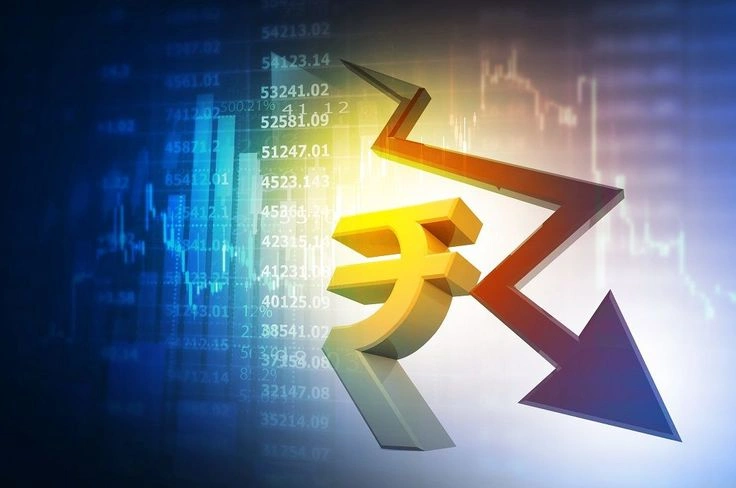
The Indian rupee has just taken a savage beating, sliding to a record low of 95.63 to the US dollar. This is no tiny blip. This is the weakest the rupee has been, ever, and it’s been triggered by the mounting geopolitical storms in West Asia that are shaking up global oil markets and India’s balance of payments. Crude prices are soaring, investor anxieties are fraying – and regular Indians are feeling the pain of expensive petrol, imported commodities and uncertain financial markets. With tensions in the Middle East simmering, what does this mean for your wallet and the economy at large?
The Dramatic Fall: What Happened and Why Now?
Consider this. Wednesday morning, early trade, tension is in the air and the rupee crashes straight past 95 to 95.63 to the dollar. That’s not just a number—it’s a record, breaking the previous lows from the tumultuous parts of 2024. The Reserve Bank of India (RBI) came in with dollar sales to arrest the freefall but even their big guns were not able to completely stop the slide. Why? It is, simply and plainly, the powder keg of West Asia.
Oil prices have surged beyond $90 a barrel, driven by ongoing hostilities like flare-ups between Israel and Iran-backed forces and Houthi disturbances in the Red Sea. India, which consumes over 5 million barrels a day (85% imported), is ultra-sensitive to this. Every dollar increase in crude price adds billions to import bill and increases current account imbalance. Then you have the capital outflows, as foreign investors are pulling back from emerging nations amid global risk aversion. A perfect storm.
It’s not all at once. The rupee has been depreciating gradually since late 2025 and is down almost 8% YTD versus the dollar. But this 95.63? Brent crude soared 5% in days in fresh escalations last week. That’s the tipping point. Volumes surged on Dalal Street amid whispers of a “rupee crash” and “USDINR 96 incoming”.
Roots of the Crisis: Geopolitical and Oil Dependence
West Asia is not just a headline but the economic Achilles heel of India. The region contributes around 60% of our crude needs, from Saudi Arabia to Iraq and the UAE. Tanker reroutes, costs surge and supply chains snag as drones buzz shipping lanes or proxy battles ramp up Remember the Russia-Ukraine mess of 2022? Then, oil was $120. Now, the tensions are a repeat, but the shadow of Iran is darker.
The true casualty here is the Indian balance of payments. The current account deficit swelled to 2.5% of GDP last quarter, fueled by record gold imports (Indians love their bling) and a tourism bounce that’s wonderful for FX but not enough to balance oil. ? Capital account FIIs (foreign institutional investors) withdrew $15 billion in 2025 alone, scared by high US interest rates and now this disaster in the Middle East.
Key factors at play:
Oil Shock: India’s oil bill to cross $200 billion at $92/barrel; 20% jump over last year
FII Exodus: Rs 2,000 crore departed Indian equities in just 1 month, ran to safer US Treasuries
Trade Imbalance: Export growth was tepid at 7%, with import growth roaring to 12% on electronics and energy.
The RBI Governor has a lot on his plate: Shaktikanta Das Since January they have spent $30 billion in currency reserves defending the rupee, leaving reserves at a still-healthy $650 billion, but for how long? One analyst joked it was like putting your fingers in the holes of a sinking ship.
Ripple Effects: Petrol Pumps To Your Grocery Bill
This rupee drop is not an abstract thing. It is biting severely. Petrol prices in Mumbai and Delhi have seen a 10% increase with petrol prices topping ₹110/litre at places. Soaring aviation fuel prices are forcing airlines like Indigo to make losses and hike air fares at the peak of the summer travel season. And what about inflation? Middle class is being squeezed as core CPI is edging up towards 6%, RBI’s discomfort zone.
Corporate India is feeling it too. For IT giants like TCS and Infosys, which earn in dollars, it may not matter much, but oil-refiners (Reliance) and auto makers (Tata Motors) are sweating on import expenses. Yesterday, the Nifty 50 dropped 2% led by banking equities as loan growth decelerates on increasing funding costs.
Imported commodities like edible oils and legumes have become costlier for households. A family in Pune may be spending ₹2,000-3,000 more a month. Want to know how a distant war might raise your shopping bill? That is globalization in action, untidy and merciless.
It’s a global warning about emerging market risks. Turkey’s lira and South Africa’s rand are also tumbling, but India’s size makes it a bellwether. China is slowing down, can Delhi steady the ship? Eyes on the prize.
Quick Snapshot: The Rupee’s Roller Coaster
All-Time Low: 95.63 (May 13, 2026)
YTD Decline: 8.2%
Forex Reserves: $650B (down 5% from peak)
Oil Import Cost: $25B increase expected for FY26
What the government and RBI did: Damage control in action
Delhi is not stagnant. Finance Minister Nirmala Sitharaman hinted at “calibrated interventions” in Parliament, while Petroleum Minister Hardeep Puri advocated for greater Russian crude buys—a deal at reduced costs, but geopolitics limits that. Last month, the government reduced import charges on gold to prevent smuggling, freeing nearly $5 billion in cash.
RBI’s arsenal? The stage is set for rate hikes – the repo rate is at 6.5%, but another 25bps contribution can rein in inflation without killing growth (projected at 6.8% for FY26). They have also opened swap lines with the Fed and the ECB to get dollar liquidity. Das’s post-policy meets frequently calm markets. Forward direction is crucial.
Critics say more’s needed. Why not accelerate rupee internationalization via UPI global push or more local currency trade deals? India has inked rupee trade deals with over 20 countries but oil firms want dollars. Subsidies on LPG and fertilizers are ballooning the fiscal deficit to 5.8%—unsustainable long-term.
Long-Term Fixes: Breaking the Oil Curse?
India’s eyeing diversification. India’s Green Energy Push: PLI schemes to help India reach 500GW renewable energy by 2030, cut oil dependency India saved $4 billion by ethanol blending at 15% last year. Electric Vehicles? Tata and Ola are ramping up. EV sales have doubled to 2 million units.
Strategic reserves at Manali and Padur hold 5.3 million tonnes—enough for 10 days. Pipeline diplomacy with UAE and Saudi helps, but West Asia’s volatility demands backups. What if India stockpiled more, or fast-tracked nuclear power? These aren’t quick fixes, but they’re on the table.
Economists like Arvind Subramanian argue for forex reforms: let the rupee float freer, build deeper bond markets to lure sticky capital. With $1.7 trillion external debt, caution rules, though.
Voices from the Ground: Traders, Families, and Experts Weigh In
Mumbai’s forex desks buzzed with panic sells. “95 was the line in the sand; 96 feels inevitable if oil doesn’t cool,” said a veteran trader at HDFC Securities. In Delhi’s auto markets, showroom footfall dropped 20% as buyers delay amid uncertainty.
Housewives in Bengaluru markets grumbled over dal prices up 15%. “Rupee weak, everything costs more—how do we manage?” one asked. Students eyeing US degrees? Forget it; fees just leaped 10% in rupee terms.
Experts offer balance. “Geopolitics is transient; India’s fundamentals—7% growth, stable politics—shine through,” notes ICRA’s Aditi Nayar. But others warn: prolonged conflict could push rupee to 100 by Diwali.
Looking Ahead: Storm Clouds or Silver Lining?
The rupee at 95.63 underscores India’s tightrope walk—growth powerhouse meets import addict. West Asia must de-escalate for oil to stabilize; absent that, expect more pain. RBI’s got ammo, but fiscal discipline and export hustles are crucial.
Bright spots? Remittances hit $120 billion last year, a forex boon. IT exports and pharma remain dollar earners. If global rates ease (Fed cuts eyed in June), FIIs could return.
Ultimately, this tests resilience. Can India pivot faster to self-reliance? The next few weeks will tell. For now, brace for volatility—but history shows we bounce back.
Rupee plummets to record low of 95.63 versus USD West Asia tensions push India’s economy to the brink