
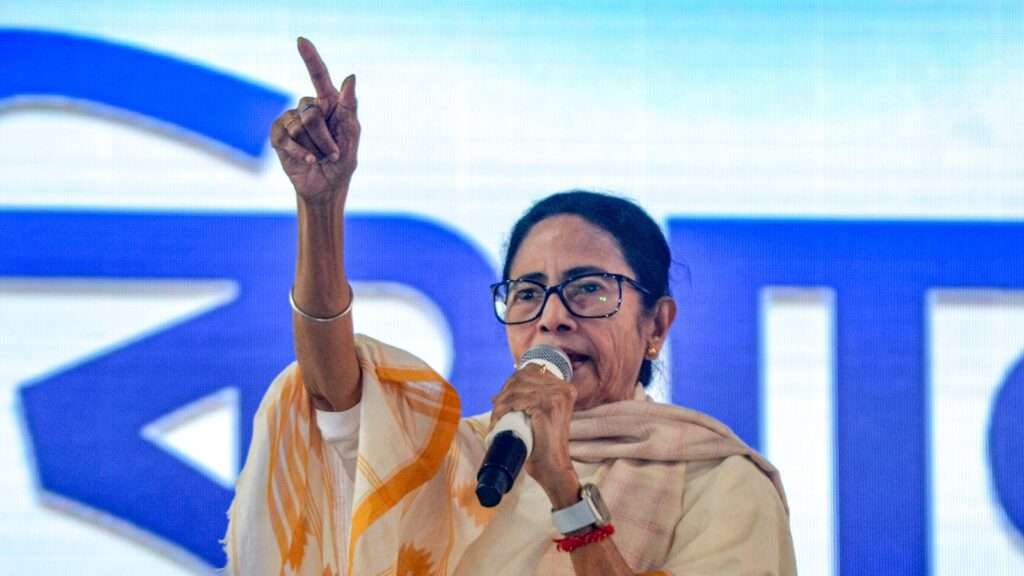
West Bengal Chief Minister Mamata Banerjee has issued resolute warnings that she will lead protests if even a single eligible voter’s name is unjustly removed from the electoral rolls during the Special Intensive Revision (SIR) process — a sweeping undertaking by the Election Commission of India (ECI) currently embroiling state political discourse.
The controversy intensified as data revealed that over 58 lakh entries could be deleted following the SIR enumeration phase, reflecting a fraught environment ahead of the 2026 West Bengal Legislative Assembly elections.
What Is the SIR and Why It Matters
The Special Intensive Revision is a constitutional exercise mandated to update and clean up electoral rolls by verifying registered voters’ details, eliminating duplicate, deceased, or untraceable names. The process has been rolled out across multiple states, including West Bengal, ahead of several key electoral events next year.
Election officials report that:
- Tens of lakhs of names, including deceased, duplicate, and missing individuals, have surfaced during the review phase.
- Draft roll publication — initially scheduled earlier — has now been pushed to 14 February 2026 to allow enhanced verification and polling station rationalisation.
In combination with ongoing election preparations, this revision cycle has attracted fierce political scrutiny, raising stakes among citizens, parties, and the judiciary.
Mamata Banerjee’s Stark Opposition
Addressing party workers and voters in Krishnanagar, Mamata Banerjee, leader of the Trinamool Congress (TMC), launched a blistering critique of the SIR exercise, accusing the Bharatiya Janata Party (BJP) and elements within the election administration of attempting to manipulate voter rolls for political gain.
Banerjee’s key assertions include:
- A vow to stage dharnas (sit‑in protests) if a single eligible voter’s name is removed.
- Claims that central influence has pressured district officials to purge voter entries that may affect electoral outcomes.
- Denunciations of alleged plans to turn the SIR into a proxy for a National Register of Citizens (NRC)‑style citizenship crackdown — an idea fiercely rejected by her administration.
Banerjee has also characterised Home Minister Amit Shah’s rhetoric regarding infiltration and citizenship as “dangerous,” asserting West Bengal will not permit detention camps or disenfranchisement tactics.
Her statements reflect broader anxieties about electoral rights and federal authority, resonating with TMC’s core advocacy for voter security and democratic integrity.
Political Backdrop and Rising Tensions
The SIR initiative in West Bengal follows similar revisions in states such as Bihar, where substantial voter deletions drew both praise for electoral accuracy and criticism for potential exclusion. West Bengal’s political landscape is sharply divided over whether the SIR represents necessary administrative housekeeping or a strategic political intervention.
Amid escalating rhetoric:
- The Supreme Court of India has expressed concern over non‑cooperation and obstruction faced by field personnel implementing SIR, hinting it may intervene if disruptions continue.
- TMC leaders have warned of legal action and mass mobilisation to defend voters’ rights.
Political analysts suggest that with elections looming, the voter list revision has become a flashpoint between the state’s ruling party and central authorities, each seeking advantage or protection of their constituencies.
What Comes Next
With the final draft voter list now slated for 14 February 2026, authorities will conduct public verification to allow corrections, additions, or deletions. Mamata Banerjee has urged citizens to actively monitor the process and report any wrongful removals, signalling that political mobilisation will remain high as West Bengal moves closer to its next assembly elections.
The unfolding SIR controversy underscores the delicate balance between electoral integrity, administrative oversight, and political contention — setting the stage for heightened scrutiny, citizen engagement, and a potentially turbulent pre-election environment in India’s eastern heartland.

