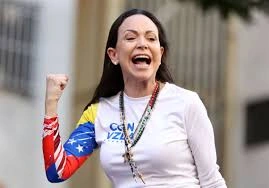
In a dramatic turn at the 2025 Nobel Peace Prize ceremony in Oslo, the laureate, María Corina Machado, was unable to collect her award in person. The decision highlights the deepening political crisis in her home country, Venezuela, where travel restrictions, threats of arrest, and ongoing persecution of dissidents have forced Machado into hiding. Her absence on the world stage has transformed the prestigious accolade into a stark symbol of repression, resilience, and unresolved conflict.
A Prize Behind Bars: Why Machado Could Not Attend
The Norwegian Nobel Institute confirmed that Machado was not in Oslo when the ceremony began. The Venezuelan government, under Nicolás Maduro, has imposed a decade-long travel ban on Machado. She has been in hiding since August 2024 and was last seen publicly during a protest in January 2025 after a brief detention. The Nobel Institute noted that Machado had made every effort to attend, but her journey “in a situation of extreme danger” could not bring her to Oslo.
As a result, Machado’s daughter, Ana Corina Sosa, accepted the Nobel Peace Prize on her behalf.
| Date | Event | Significance |
|---|---|---|
| Jan 9, 2025 | Last public appearance of Machado — protest in Caracas | Highlighted rising repression after contested election |
| Aug 2024 onward | Went into hiding as travel ban imposed | Increased risk of arrest and persecution |
| Dec 10, 2025 | Nobel Ceremony in Oslo — Machado absent; daughter accepts award | Symbolic victory amid ongoing threats to Venezuelan opposition |
The Significance of the Prize and Its Unusual Absence
The Nobel Committee awarded Machado the Peace Prize for her tireless work promoting democratic rights for the people of Venezuela and for her struggle to achieve a just and peaceful transition from dictatorship to democracy.
Her win — and forced absence — sends a powerful message:
- A spotlight on repression: The fact that a laureate cannot safely collect her prize underscores the extent of authoritarian pressure on dissidents in Venezuela.
- International solidarity and scrutiny: The global attention the Nobel Prize brings may galvanize human rights groups, foreign governments, and international institutions to press for accountability.
- Moral victory for democracy advocates: Despite exile, silence, or threats, Machado’s symbolic win may inspire renewed resistance and hope among Venezuelans and pro-democracy activists worldwide.
Several previous laureates have missed their ceremonies due to imprisonment, but Machado’s case is more complex: legal threats, travel restrictions, and personal safety concerns all prevented her attendance.
Broader Implications: What This Means for Venezuela and Global Democracy
Machado’s absence highlights ongoing uncertainties about Venezuela’s political future under Nicolás Maduro. The travel ban and legal threats, framed by the government as charges of conspiracy or terrorism, reveal how authoritarian regimes use the legal system to suppress opposition voices.
At the same time, the Nobel Peace Prize elevates international visibility of Venezuela’s plight. With her daughter accepting the award, Machado’s struggle is kept alive on a global platform, potentially inviting increased diplomatic pressure, sanctions, or other interventions in favor of democratic rights.
It also raises critical questions for democratic institutions worldwide: what does it mean when a Nobel laureate cannot physically claim her prize, and what precedent does it set for future laureates from authoritarian countries?