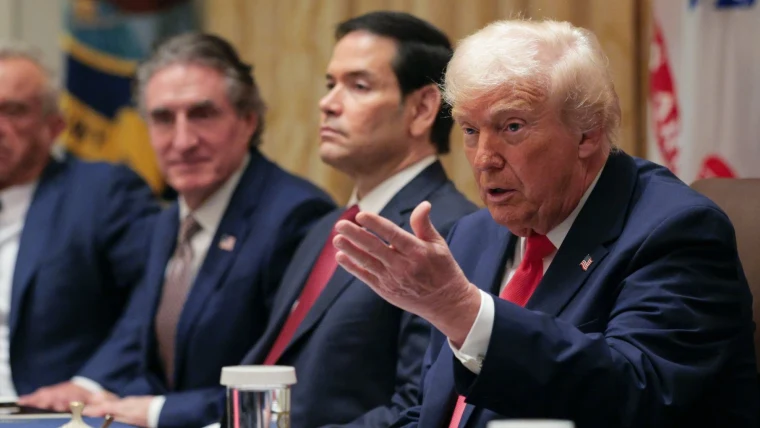
In a forceful escalation of his anti‑immigrant rhetoric, Donald Trump has renewed his public assault on Ilhan Omar and Somalia‑origin immigrants — describing them as “garbage,” calling for their removal, and intensifying calls for heightened immigration enforcement. The remarks, delivered during a recent Cabinet meeting and echoed at a campaign rally, have provoked widespread condemnation and raised alarm about rising xenophobia and political polarization in the United States.
A Tirade That Crossed New Lines
At the heart of Trump’s remarks was a blunt denouncement of Somali immigrants and Omar, who fled war‑torn Somalia as a child and later became the first Somali‑American elected to Congress. Trump labeled Somali immigrants as individuals who “contribute nothing” and explicitly called Omar “garbage.” He further demanded that she and unspecified immigrants be “thrown out” of the country — a statement that many interpreted as harking back to the infamous “go back” chants heard during past election cycles.
Immediate Fallout: Fear, Anger, and Demands for Accountability
The response was swift. Ilhan Omar condemned the remarks, calling Trump’s “obsession” with her and the Somali community “creepy” and a blatant attempt to scapegoat minorities. Civil‑rights organizations, immigrant advocates, and a coalition of Democratic lawmakers likewise denounced the language as xenophobic, dehumanizing, and unfit for a leader.
Communities in Minnesota — home to the largest Somali‑American population in the country — reported a surge in fear and unease. In one flashpoint, federal agents used pepper spray on protesters in a Somali neighborhood in Minneapolis during an immigration enforcement operation.
| Group | Response / Action |
|---|---|
| Somali‑American Community | Fear, anger, widespread criticism of Trump’s remarks, growing sense of vulnerability |
| Democratic Lawmakers & Rights Groups | Called comments “xenophobic,” demanded condemnation and accountability |
| Ilhan Omar | Rebuked the remarks as “unhealthy obsession,” affirmed commitment to stand firm |
Broader Political Context and Possible Motivations
Observers suggest the tirade may be part of a broader strategy by Trump to galvanize his political base ahead of the 2026 midterm elections, leveraging fear over immigration and national security to shift attention from economic challenges and political setbacks. Others warn that the language echoes historical patterns of dehumanization, which have previously paved the way for discriminatory policies and social hostility.
Critics argue that such rhetoric can legitimize increased federal crackdowns on immigrant communities, embolden hate speech, and exacerbate divisions along ethnic and religious lines. The lack of immediate condemnation from many of Trump’s allies underscores concerns about the normalization of xenophobic discourse.
The Path Forward: Polarization or Reckoning?
As outrage mounts, the implications of Trump’s remarks could reverberate far beyond immediate headlines. For the Somali‑American community and other immigrant groups, a sustained wave of fear, uncertainty, and potential targeting looms large. For the nation at large, the events raise urgent questions about the boundaries of political speech, the responsibilities of public leaders, and the resilience of democratic norms in the face of polarizing rhetoric.
Going forward, the pressure will mount on both lawmakers and society to respond — either by rejecting xenophobic divisiveness or by enabling a political environment that tolerates dehumanization of vulnerable communities. For now, many remain watching closely to see whether this moment becomes a turning point or another chapter in a troubling escalation.