There’s something quietly significant about the image — Prime Minister Narendra Modi’s aircraft touching down in Abu Dhabi, flanked by UAE fighter jets in a ceremonial escort. It wasn’t just a diplomatic formality. It was a statement. And India seems to be making a lot of those lately.
Modi’s latest five-nation diplomatic tour, which kicked off with a high-profile visit to the United Arab Emirates, signals that India is done playing a supporting role in global affairs. This is a country now actively shaping its own strategic destiny — and the world is paying attention.
Why the UAE, and Why Now?
The UAE has long been one of India’s most reliable partners in West Asia. With over 3.5 million Indians living and working there, the human connection alone is enormous. But this visit goes well beyond the diaspora. The focus this time is sharply economic — trade expansion, energy cooperation, and infrastructure investment sit at the top of the agenda.
India’s energy import bill has been a pressure point for years. In a world of volatile global oil markets, building deeper ties with major Gulf producers like the UAE isn’t just good diplomacy but an economic imperative. India’s aggressive push to achieve its clean energy transition goals can help build a more stable base with long-term energy supply arrangements and cooperation on renewables.
On the trade front, the two countries are already using the Comprehensive Economic Partnership Agreement (CEPA) signed in 2022. That deal was a milestone, but what comes next matters even more — implementation, investment flows, and expanding sectoral cooperation into technology, fintech, and healthcare.
More Than Just Business
It would be a mistake to reduce this visit to a trade mission. India-UAE relations have steadily evolved into a genuine strategic partnership. Defense cooperation, intelligence sharing, and counter-terrorism coordination have all deepened over the past decade. The fighter-jet escort wasn’t just pomp — it was a visual shorthand for how far this bilateral relationship has come.
There’s also a geopolitical dimension worth noting. Modi’s visit comes at a time when the overall West Asian landscape is changing, with the Abraham Accords redefining regional alignments and India continuing its balancing act between different power blocs. India’s proactive engagement with the Gulf nations affirms that New Delhi wants to stay a constructive, trusted presence in a strategically vital region.
The Bigger Picture: Five Nations, One Message
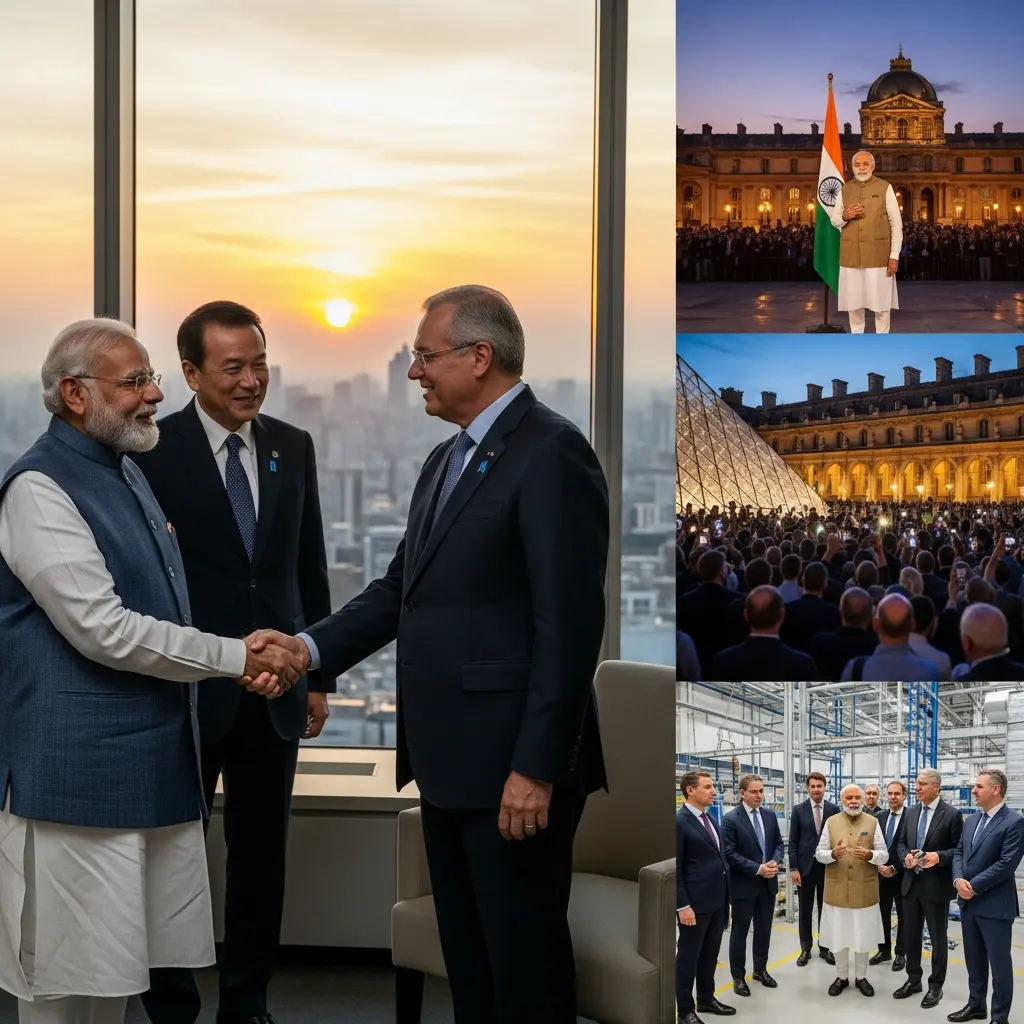
The UAE stop is just the beginning of the tour across five nations. The broader five-nation tour is designed to reinforce India’s foreign policy priorities across multiple theaters simultaneously — a clear signal of India’s intention to punch above its diplomatic weight class.
Each leg of the tour has its own objectives but collectively they add up to a unifying vision: India is an economy worth partnering with, a market worth entering and a nation worth having on your side. Be it infrastructure financing, digital trade corridors or bilateral investment treaties, Modi’s government has been methodical in converting diplomatic warmth into tangible economic deliverables.
This is the approach – high frequency, high visibility diplomatic engagement – that has become something of a signature for India’s foreign policy under Modi. The sheer pace of bilateral meetings, agreements signed, partnerships announced can sometimes feel overwhelming, but the logic is consistent: build relationships now, so India has partners when it needs them most.
What India Needs From This Tour
Domestically, India is navigating a complex moment. Growth remains strong relative to global peers, but inflationary pressures, a widening current account, and a need for foreign direct investment mean that the outcomes of tours like this genuinely matter beyond the photo opportunities.
Landing concrete investment commitments — in manufacturing corridors, semiconductor supply chains, or green energy infrastructure — would be a real win. So would meaningful progress on using local currencies for bilateral trade, a goal India has been pushing with several partners as part of a broader effort to reduce dollar dependency in its trade relationships.
And then there’s the soft power dimension. Each successful visit reinforces the narrative that India is a rising, responsible power – stable enough to do business with, principled enough to trust, ambitious enough to be a long-term partner rather than a short-term opportunity.
Diplomacy in Motion What most observers notice about India’s current diplomatic tempo is a sense of momentum. There’s an energy and confidence to how India is engaging globally that feels different from even five years ago. The country isn’t waiting to be invited to the table anymore. It’s building its own tables.
Modi’s five-nation tour, starting with the UAE, is part of that larger story. Trade, energy, infrastructure, and strategic partnerships aren’t just agenda items — they’re the building blocks of the kind of India that the current government wants to project to the world.
Whether every promise translates into policy, every MoU into actual investment — that’s always the harder question. But as India’s foreign policy machine shifts into a higher gear, the direction of travel seems clear enough.
The world is watching. And right now, India seems quite comfortable with that.
Modi’s Five-Nation Tour: India Steps Up Its Global Game.