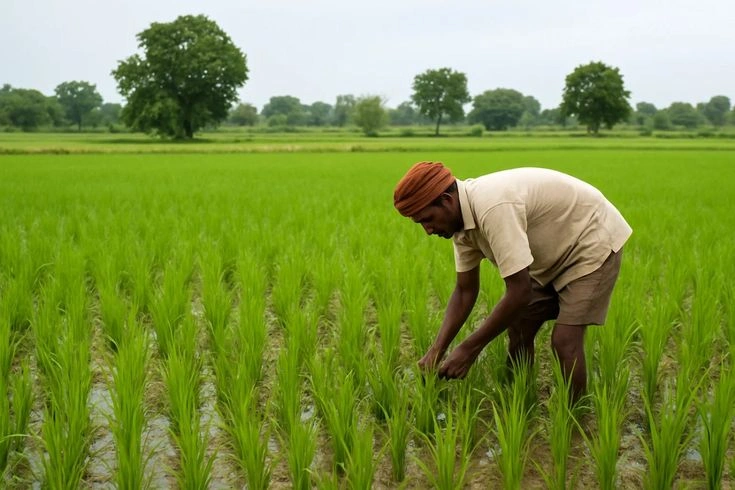
The air is thick with the typical, scorching pre-monsoon days of India, but this year the expectation is different. For millions of farmers, traders and ordinary households, the annual talk about the southwest monsoon has changed from optimistic preparation to careful computation. The India Meteorological Department (IMD) has come out with its long-range estimate for the 2026 season and hinted that the country could get below normal rainfall, pegged at roughly 92% of the Long Period Average (LPA). The monsoon is still a dynamic system and can throw up surprises for meteorologists, but this early outlook has certainly put a shadow of concern over the agricultural heartlands.
It’s a depressing fact to acknowledge, particularly as agriculture remains the backbone of the rural economy, impacting all the way from the price of a vegetable in the city market to the purchasing power of households in remote communities. When the rains don’t come it is rarely just a meteorological failure. It is the knock-on effect that reverberates over every corner of the nation. The monsoon runs from June through September, so it’s not only a question of how much water will rain from the sky, but exactly when and where it will fall.
The Mathematics of Rain
The IMD’s projection of 92% of the LPA is a statistical prediction at its core, based on complicated climate models that include global indications like as the transition of La Niña and possible fluctuations in ocean surface temperatures. To the average individual, “92% of the LPA” sounds like a modest dip — almost normal, after all. For Indian farmers who make a living through a delicate balancing act, an eight percentage point decline can be the difference between a bountiful crop and a struggle to keep crops alive.
To understand why this is important we need to think about how the rain falls:
Windows: Sowing must be done in good time. A delayed or uneven commencement of monsoon can lead farmers to miss the optimum sowing window and affect the final production directly.
Regional Differences: Rainfall is not consistent in a subcontinent as diverse as India. Though a few pockets may get adequate covering, the projection shows probable shortfalls in crucial agricultural districts of Northwest, Central and South India.
Reservoir Levels: These are safeguards for the agricultural sector. If rains are scanty during the important grain-filling months of August and September, the demand on groundwater and reservoir storage would mount sharply.
Are we perhaps entering an era in which our dependence on the seasonal cycle is increasingly vulnerable to shifting global climatic patterns? The data implies that we are at least entering a phase where the old predictable routines are being challenged.
Double-edged sword for rural India
rainfall is not the only topic of conversation this year. Analysts and market watchers have flagged a “dual threat” to the rural economy — the prospect of a below-normal monsoon and growing input costs. A range of global crises and supply chain interruptions have pushed up the cost of things like fertilizer, seeds and logistics.
When you add those increasing costs to a season in which the principal source of irrigation is predicted to be below average, it makes for a much more complicated position for the average farmer. Smallholders, many on slim margins, are squeezed. When the cost of growing a crop rises and the predicted yield of the harvest is unknown, the decision making process becomes considerably more conservative. Does the farmer switch to hardier and shorter duration cultivars which need less moisture or plant water intensive income crops?
Already, the strategy is beginning to change. In many rain-fed locations, one can see a shift to drought-resistant seeds and more conservative land use. These are the changes that must be made, but they carry with them their own trade-offs with respect to total output volumes. Rural demand, which is closely related to farm revenues, can often reflect these stresses. The ripple effect affects small stores, agricultural equipment manufacturers and even consumer goods companies that rely on the rural market to drive growth. When farmers have less money to spend, it takes a toll.
Negotiating the Unknown
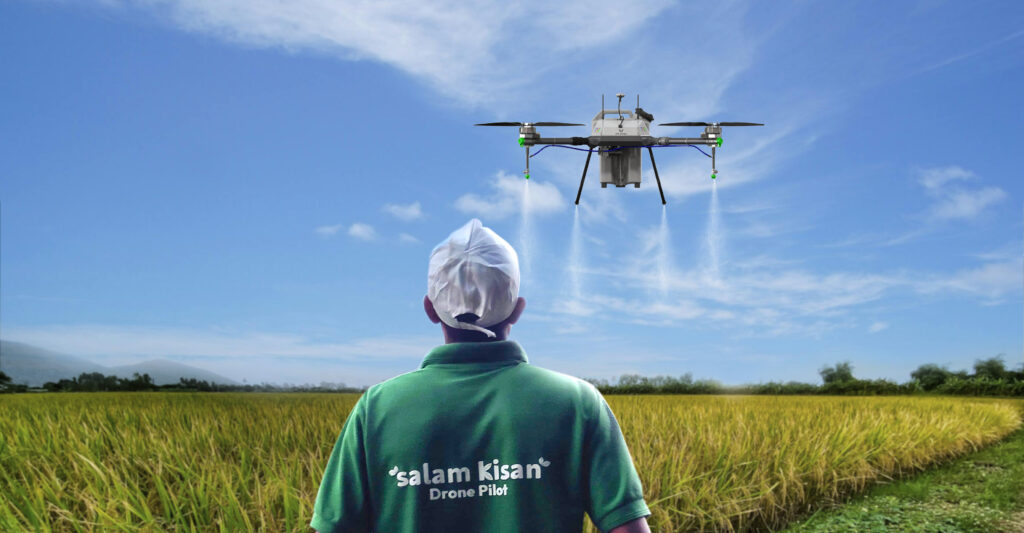
But if the attitude is careful, there is no room for despair. India’s agriculture sector has been very resilient in the past. It has been able to adjust to unpredictable weather patterns with a mix of ancient expertise and contemporary technology. Investments in precision irrigation, better water storage facilities and widespread use of crop insurance schemes have provided some level of protection from vagaries of the monsoon.
Looking ahead to the next few months, the emphasis will likely be on how these systems perform under pressure. Policymakers are already closely tracking food inflation indicators and keeping a tight watch on staple crops like paddy and pulses to guarantee stability in the supply chain. For the urban consumer, this can sometimes mean price instability in the markets—a reminder that the monsoon is indeed a national issue, not simply a rural one.
Then there is the question of regional variety. Some estimates point to somewhat better rainfall activity in regions of East and Northeast India, which will be an important counterweight to possible deficiencies in other parts. It is a reminder that in a country as big as this, the ‘average’ rainfall statistic is rarely enough to tell the complete story of what is happening on the ground in individual states and districts.
The Road Ahead
As the months of the monsoon approach, the country is waiting to see how the weather patterns will actually play out. The prediction now is, at most, a picture of probability, not surety. We have learned from experience that the weather is very difficult to predict with 100% accuracy, and the environment is not always as the models indicate.
Ultimately this year will be a test of our collective ability to manage resources and keep things stable in the face of uncertainty. It reminds us of our continuing relationship with the land and the sky, a relationship as strong today as decades ago. As we look ahead to the coming months the hope is that the monsoon will come with enough intensity to nurture the fields, keep the rural economy going and bring the relief that millions of people are looking for as they gaze up at the accumulating clouds. As always we are looking to the sky and preparing for what is to come, wishing for the best but prepared for the reality of the season ahead.
Monsoon 2026: Why Markets and Farmers are preparing for a tough season