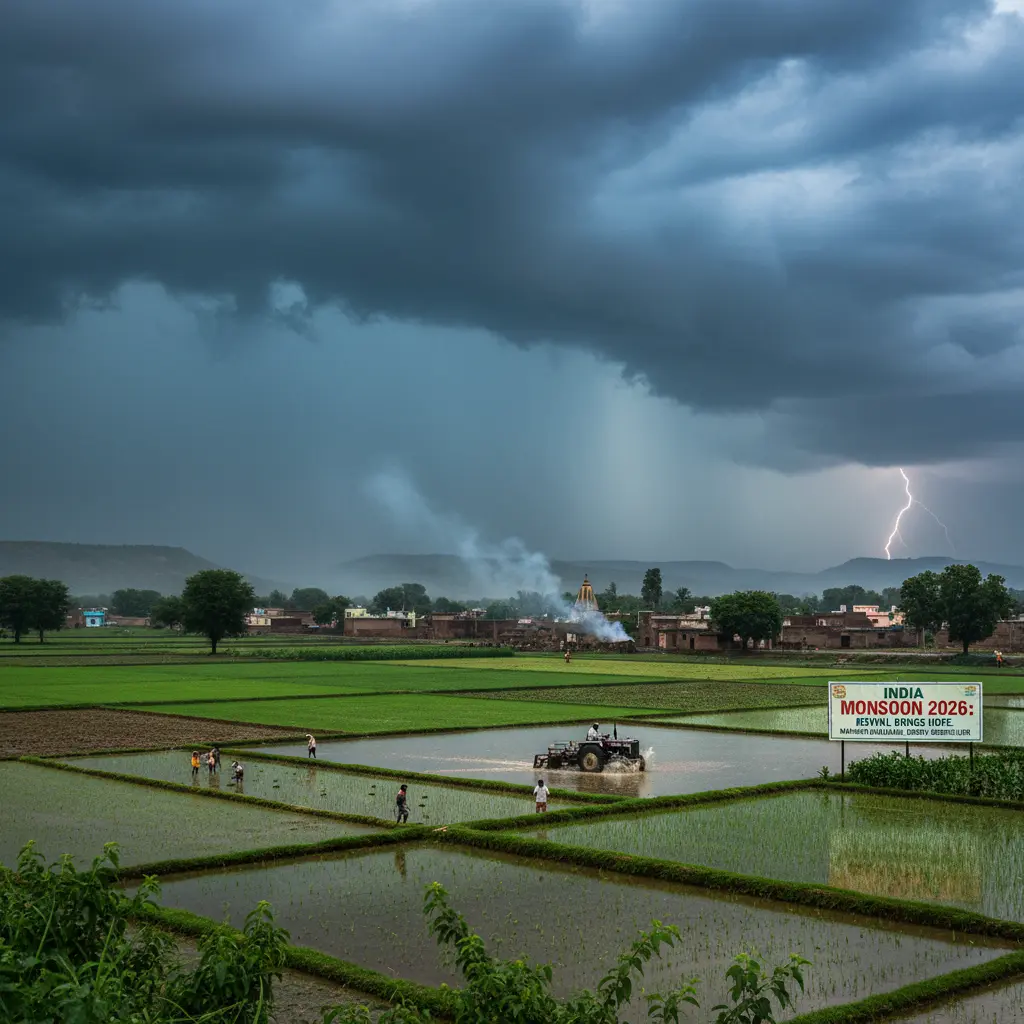
After a brief lull that had farmers and meteorologists alike holding their breath, India’s southwest monsoon has found its rhythm again. The India Meteorological Department says conditions are now favourable for the rain band to push deeper into Maharashtra, Telangana, Karnataka, Odisha, and several other central states over the next few days, marking a welcome turn in this year’s India monsoon 2026 story.
For anyone tracking weather news India this season, the timing matters as much as the rainfall itself. The monsoon had advanced steadily through the first half of June, only to slow down as it approached central India. That pause is now over. IMD’s recent press updates point to the northern limit of the monsoon shifting further inland, sweeping through more of Maharashtra and the remaining stretches of Karnataka and Telangana, while also nudging into parts of Odisha, Jharkhand, Bihar, and Chhattisgarh.
What’s Happening on the Ground
In Maharashtra, the revival couldn’t have come at a better moment. Mumbai and several other parts of the state have already seen yellow alerts for thunderstorms, lightning, and gusty winds, signalling that the dry spell residents endured earlier this month is giving way to consistent showers. This shift in Maharashtra rainfall patterns is being watched closely, since the state’s agricultural belts, from Marathwada to Vidarbha, depend on a well-timed monsoon to kickstart their farming calendar.
Telangana and Karnataka are seeing similar movement, with the rain band steadily covering ground that had been waiting since early June. Odisha, too, is expected to receive more widespread coverage in the coming days, which should help replenish reservoirs and groundwater levels that had dipped during the dry stretch.
Why This Matters for Agriculture
This isn’t just a weather story — it’s an economic one. India’s agriculture, particularly the kharif crops such as rice, soybean, cotton and pulses, which are planted around this time of the year, is closely tied to the monsoon’s progress. A late or patchy monsoon can delay sowing schedules, cut yields and eventually pinch farm incomes. So when officials talk about the monsoon “gaining momentum” it carries real significance for millions of households whose livelihood depends on timely rain.
Farmers in central India have reportedly been sitting on the sidelines, waiting to see signs of consistent rainfall as opposed to a few scattered showers, before they start sowing. Now that the monsoon is expected to act more predictably in the coming days, many will be likely to start field preparation and sowing work in earnest.
The Bigger Economic Picture
Away from the fields, this monsoon update is being watched closely by economists and policymakers. Rainfall performance feeds directly into food production estimates, and food prices have an outsized impact on retail inflation in India. A healthy, well-distributed monsoon tends to ease pressure on vegetable and grain prices later in the year, while an erratic one can do the opposite.
It’s worth noting that not every forecast this season has been entirely reassuring. Some market analysts have flagged monsoon performance as a key risk to watch for India’s broader economic outlook this year, citing the possibility of an uneven rainfall pattern in certain pockets. That’s part of why this current advance into Maharashtra, Telangana, Karnataka, and Odisha is being framed as encouraging news rather than a final verdict — the season still has a long way to run, and how it plays out over July and August will matter just as much as how it started.
What to Expect Next
Weather officials expect the improved rainfall conditions to continue spreading over the coming days, gradually covering the remaining pockets of central India that are still waiting for their first substantial showers. Alongside Maharashtra, Telangana, Karnataka, and Odisha, neighbouring regions like Chhattisgarh, Jharkhand, and Bihar are also expected to see the rain band push further in.
For city dwellers, this likely means a mix of relief from the heat and the usual monsoon disruptions — waterlogging, traffic snarls, and the occasional thunderstorm warning. For rural India, it means something more fundamental: a chance to get the sowing season back on track after weeks of uncertainty.
As always with monsoon coverage, the story is still unfolding. IMD continues to issue updates every few days, and the next couple of weeks should make it clearer whether this revival holds steady or faces fresh interruptions. But for now, the mood among farmers, officials and market watchers alike appears to be one of cautious optimism — the rains are back, and that’s just what large parts of central India have been waiting for.
Monsoon Advances Across Central India, Bringing Relief to Farmers and Cities Alike.