Region: India.
India’s monsoon season is picking up pace and the India Meteorological Department is not holding back on the warnings. The latest IMD weather bulletins have expanded heavy rainfall alerts across a wide swathe of the country, covering Maharashtra, Karnataka, Gujarat, Goa, Tamil Nadu, and several northern states. For millions of people this means one thing: the India monsoon has well and truly arrived and it is bringing both relief and disruption in equal measure.
The southwest monsoon has been moving steadily north and west over the past week, almost daily breaking new ground. Maharashtra, including Mumbai, has already seen the system move in, while parts of Gujarat, Madhya Pradesh, Chhattisgarh, Jharkhand, and Bihar are now also coming under its influence. Meteorologists expect the monsoon to continue advancing into more parts of Uttar Pradesh and Uttarakhand in the coming days, which would mark another significant step toward covering the entire country.
Where the Heavy Rainfall Alert Is in Effect
The IMD has flagged heavy to very heavy rainfall along India’s west coast, across the northeastern states, and over sub-Himalayan West Bengal and Sikkim through the week. That’s a broad geographic spread, and it reflects just how active the current weather pattern has become. In the south, Karnataka’s interior districts and the Konkan coast are bracing for intense spells, while Goa and coastal Maharashtra are expected to see persistent downpours that could disrupt daily commutes and outdoor activity.
Tamil Nadu is also on alert, with forecasters warning of localised flooding in low-lying and urban areas where drainage systems often struggle to keep pace with sudden, heavy bursts of rain. In the north, a combination of monsoon moisture and lingering western disturbances has made the weather unsettled, with thunderstorms, lightning and gusty winds reported across hill states and parts of the Indo-Gangetic plains.
A number of vulnerable districts have also kept disaster response teams on standby as a routine precaution during the monsoon season. Local administrations are closely monitoring river levels especially in areas that have witnessed flash flooding in the past and have urged residents in low-lying or landslide-prone areas to stay tuned to official updates.
A Mixed Bag: Relief in Some Places, Heat in Others
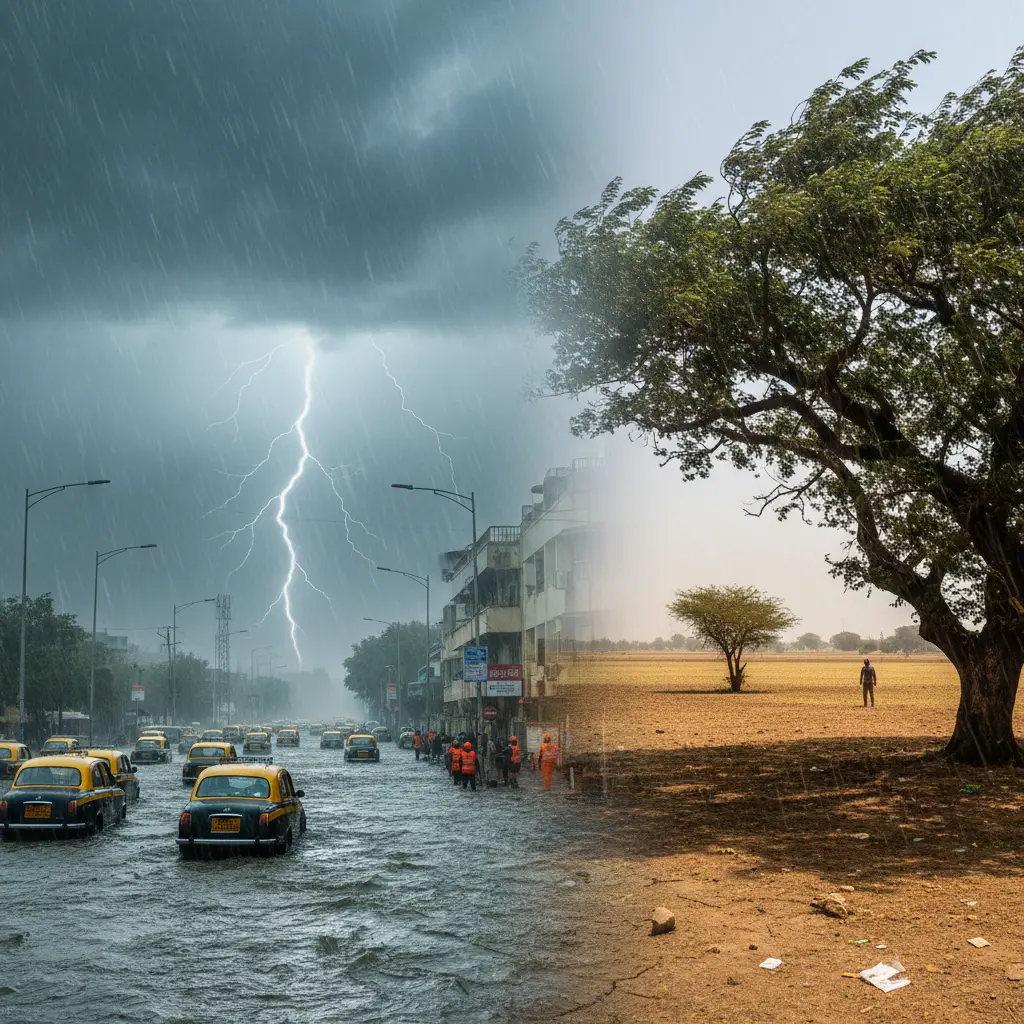
What makes this year’s weather today particularly interesting is the contrast playing out across the map. While most of the country is welcoming the rain — especially after a slow start to the season in early June, when rainfall ran well below normal in several regions — eastern India is dealing with a very different story. Heatwave conditions continue to grip parts of the east, even as monsoon clouds gather elsewhere, creating an unusual split-screen effect: flooded streets in one state, scorching afternoons in another.
This kind of contrast isn’t entirely new, but it does highlight how uneven the monsoon’s progress can be in its early-to-mid stages. Farmers, especially those depending on timely rainfall for sowing, are watching the forecasts closely. A good monsoon is vital for agriculture, reservoir levels and the economy as a whole, and so IMD’s updates are being followed not only by city residents wondering whether to carry an umbrella, but by an entire agricultural economy hoping for a healthy season.
What People Should Expect Next
With the rain alert active across so many states, officials are urging caution rather than panic. Most of the warnings point to localized and short-duration intense spells rather than continuous, days-long downpours everywhere. That said, low-lying urban areas, coastal districts, and hill regions remain the most exposed to disruption — whether that’s waterlogged roads, delayed flights and trains, or temporary landslides blocking mountain routes.
Authorities have urged residents in the affected states to avoid any unnecessary travel during the peak of the rainfall, keep emergency contacts at hand and listen to official IMD weather updates instead of believing in rumors or outdated forecasts floating on the internet. Schools and local offices in a few districts have also been asked to stay flexible with timings depending on how conditions evolve hour to hour.
For now, the broader picture is one of a monsoon finding its rhythm. After advancing steadily through the country over the past couple of weeks, the system is expected to keep pushing into new regions, gradually replacing the pre-monsoon heat with the kind of sustained rainfall that much of India waits for every year. Whether that translates into smooth sailing or scattered disruptions will depend largely on how these next few days play out — but for residents across Maharashtra, Karnataka, Gujarat, Goa, Tamil Nadu, and the northern states currently under alert, keeping an eye on the sky, and the latest forecast, remains the safest bet.
Monsoon Intensifies Across India As IMD Issues Widespread Rain Alerts.