Region: Venezuela.
Venezuela is experiencing one of the most deadly natural disasters in its modern history after a pair of strong earthquakes tore through the country’s northern coast, destroying buildings, severing communication lines and leaving whole neighborhoods buried in rubble. The Venezuela earthquake has now claimed more than 230 lives, with officials warning that the number is almost certain to climb as search teams dig deeper into the wreckage.
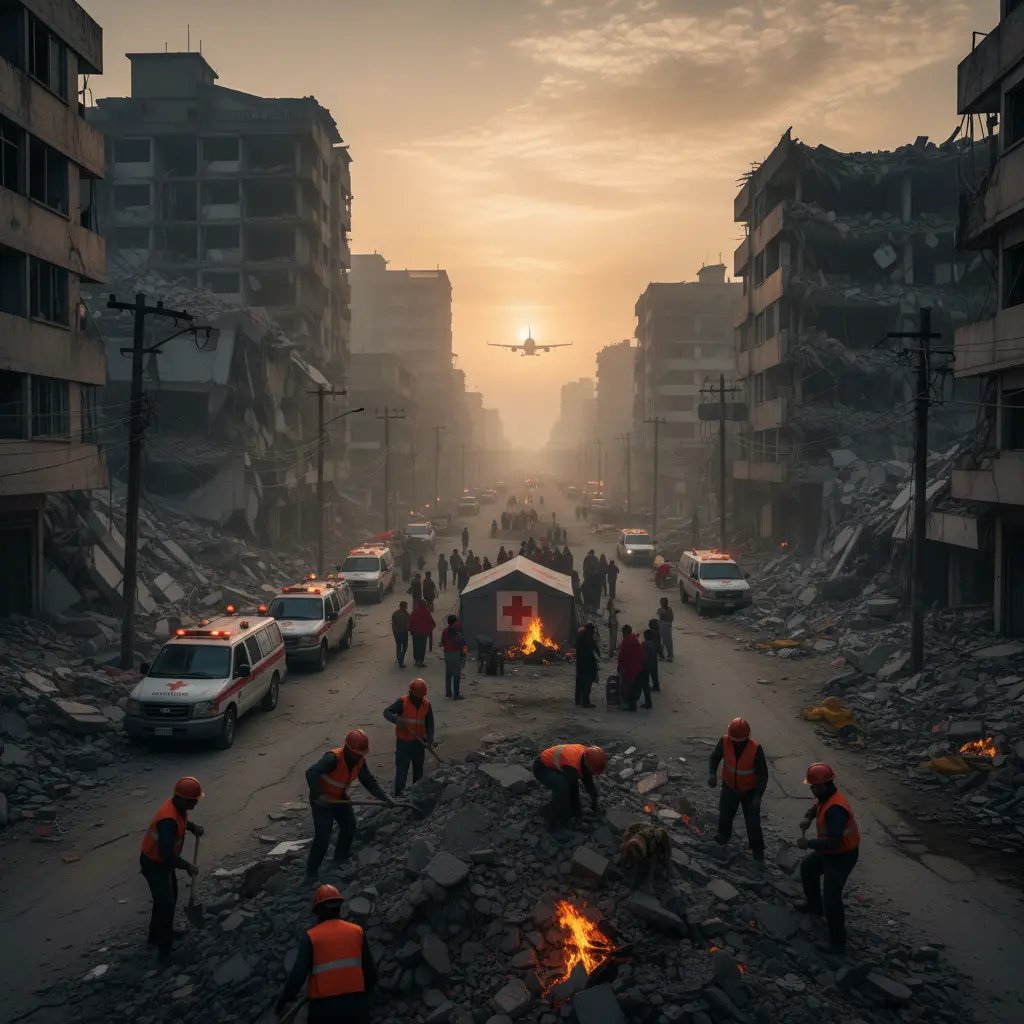
The twin quakes struck in quick succession on a Wednesday evening, catching millions of people off guard. The survivors told of frightening minutes of shivering that felt like an eternity, lights fading, walls cracking, and the ground seeming to shift beneath their feet. By the time the tremors stopped, the damage stretched across several states, with the coastal city of La Guaira among the hardest hit. Reports indicate that more than a hundred buildings collapsed there alone, turning the port city into what local authorities have called a genuine disaster zone.
A Disaster of Historic Scale
Seismologists say this was no ordinary earthquake. The two quakes struck so close together — separated by less than a minute — that experts are calling it a rare “doublet” event, among the strongest to hit Venezuela in more than a century. The U.S. Geological Survey placed the epicenters roughly three miles apart near the country’s Caribbean coastline, and the larger of the two events ranks as the most powerful to strike the nation since the turn of the last century.
For a South America earthquake of this magnitude, the human toll was almost inevitable. Beyond the confirmed deaths, well over a thousand people have been injured, and more than a hundred remain unaccounted for. Thousands of families have been displaced, many of them now sheltering in parks, open fields, or makeshift camps because their homes are too damaged — or too dangerous — to return to.
Rescue operations are paramount in the crisis, with emergency crews rushing to find and rescue survivors from wreckage of toppled structures. Graphic video and satellite images have documented the scope of the destruction in painful detail — whole apartment complexes reduced to piles of mangled concrete and rebar, hotels split in half, streets clogged with debris from toppled buildings.
Adding to the urgency of the situation, geologists have warned of the threat of aftershocks; There is a notable chance that another sizable earthquake could strike the same region in the days ahead, which has forced rescue teams to balance speed with caution as they navigate unstable wreckage. Crews are also racing against the clock in a more literal sense — the window for finding survivors trapped under rubble narrows with every passing hour.
Communication has been part of the struggle too. Venezuela’s already restricted media and internet environment made it harder, in the disaster’s early hours, for families abroad to learn whether their loved ones were safe. International bodies have since pushed for greater access to information and communication tools, arguing that timely updates are essential for protecting lives during the response.
The World Reacts
This developing world story has elicited a quick wave of international solidarity. Neighboring countries, such as Colombia, were quick to offer assistance, and humanitarian organizations, including the United Nations and several global relief agencies have begun to coordinate the delivery of medical supplies, food, and emergency shelter materials. Even the United States, despite a complicated diplomatic history with Caracas in recent years, pledged rapid assistance, with officials saying resources were being mobilized to support the relief effort.
That kind of cross-border cooperation matters enormously right now. Venezuela was already in the throes of an extreme economic crisis when this disaster struck, with millions of citizens relying on humanitarian aid even before the earthquakes. To add a disaster of this magnitude to an already precarious situation has stretched the country’s resources, making outside assistance not only welcome but necessary.
Next Steps
In the days ahead, the people of Venezuela will be engaged in two simultaneous tasks: the continued search for survivors and the start of the long and difficult process of recovery. Emergency shelters are being erected across the affected areas, medical teams are treating the injured in makeshift facilities and engineers are beginning the process of assessing which structures can be re-entered and which must be demolished entirely.
Once again, this global catastrophe has shown how fast nature can interrupt the daily life of people and how much strength a community needs to restore it later. Rescue efforts are still ongoing and the death toll keeps rising. The world’s eyes are on Venezuela, a country now struggling with the need to mourn its losses and the will to recover.
The coming weeks will show the real scale of the destruction but for the moment the priority is simple and urgent: find survivors, care for the injured, give displaced families a safe haven to wait out the aftermath of a disaster that has reshaped the country overnight.
Venezuela Earthquakes Kill Hundreds as Rescue Efforts Run Out of Time.