
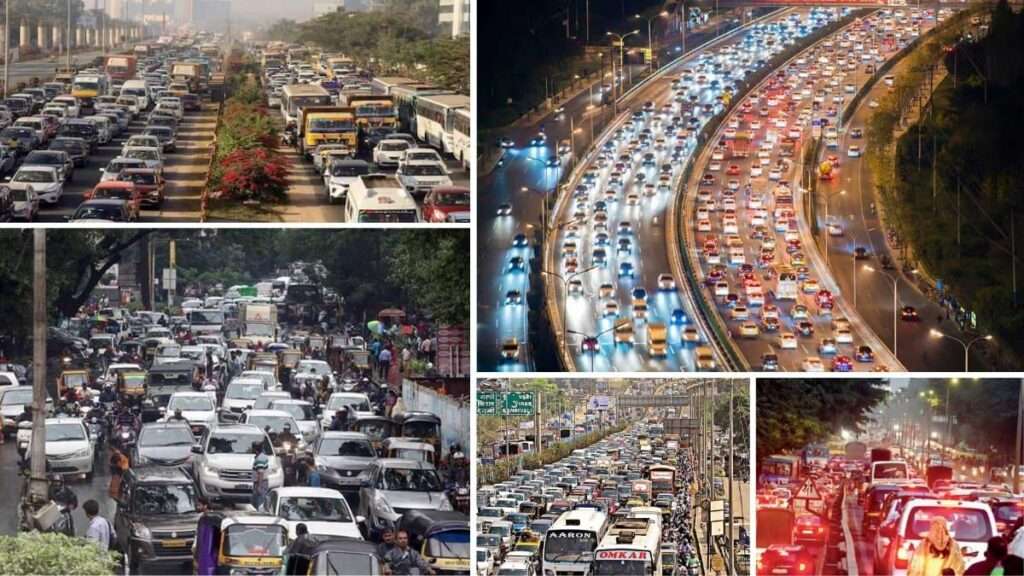
August 2025: Traffic congestion in Mumbai and Pune continues to worsen, highlighting a growing paradox: even with new metro lines and extensive infrastructure projects, commuting in these cities remains a challenge. Urban planners and commuters alike are questioning the effectiveness of current strategies as road gridlocks become an everyday reality.
Mumbai’s Gridlock
Mumbai, India’s financial hub, is facing multifaceted traffic challenges. While the city’s metro expansion aims to modernize public transport, ongoing construction has reduced road space on key arteries, creating bottlenecks and longer travel times. The emphasis on car-centric infrastructure, such as flyovers and coastal roads, has not significantly reduced congestion. Instead, it has encouraged greater reliance on private vehicles.
Public transportation, particularly BEST bus services, is struggling to maintain efficiency. Peak-hour bus speeds have dropped over the years, reflecting overcrowded roads, reduced service frequency, and outdated infrastructure. As a result, many commuters prefer private cars, exacerbating traffic jams.
Pune’s Rapid Growth Outpacing Infrastructure
Pune, once celebrated for its manageable traffic, now faces similar issues. Rapid urbanization, combined with a sharp increase in vehicle registrations—over 72 lakh vehicles, with nearly three lakh added annually—has overwhelmed existing road networks. Efforts to widen roads and build new flyovers have failed to keep pace with rising demand, leaving major highways and arterial routes heavily congested.
Infrastructure projects such as the Khopoli-Kusgaon missing link on the Pune-Mumbai Expressway, intended to reduce travel time by 30 minutes, have been delayed repeatedly. Such delays frustrate commuters and highlight inefficiencies in project management.
Common Challenges
Both cities face systemic challenges that contribute to worsening traffic:
- Insufficient Public Transport: Metro lines and bus systems remain underdeveloped relative to population growth, leading to dependence on private vehicles.
- Uncoordinated Urban Planning: Rapid urban expansion without integrated transport solutions has created congestion hotspots.
- Project Delays: Critical infrastructure projects often face bureaucratic hurdles, slowing progress.
- Environmental Impacts: Seasonal heavy rains cause waterlogging, further disrupting traffic flow.
The Way Forward
Experts emphasize that solving traffic congestion requires a holistic approach. Enhancing public transportation, implementing coordinated urban planning, and ensuring timely completion of infrastructure projects are essential. Without integrated strategies, Mumbai and Pune will continue to face daily gridlocks, impacting productivity, the environment, and residents’ quality of life.
Addressing these challenges is crucial for sustainable urban growth, ensuring that infrastructure development translates into smoother commutes rather than deeper congestion.

