
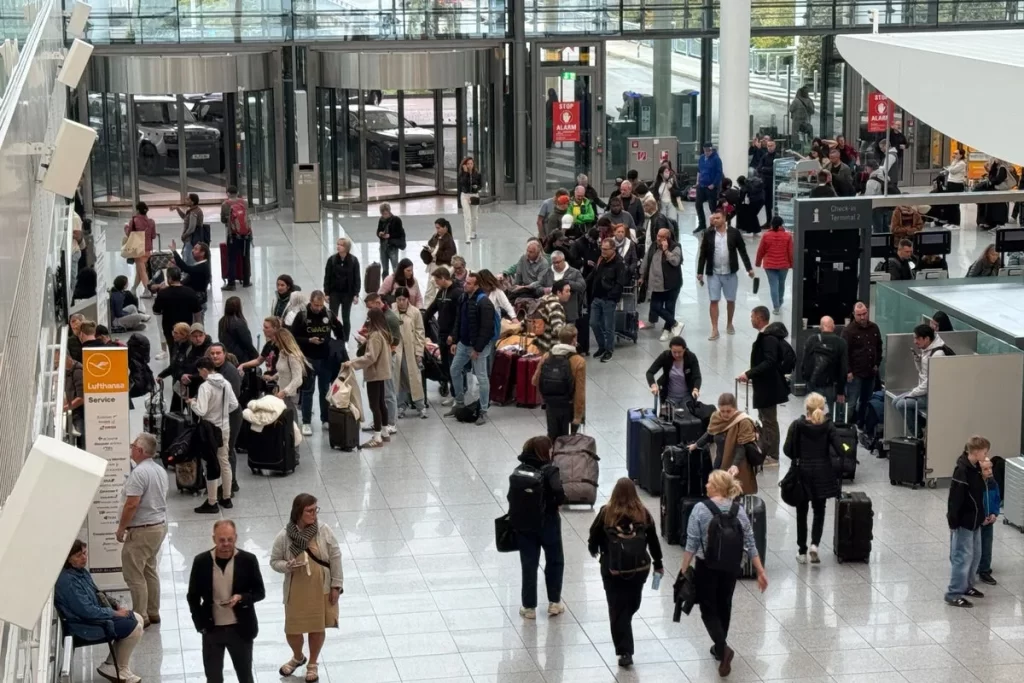
Munich Airport, Germany’s second-largest air travel hub, experienced significant disruptions this week due to two separate drone sightings within a 24-hour period. These incidents led to the temporary closure of both runways, affecting thousands of passengers and raising serious concerns about aviation security across Europe.
The first closure occurred late Thursday evening when drones were spotted near the airport’s perimeter. Flight operations were suspended as a precautionary measure, resulting in the diversion of 15 incoming flights and the cancellation of several others. The airport resumed operations early Friday morning, but the situation escalated again on Friday night. At approximately 9:30 PM local time, renewed drone sightings prompted authorities to halt all flights once more. This second closure led to the cancellation of 12 arrivals and 48 departures, impacting around 6,500 passengers who were stranded overnight. Passengers were provided with camp beds, blankets, and refreshments as they awaited the resumption of services.
These incidents are part of a broader pattern of unauthorized drone activities near critical infrastructure sites across Europe. Countries such as Belgium, Denmark, and Poland have reported similar drone sightings over military bases, power plants, and airports. Authorities suspect that these coordinated operations may be linked to geopolitical tensions, though such claims remain unconfirmed.
In response to the escalating threat, Germany’s Interior Minister announced plans to expedite legislation allowing police to request military assistance in neutralizing drones deemed to pose a risk to public safety. Additionally, the European Union is considering the development of a “drone wall”—a network of sensors, signal jammers, and other technologies—to protect borders and critical infrastructure from unauthorized incursions.
Munich Airport’s management has expressed its commitment to enhancing security measures to prevent future disruptions. The airport is collaborating with national and European authorities to implement advanced drone detection and mitigation technologies. These efforts include the deployment of radar systems, signal jammers, and trained personnel to identify and neutralize unauthorized drone activities swiftly.
The recent closures have underscored the vulnerability of airports to drone-related threats and the need for comprehensive counter-drone strategies. As drone technology becomes more accessible, airports worldwide are reassessing their security protocols to address this emerging challenge.
The repeated drone sightings at Munich Airport highlight a growing concern for aviation security in Europe. While the perpetrators remain unidentified, the incidents have prompted swift action from German authorities and the European Union to bolster defenses against unauthorized drone activities. As investigations continue, the focus remains on ensuring the safety of air travel and safeguarding critical infrastructure from potential threats.

