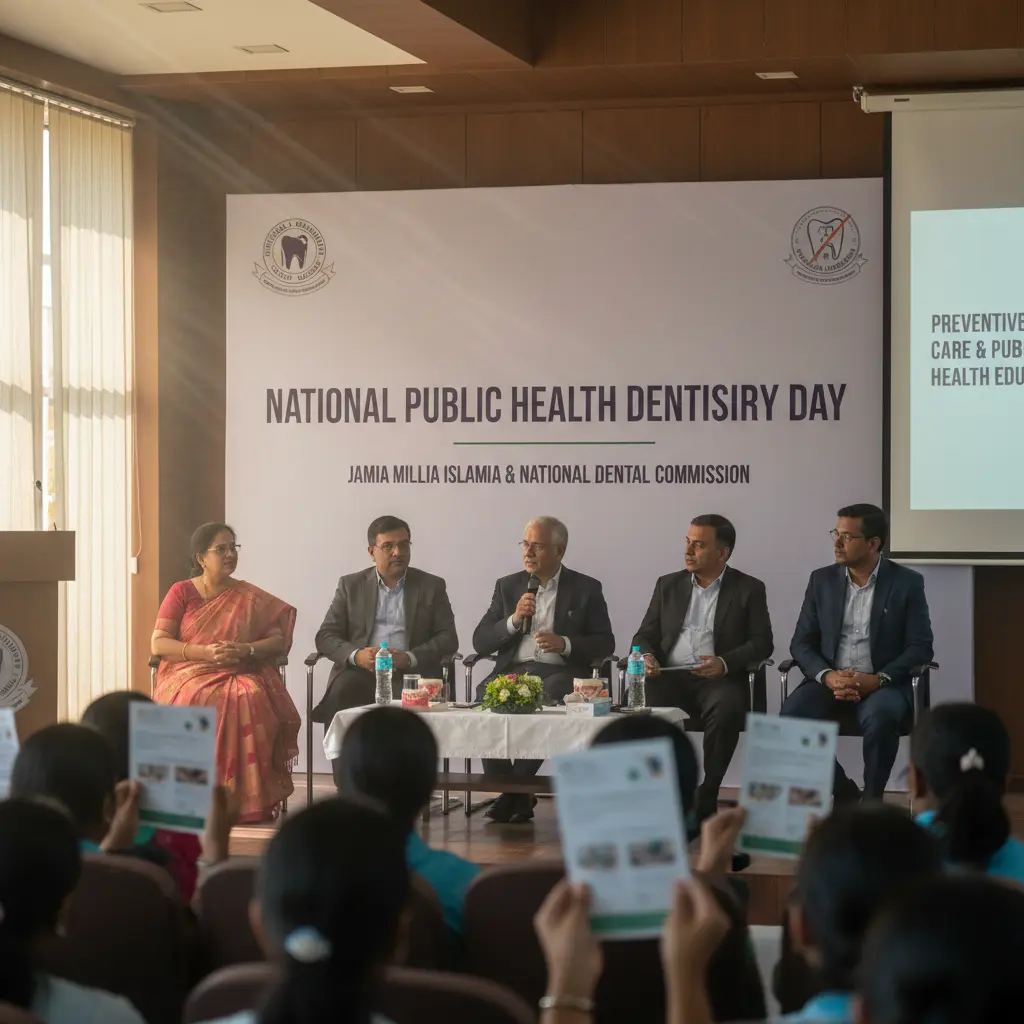
Every year on June 19th, something quietly important happens across dental institutions in India that most people outside the profession barely notice. National Public Health Dentistry Day comes and goes, often overshadowed by louder health observances, yet it carries a message that touches nearly everyone: your mouth matters more to your overall health than you probably think. This year, Jamia Millia Islamia’s Faculty of Dentistry, in coordination with the National Dental Commission, used the occasion to push that message further, organizing awareness drives and expert discussions aimed at improving oral healthcare services across the country.
Why This Day Exists in the First Place
Public health dentistry isn’t the flashiest branch of medicine. It doesn’t get the dramatic headlines that surgery or cardiology might. But ask any dentist working in rural or underserved communities, and they’ll tell you it might be one of the most consequential fields out there. Oral disease is staggeringly common, and a huge percentage of it is entirely preventable with the right awareness, habits, and access to basic care. That’s really the heart of what this day is about: shifting focus from treating problems after they happen to preventing them before they start.
At Jamia Millia Islamia, faculty members and dental students used the day to engage directly with the public, a practice the institution has leaned into for years through its various outreach efforts. The university has a long history of taking dental care beyond the clinic walls and into neighborhoods, schools, and community centers, particularly targeting groups who might not otherwise have easy access to a dentist. This year’s observance built on that same spirit, combining healthcare awareness campaigns with open conversations about what’s actually working and what still needs fixing in India’s broader oral care system.
The Role of the National Dental Commission
The involvement of the National Dental Commission added some extra weight to this year’s discussions. The involvement of the commission, which is the regulatory body of standards of dental education and practice in India, indicates that public health dentistry is not a feel-good campaign tucked in one day of the calendar, but is associated with policy, standards of training and the long-term direction of the delivery of dental health care across the country.
Experts at the event spoke candidly about the gaps that still exist, particularly when it comes to access in smaller towns and rural pockets where dentists are scarce and oral health often takes a back seat to more visible health concerns. The conversations also touched on how dental education itself needs to keep evolving, training future dentists not just to fix cavities but to think like public health advocates who understand prevention, education, and community engagement as part of their job.
Prevention Takes Center Stage
Prevention was the common theme in all discussions. Preventive dental care may not seem sexy, but it can be a game-changer when implemented broadly. Simple things such as proper brushing, cutting back on sugar, regular check-ups and early detection of problems such as gum disease or caries can prevent the development of more serious, costly and painful issues down the road.
Specialists said oral health education needs to start early and be consistent. Kids who learn early why oral hygiene is important tend to carry those habits into adulthood, easing the long-term burden on the healthcare system as a whole. It’s a slow, unglamorous strategy, but it’s far better than waiting for problems to become emergencies.
Connecting Oral Health with Broader Public Health Goals Something that often gets missed in casual conversation is the profound connection between oral health and overall well-being. Poor dental health has been associated with conditions including cardiovascular disease, pregnancy complications and mental health problems related to self-esteem and chronic pain. To see dentistry as a cosmetic issue is to miss the bigger picture.
And that’s exactly what public health dentistry is – a separate discipline. It looks at oral care as part of a much bigger picture where awareness campaigns, government policy, education systems and individual habits all have their part to play. Days like this one serve as a checkpoint, a moment to ask how far that effort has come and where it still needs to go.
Looking Ahead
Observances like National Public Health Dentistry Day won’t single-handedly fix the access gaps or awareness shortfalls that still exist across India, and nobody involved seems to be pretending otherwise. But events like the one held at Jamia Millia Islamia do something valuable in their own right. They keep the conversation alive, bring together institutions and regulators who can actually influence policy, and remind ordinary people that a trip to the dentist isn’t just about a brighter smile.
As discussions continue around expanding access and strengthening preventive dental care nationwide, this year’s observance offered a useful reminder that meaningful change in healthcare rarely comes from a single big announcement. It comes from steady, repeated efforts to educate, engage, and improve, one community and one conversation at a time.
National Public Health Dentistry Day Observed.