
July 31,2025 :
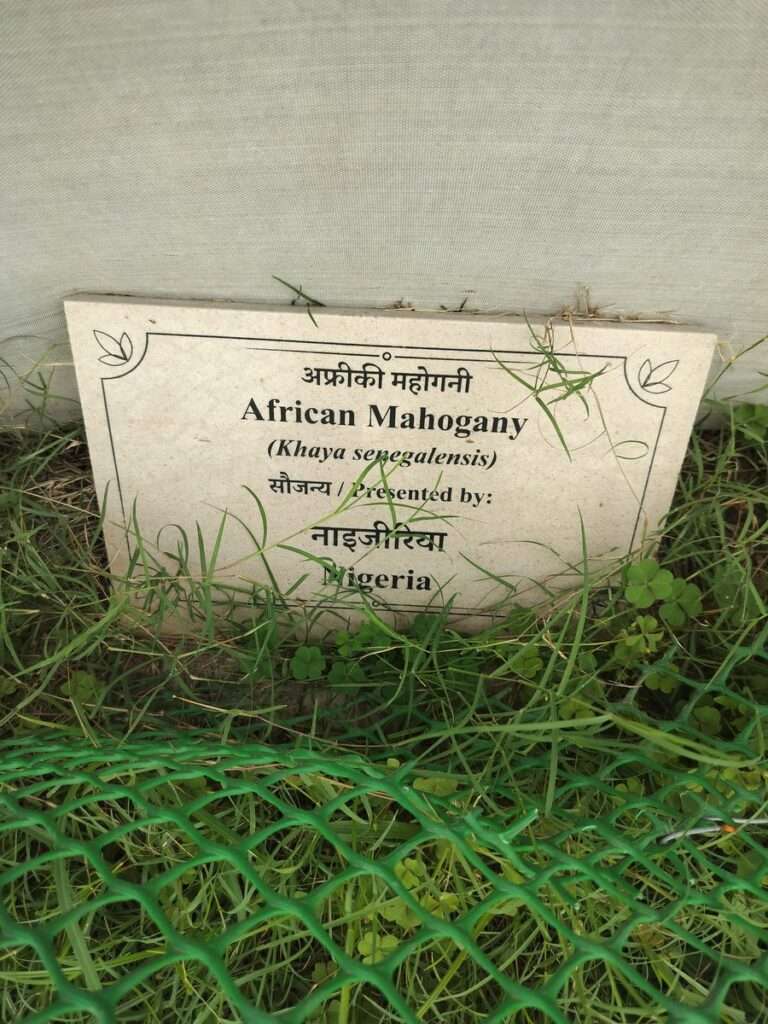
A tree planted in Delhi’s Nehru Park during the G20 summit has become the center of a botanical controversy after a citizen-led environmental group revealed it was misidentified. According to a viral post by DelhiTrees on social media platform X (formerly Twitter), the tree labeled as African Mahogany (Khaya senegalensis) is, in fact, a native Jamun (Syzygium cumini).
The post, published on Monday, featured close-up images of the sapling’s leaves and bark, stating, “The so-called African Mahogany, planted in Nehru Park during G-20, turned out to be a Jamun.” The claim quickly gained traction online, garnering over 28 lakh (2.8 million) views and sparking a public discussion on ecological awareness and planting practices in the national capital.
The tree in question was part of a high-profile plantation drive held during the G20 summit in 2023, which aimed to showcase India’s commitment to sustainability. Various foreign dignitaries were invited to plant saplings, many of which were claimed to be exotic or symbolic species like African Mahogany, known for its durable timber and expansive canopy.
However, environmentalists and botanists have supported the observations made by DelhiTrees, pointing out that the visual markers of the tree match that of the Jamun—a common native species in the Indian subcontinent—rather than the African Mahogany.
“It is quite clear from the leaf structure and bark that the tree is Jamun,” said Dr. Ramesh Varma, an urban ecologist. “Such misidentifications are not uncommon, but in a high-visibility event like G20, it raises questions about the credibility of plantation records.”
The incident has opened up a broader conversation on the preference for exotic species in government-led beautification drives, despite expert consensus that native species like Jamun are better suited to Delhi’s climate and biodiversity.
“Jamun is one of the best choices for urban forestry in Delhi,” said Dr. Meera Iyer, a heritage and environment conservationist. “It supports native pollinators and birds, adapts well to local soil, and requires less maintenance. Ironically, if this was indeed planted by mistake, it may actually benefit the environment more.”
DelhiTrees, which routinely documents and audits urban greenery through public participation, emphasized that their intention was not to embarrass officials but to highlight the need for botanical literacy and transparency in public projects.
“This is about accountability and education,” the group said in a follow-up post. “People should know what’s being planted in their name—especially when done as a symbolic act on an international platform.”
As the debate continues, experts and citizens alike are calling for greater oversight in ceremonial plantation drives, and for the prioritization of native species in the capital’s afforestation efforts.

