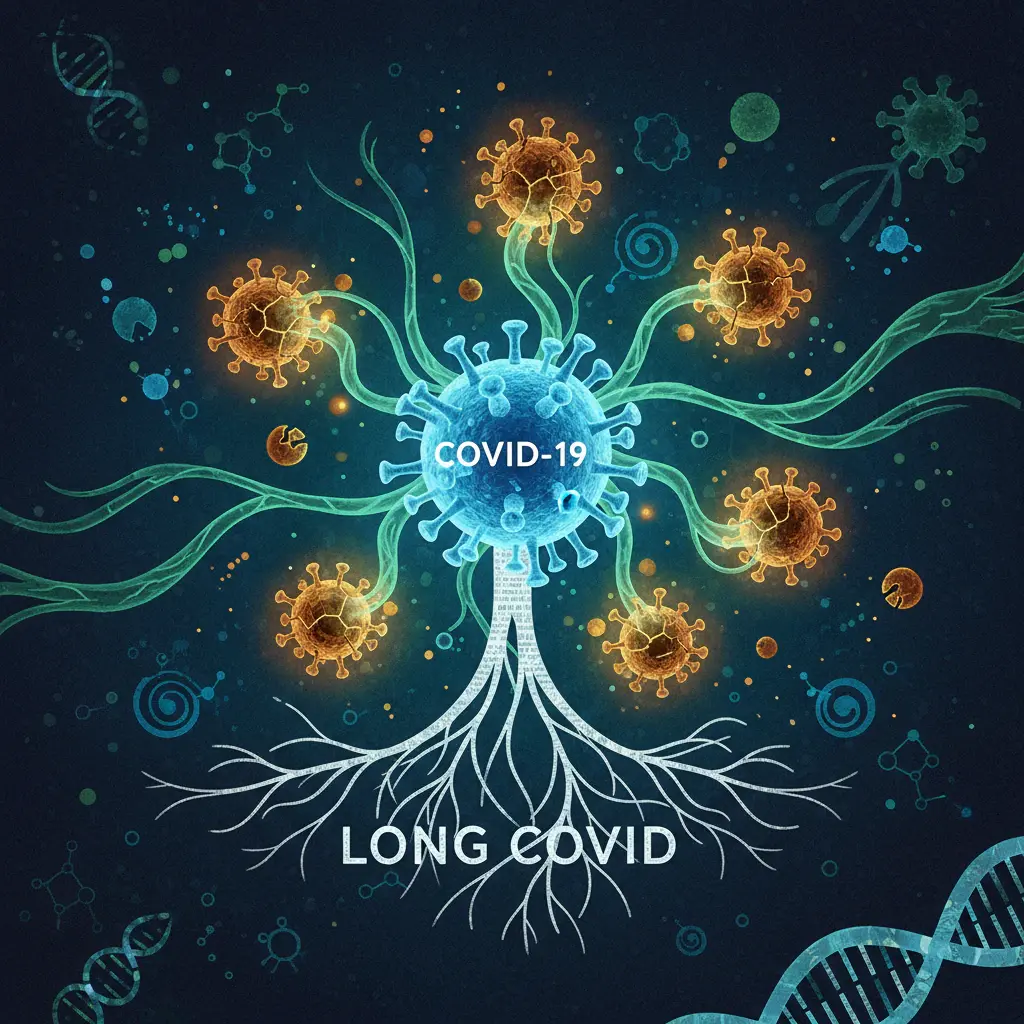
For years, one of the most frustrating aspects of long COVID has been how little doctors could explain about it. Patients would describe fatigue that never lifted, brain fog that clouded ordinary tasks, and a grab-bag of symptoms that didn’t fit neatly into any single diagnosis. Now, a major new study published in Nature offers a compelling piece of the puzzle: COVID-19 doesn’t just attack the body on its own. It appears to wake up other viruses that have been lying dormant for years, and that reactivation may be quietly driving some of the most stubborn post-COVID symptoms.
The research, led by scientists at the University of Texas at Austin’s Dell Medical School and Boston Children’s Hospital, working alongside a consortium of 15 biomedical institutions across the United States, drew on data from 1,154 hospitalized COVID-19 patients enrolled in the Immunophenotyping Assessment in a COVID-19 Cohort, or IMPACC, study. Researchers collected blood samples, nasal swabs, and lung fluids from patients treated at 20 hospitals between May 2020 and March 2021, generating over a billion data points in the process. What they found reshapes how scientists think about what a severe COVID-19 infection actually does inside the body.
Nearly half of the patients studied showed evidence of at least one reactivated dormant virus within the first 40 days after hospital admission. In total, the team identified 11 different reactivated viruses, with the most commonly detected being Epstein-Barr virus, herpes simplex virus 1, cytomegalovirus, and a group of viruses called Anelloviridae. Most people carry several of these chronic, generally harmless viruses without ever knowing it. Epstein-Barr virus alone infects more than 90% of adults worldwide at some point in their lives, typically staying quiet in the body after the initial infection resolves. But under the stress of a severe COVID-19 illness, these viruses appear to stir back to life.
What’s particularly striking is the timing pattern researchers uncovered. These viruses didn’t all reactivate simultaneously. Epstein-Barr virus tended to peak early, often detectable near the time of hospital admission before gradually declining. Cytomegalovirus and herpes simplex virus 1, by contrast, tended to show up roughly three weeks later. Anelloviridae followed yet another pattern, remaining steady for about 20 days before slowly tapering off. This staggered timeline suggests the reactivations aren’t random noise, but rather follow some kind of coordinated biological sequence tied to how the immune system responds to COVID-19 over time.
Perhaps the most medically significant finding involves that poorly understood Anelloviridae family. While these viruses don’t cause any proven disease on their own and are carried by the vast majority of adults, their reactivation was strongly associated with long-term physical disability and long COVID, defined in the study as symptoms persisting at least four weeks after the initial infection. That’s a meaningful clue for a condition that has remained maddeningly difficult to diagnose, let alone treat, and it opens a fresh angle for post-COVID syndrome research that hasn’t been available until now.
The study also challenges a longstanding assumption in immunology. Researchers had generally believed that dormant viruses reactivate mainly when the immune system is suppressed, whether from illness, medication, or other stressors. But the analysis found that Epstein-Barr virus and cytomegalovirus reactivated in these patients in connection with inflammation, not immune suppression. In other words, reactivation happened even in people whose immune systems appeared to be functioning normally, simply because their bodies were dealing with intense systemic inflammation. That’s a genuinely new mechanism, and one that researchers say could reshape how scientists think about viral reactivation during any severe illness, not just COVID-19.
Reactivation of these dormant viruses was also linked to more severe COVID-19 outcomes overall, including increased risk of death, adding another layer to why this discovery matters beyond the long COVID connection alone. The researchers are careful to note that their findings show correlation, not proof of causation. It’s still not established that reactivated viruses directly cause long COVID’s lingering symptoms, and the patients studied were unvaccinated and largely infected during the early phase of the pandemic, before the emergence of later variants and before most of the global population had built up immunity through vaccination or prior infection. Whether the same pattern holds for people infected with more recent strains, or for those with milder illness, remains an open question.
Even so, researchers involved in the work believe the implications are significant. Ofer Levy, director of the Precision Vaccines Program at Boston Children’s Hospital and a site principal investigator on the study, pointed out that COVID-19 remains a real public health burden even now, noting that up to 50,000 Americans died during the 2025-2026 respiratory season and that estimates suggest more than 10 million U.S. adults may be living with long COVID. The next phase of research, he said, will focus on understanding exactly how the immune system responds to these reactivated viruses throughout the course of COVID-19, with the goal of identifying which patients might benefit from targeted antiviral treatment and figuring out the optimal timing for such interventions.
For a field that has struggled to offer patients clear answers, this study represents real progress. It won’t immediately translate into a treatment for long COVID, but by mapping which viruses reactivate, when, and under what immune conditions, researchers now have a far more detailed roadmap than they did before. That roadmap could eventually guide new diagnostic tests capable of identifying which patients are at higher risk of lasting symptoms, and which therapies might actually help them recover.