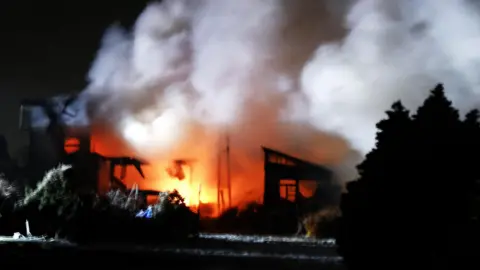
A massive 7.5-magnitude earthquake struck off the northern coast of Japan late on Monday, December 8, 2025, triggering tsunami warnings, widespread evacuations, and leaving at least 33 people injured. The tremor, which shook several prefectures along the Pacific coastline, prompted authorities to order the evacuation of nearly 90,000 residents from vulnerable coastal areas before all tsunami warnings were lifted early Tuesday.
Strong Shaking and Swift Emergency Response
The quake occurred around 11:15 p.m. local time, with its epicenter located offshore near Aomori Prefecture at a depth of about 54 kilometers. The shaking reached “upper 6” on Japan’s seismic intensity scale, strong enough to knock people off balance, topple furniture, and cause interior damage in several homes and commercial establishments.
Immediately following the tremor, Japan’s Meteorological Agency issued tsunami alerts for Hokkaido, Aomori, and Iwate, warning of possible waves up to three meters high. Emergency sirens were activated, and local authorities coordinated rapid evacuations from low-lying districts and fishing communities.
Minor Tsunami Waves Recorded
Tsunami waves between 20 and 70 centimeters were observed across multiple coastal monitoring stations—significantly lower than initial projections. While the smaller-than-expected surges prevented major coastal damage, authorities stressed that early evacuation was critical, as tsunami behavior can be unpredictable following large offshore quakes.
By early Tuesday morning, all tsunami warnings and advisories were canceled, allowing residents to return to their homes.
Injuries, Service Disruptions, and Safety Measures
Preliminary reports confirmed that 33 individuals sustained injuries, most of them minor and caused by falling objects during violent shaking. One person suffered a serious injury. Damage to infrastructure remains limited, although some fishing equipment and aquaculture installations experienced losses.
Key impacts included:
- Rail and Transport Disruptions: Major bullet-train services were suspended for safety inspections, leading to delays and temporary travel disruptions.
- Power Outages: Up to 800 households experienced brief blackouts in affected regions.
- Nuclear Plant Safety: No critical abnormalities were reported at nearby nuclear facilities, though one plant detected a minor water leak that posed no public safety threat.
- Aftershock Alerts: Authorities warned that strong aftershocks, potentially powerful, may continue over the next several days.
Japan’s Seismic Preparedness in Focus
Japan, located along the volatile Ring of Fire, experiences thousands of earthquakes annually, with several reaching destructive magnitudes. In the years since the devastating 2011 Tōhoku earthquake and tsunami, the country has invested heavily in early-warning systems, reinforced construction standards, and streamlined evacuation protocols.
The swift response to Monday’s quake—marked by timely tsunami alerts, rapid mobilization of emergency teams, and high public compliance—demonstrated the effectiveness of Japan’s disaster-preparedness measures.
Outlook
Authorities continue to monitor seismic activity closely and urge residents in coastal and high-risk zones to remain alert. Emergency crews are assessing damage, restoring disrupted services, and offering support to affected communities.
While the region avoided catastrophic destruction, the event underscores Japan’s constant vulnerability to major seismic hazards and the vital importance of ongoing preparedness.