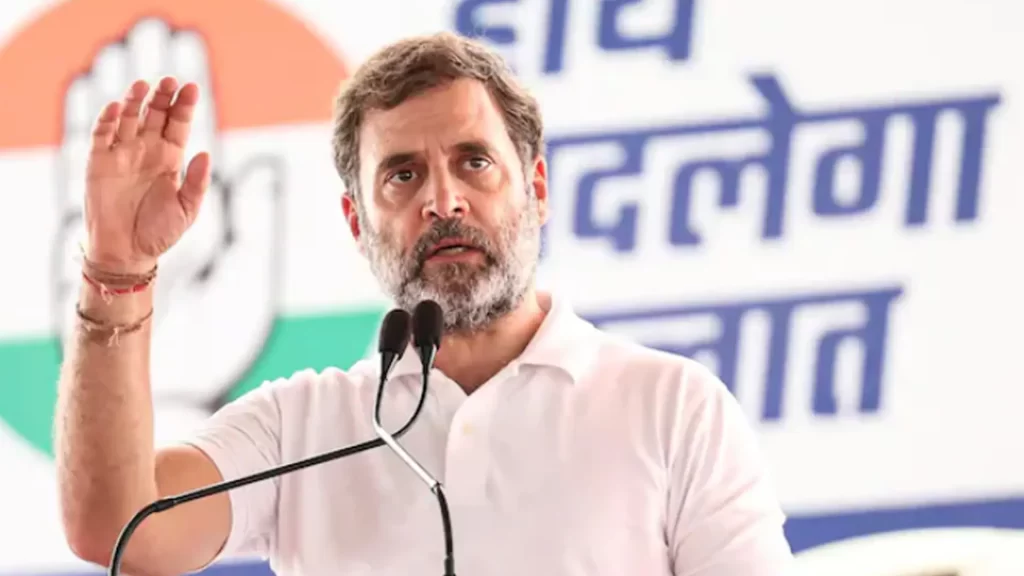
Congress leader Rahul Gandhi’s recent remarks during his visit to Colombia have ignited fresh political controversy in India, with the Bharatiya Janata Party (BJP) accusing him of undermining the nation’s image abroad. Speaking at EIA University in Medellín, Gandhi warned of a “wholesale attack on democracy” in India, drawing sharp criticism from ruling party leaders.
Addressing an audience of students and academics, Gandhi stressed that India’s democratic framework is essential to safeguarding its cultural diversity. He stated, “India’s strength lies in its diversity — our languages, traditions, and religions. Democracy allows us to preserve this uniqueness. We cannot follow China’s authoritarian model, which suppresses voices and curtails freedom.” Gandhi further criticized the BJP government’s policies, particularly demonetization and centralized economic control, claiming they have eroded democratic processes and weakened institutional integrity. “The path we are on risks concentrating power and diminishing accountability,” he said, calling for a recommitment to democratic principles.
The BJP responded with strong condemnation. MP Sudhanshu Trivedi accused Gandhi of “spreading false narratives that damage India’s reputation on foreign soil,” while Ravi Shankar Prasad described his statements as “baseless and detrimental to national interest.” Actor and BJP supporter Kangana Ranaut also weighed in, calling Gandhi’s remarks “a shameful attempt to defame India internationally.”
This episode is part of a continuing pattern. Gandhi has previously faced criticism from the BJP for comments made abroad, including speeches at Chatham House in London and Stanford University in the United States. BJP leaders have consistently accused him of portraying India negatively to international audiences, framing it as political opportunism rather than constructive criticism.
Political analysts suggest that Gandhi’s remarks in Colombia are aimed at reinforcing his party’s position ahead of upcoming state elections, while also appealing to global platforms to highlight concerns over governance and democratic erosion. “Rahul Gandhi is leveraging international forums to pressure the BJP government, but such moves invariably attract accusations of harming India’s image,” said political commentator Meera Krishnan.
The controversy has sparked a wider debate on the balance between free political expression and safeguarding national interests. Supporters of Gandhi argue that constructive criticism is vital to a functioning democracy and that international discourse can strengthen accountability. Critics, however, view such comments as crossing a line, arguing that internal matters should be addressed within the country rather than on foreign platforms.
As the political discourse intensifies, Gandhi’s Colombia visit will likely remain a focal point of debate in India’s media and political circles. Both the Congress and the BJP are expected to leverage this episode in the larger narrative leading up to the next general elections, with Gandhi’s remarks reinforcing the Congress’s call for democratic vigilance and the BJP portraying it as a challenge to national unity.
Rahul Gandhi’s statements in Colombia have once again brought to the forefront the contentious intersection of domestic politics and international diplomacy. The incident underscores the ongoing struggle over the interpretation of India’s democratic health and the role of political leaders in shaping global perceptions of the nation.