
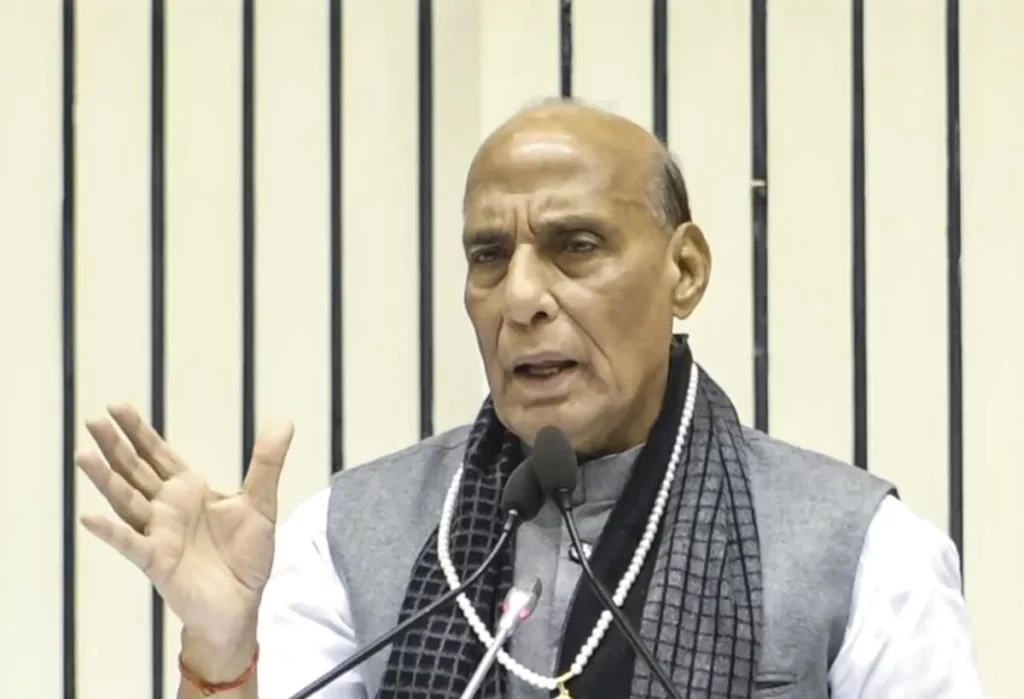
In a bold and controversial statement, India’s Defence Minister Rajnath Singh said on Sunday that while Sindh is no longer a part of India, it remains an integral part of the country’s civilisational heritage. Speaking at the Sindhi Samaj Sammelan in New Delhi, Singh added that “borders can change,” suggesting that Sindh might one day return to India. His remarks have drawn sharp reactions from Pakistan and reignited longstanding debates on Partition and territorial identity.
Civilisational Bond Over Geography
Addressing the Sindhi community, Singh remarked, “Today, the land of Sindh may not be a part of India, but civilisationally, Sindh will always be a part of India.” He emphasized that borders are fluid and alluded to the possibility of Sindh returning to India in the future. Singh echoed the views of veteran BJP leader L. K. Advani, noting that many Sindhi Hindus still struggle to accept the separation of Sindh from India.
Symbolism of the Indus River
Singh highlighted the historical and cultural significance of the Indus River, noting that both Hindus and Muslims in Sindh historically considered it sacred. He cited that the Indus water was revered in a manner similar to the holiness of other major religious sites. Singh underlined that Sindhis, wherever they reside today, remain an inseparable part of India’s cultural fabric.
Political Undertones: Citizenship and Identity
The Defence Minister also referenced India’s Citizenship Amendment Act (CAA), stating that it was enacted to protect persecuted minority communities in neighboring countries. He stressed that while some communities were previously ignored, the CAA aimed to address historical injustices, particularly for displaced Sindhi Hindus.
Backlash from Pakistan
Singh’s statement provoked a swift response from Pakistan, with its Foreign Office condemning the remarks as “delusional and dangerously revisionist.” Pakistan’s government accused India of fostering an “expansionist mindset” that disregards international law and the sanctity of recognized borders.
Historical Significance
Sindh holds significant historical importance, once forming part of undivided India and hosting ancient sites of the Indus Valley Civilisation, including Mohenjo‑Daro. Singh invoked this heritage to reinforce his argument that cultural and civilisational bonds transcend contemporary geopolitics.

