
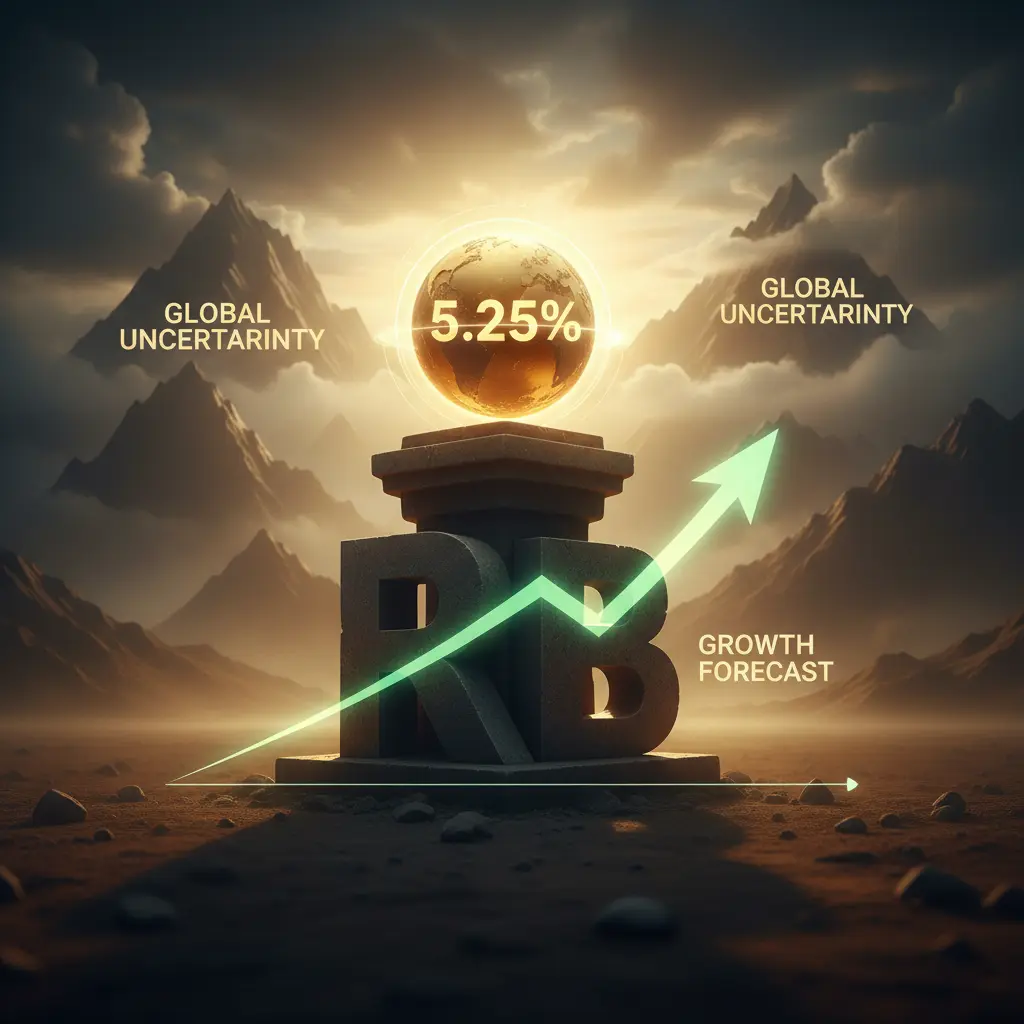
The Reserve Bank of India has opted for the stability route in the third bi-monthly review of the financial year 2026-27 by keeping the benchmark repo rate unchanged at 5.25%. The decision was taken unanimously by the Monetary Policy Committee headed by Governor Sanjay Malhotra at the end of a three-day meeting held from August 3 to August 5 and was largely in line with what most economists were expecting.
That’s another pause in what has otherwise been a pretty active rate-cutting cycle over the last year and a half. The RBI has slashed rates by a total of 125 basis points since February 2025, bringing the repo rate down from 6.5% to the current level. However the central bank has held its ground since December 2025 and this latest move continues that trend. The repo rate, the rate of the Standing Deposit Facility, the rate of the Marginal Standing Facility and the bank rate remain unchanged at 5%, 5% and 5.5% respectively.
Cautiously optimistic on growth
But the highlight of this policy review was not the widely expected decision to keep rates on hold but the upward revision of the growth outlook. The central bank has raised its FY27 GDP growth forecast to 6.7% as it believes in the underlying economic momentum in India, despite the turbulent global environment.
Governor Malhotra cited resilient domestic demand as a major reason for this optimism, adding that buoyant discretionary spending has continued to underpin private consumption. The Indian economy performed better than expected in the first quarter of the financial year, he said, a comment that will be welcomed by both markets and businesses. The healthy inflows of capital into the country have also given the RBI more room to be more confident about growth prospects even as global headwinds persist.
Inflation Target Reduced to 5%
On the price front, the RBI lowered its inflation projection for FY27 to 5% in a move that reflects easing price pressures on the domestic front. Still, the central bank was careful not to sound overly reassuring. Malhotra flagged a couple of risks that could complicate the inflation outlook going forward, including the unpredictable impact of El Nino on rainfall patterns, which in turn affects food prices, and continued volatility in global oil markets.
That volatility in oil prices is closely tied to the broader geopolitical uncertainty coming out of the Middle East. With the conflict in the region having escalated again since early July, the RBI has had to factor in sharp, two-way swings in energy prices as one of the bigger wildcards for India’s inflation trajectory in the months ahead. Malhotra was candid about the fact that the overall outlook remains somewhat hazy, citing global trade policy uncertainties as another factor the committee will need more clarity on before making its next move.
Neutral Stance, Neither Hawkish Nor Dovish
True to form, the Monetary Policy Committee maintained its “neutral” policy stance, a position it has held onto since shifting away from an accommodative approach last year. At the press conference after the announcement of the policy, Malhotra summed up the RBI’s stance at this stage in one sentence: the central bank was “neither dovish nor hawkish”. Future policy action, whether cutting, holding or eventually raising rates, will depend heavily on how inflation and growth data evolve in the coming months, he said.
In such an unpredictable external environment, the RBI is not unfamiliar with a wait-and-watch approach. Energy markets are reacting to Middle East events and global trade policy is still trying to find its way. In the face of that, the central bank appears to be favoring flexibility over any fixed directional bias.
What’s next
The RBI’s decision to hold rates while upgrading its growth forecast reflects an economy that policymakers view as fundamentally sound, even if the road ahead is not entirely smooth. For borrowers and businesses, there is some predictability in the repo rate being unchanged, which should mean EMIs and lending rates remain unchanged for now, at a time when global markets are anything but predictable.
The next Monetary Policy Committee meeting, scheduled for October 5-7, 2026, will now be the focus. By then, the RBI would also know better how the monsoon season has unfolded, where global oil prices are headed and whether the geopolitical situation in the Middle East has settled down or worsened further. Until then, the message from Mumbai is one of cautious confidence: growth is holding up, inflation is easing, but the world beyond India’s borders is too unsettled for the central bank to lower its guard.

