There are moments in politics when a single speech manages to unsettle everyone, friends and rivals alike. Mohan Bhagwat’s recent remarks on Gen Z protesters did exactly that. Speaking in Mumbai just days after the student demonstrations at Delhi’s Jantar Mantar wound down, the RSS chief made it clear that young people raising their voice against a broken exam system are not enemies of the nation. That one line has now set off a fairly noisy debate across India’s political spectrum, and it’s worth understanding why.
What Bhagwat Actually Said
The backdrop here matters. Weeks of student anger had built up over alleged NEET paper leaks and irregularities in competitive exams, eventually spilling onto the streets near Jantar Mantar in Delhi. The protests were intense enough that the Union Education Minister ended up stepping down. Along the way, several voices within the ruling establishment had reportedly dismissed the agitating students in fairly harsh terms, even suggesting foreign influence behind the movement.
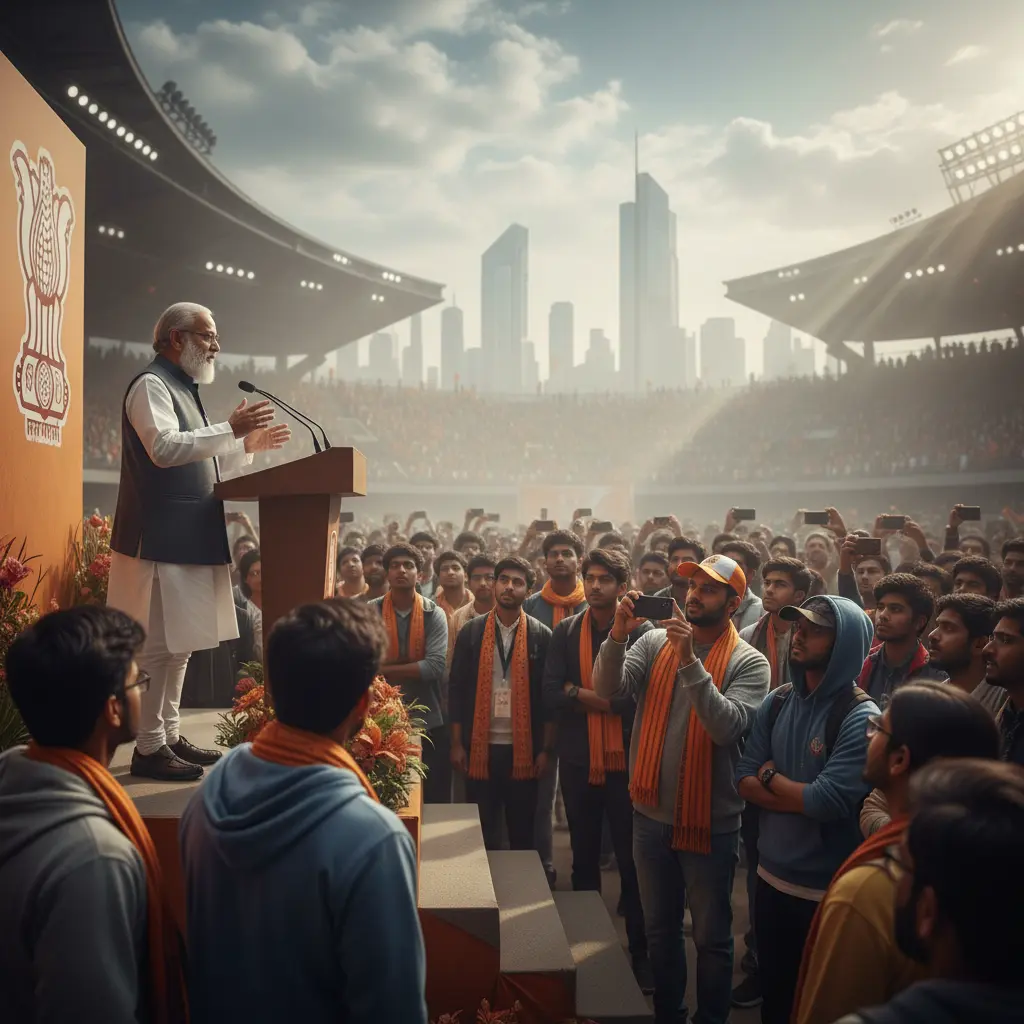
It was against this backdrop that Bhagwat, addressing a gathering of roughly two thousand Gen Z and Gen Alpha participants at a youth event in Mumbai, chose to strike a very different note. He said plainly that a young person protesting does not become anti-national simply for doing so, describing them instead as the country’s own people and its next generation. He went further, calling their frustration with the education system genuine rather than manufactured, and urging that these young Indians be met with empathy and dialogue instead of suspicion.
Bhagwat also touched on protest itself as a democratic tool, framing it as a legitimate way to build consensus rather than create division. He didn’t shy away from the more delicate question of police action either, saying he lacked full details on the use of pellet guns against demonstrators and wasn’t in a position to comment on that specific issue. On the subject of social media, he cautioned young people about misinformation and fabricated clips, urging verification before trusting or sharing content online.
Why This Is Being Called a Political Storm
None of this would have caused much of a stir if it had come from an ordinary commentator. But Bhagwat heads the RSS, the ideological parent organisation of the BJP, and his words carry weight far beyond a single speech. The BJP moved quickly to back him, with party representatives echoing the idea that the protests themselves were not anti-national, while suggesting that certain fringe elements may have tried to hijack the movement for their own ends.
Opposition leaders, however, saw an opening and took it immediately. Their central argument is straightforward: if the RSS chief is now describing the Jantar Mantar protests as legitimate and the students as patriotic, why did BJP leaders and even RSS-linked functionaries spend weeks branding the same protesters as anti-national, or worse, accusing them of having foreign funding? Critics have pointed to specific instances where student demonstrators were reportedly called disparaging names by party figures, arguing this exposes a gap between what the RSS says publicly and how the BJP has behaved on the ground.
Some opposition voices have gone as far as accusing the Sangh of a familiar pattern, testing public reaction with a statement before deciding how far to push it. Others have used the moment to question why groups aligned with the RSS were largely silent when protesters faced police action, even as the chief now speaks the language of compassion. The Maharashtra Chief Minister, for his part, pushed back on the idea of any rift, arguing that Bhagwat speaks in the national interest rather than for any particular party.
The Bigger Picture: Indian Youth Politics
Strip away the political point-scoring for a moment, and there’s a genuinely important story here about Indian youth politics. Gen Z voters are set to be a significant force in the next general election cycle, and their grievances around employment, exam fairness, and institutional accountability aren’t going away. Political observers have noted that Bhagwat’s outreach looks less like a one-off comment and more like a calculated attempt to keep the RSS relevant to a generation that communicates, organises, and expresses anger very differently from the ones before it.
Whether this translates into any real course correction from the BJP remains to be seen. For now, the episode has done what these things often do in Indian politics: it has forced everyone to restate their position, given the opposition a fresh line of attack, and left ordinary students watching from the sidelines, wondering if anyone in power is actually listening to what started all of this in the first place, an exam system many of them simply don’t trust anymore.
Responsible dialogue, less confrontation, and honest engagement with young India’s frustrations, that was Bhagwat’s core message. Whether it holds up under the weight of India’s noisy political theatre is the question everyone is now watching for.