
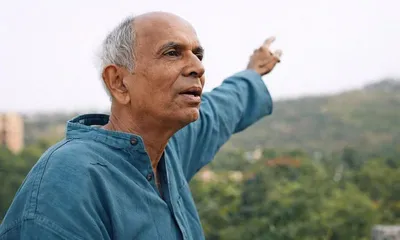
India mourns the loss of one of its most influential environmental scientists and conservationists, Madhav Gadgil, who passed away at the age of 83 on the night of January 7, 2026, in a Pune hospital after a brief illness. Widely revered as the “father of modern Indian ecology,” Gadgil’s death marks the end of a remarkable six‑decade career that reshaped ecological research, conservation policy, and environmental consciousness across the nation.
Born in Pune in 1942, Gadgil pursued biology and zoology before earning his doctorate from Harvard University, returning to India in the early 1970s. He joined the Indian Institute of Science (IISc), Bengaluru, where he established the Centre for Ecological Sciences (CES)—a pioneering institution that became the cornerstone of ecological sciences and sustainability research in the country. His academic work spanned ecology, biodiversity, human‑environment interactions, and conservation policy, earning him global recognition.
Architect of Environmental Policy and Western Ghats Conservation
Gadgil’s legacy is most prominently linked to his work on the Western Ghats, a UNESCO‑designated biodiversity hotspot that stretches across six Indian states. As chair of the Western Ghats Ecology Expert Panel (WGEEP)—popularly known as the Gadgil Commission—he led a landmark scientific assessment of the region’s ecological health. The panel’s 2011 report, though controversial in its recommendations for declaring a majority of the Ghats as ecologically sensitive zones, became a defining moment in India’s environmental policy discourse, emphasizing sustainable development and community participation.
His approach to conservation was deeply rooted in scientific rigor and social inclusion, advocating for environmental stewardship that respected both ecosystems and the rights of local communities. Gadgil’s thinking helped shift the paradigm of conservation from exclusionary models to those integrating grassroots perspectives and indigenous knowledge—a stance that influenced policy, activism, and academic thought alike.
Honours, Influence, and Impact
Throughout his illustrious career, Gadgil received numerous accolades, including Padma Shri, Padma Bhushan, and prestigious international awards for environmental achievement. In 2024, he was honored with the Champions of the Earth award, the United Nations Environment Programme’s (UNEP) highest environmental recognition, underlining his global impact and leadership in ecological science.
Beyond institutional honors, Gadgil was lauded as a “people’s scientist” for his efforts to democratize ecological knowledge and promote public engagement in environmental protection. Political leaders, scientists, and civil society across India acknowledged his passing as a profound loss. Maharashtra Chief Minister Devendra Fadnavis praised Gadgil as a lifelong crusader for ecological balance, noting that his work will inspire generations of environmentalists and policymakers.
Legacy and Future Outlook
Madhav Gadgil’s contributions extend far beyond academic literature and government panels; they live on in India’s ecological movements, conservation frameworks, and the ongoing debates about balancing development with environmental sustainability. His insistence on integrating science, policy, and community stewardship remains a guiding principle for tackling contemporary environmental challenges such as climate change, biodiversity loss, and habitat degradation.
As India continues to confront ecological crises and the impacts of global warming, Gadgil’s work stands as both a beacon and a challenge: to pursue sustainable growth without compromising the health of the planet. While his physical presence is no more, his intellectual legacy and environmental ethos will endure in scientific research, grassroots movements, and legislative reforms that seek to protect India’s natural heritage for future generations.
Key Contributions of Madhav Gadgil
- Founded the Centre for Ecological Sciences at IISc
- Chaired the Western Ghats Ecology Expert Panel (Gadgil Commission)
- Championed community‑centric conservation approaches
- Influenced national policy through scientific and public engagement
- Recipient of major national and international environmental honors
Madhav Gadgil’s passing is not merely a moment of reflection but a reminder of the urgent need to uphold ecological integrity in policy and practice. His life’s work remains a touchstone for environmental responsibility in India and beyond.

