
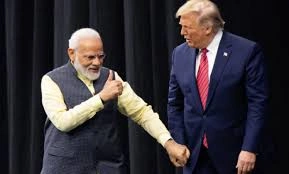
The global trade landscape faces renewed uncertainty after US President Donald Trump endorsed the proposed Sanctioning Russia Act of 2025, a bipartisan bill aimed at intensifying economic pressure on Moscow over its ongoing war in Ukraine. If passed by the US Congress, the legislation would empower the White House to impose punitive tariffs of at least 500% on imports from countries that continue purchasing Russian oil and energy products — a move that could significantly impact India and other major buyers.
The endorsement marks a sharp escalation in Washington’s strategy to choke off revenue streams supporting Russia’s war effort. Markets reacted swiftly, with Indian export-oriented stocks witnessing a decline as investors weighed the heightened risk of trade disruptions and retaliatory measures.
What the Sanctioning Russia Act of 2025 Proposes
At its core, the bill seeks to deter third-party nations from sustaining Russia’s economy through energy trade. It authorizes the US President to impose sweeping secondary tariffs on countries deemed to be indirectly financing Moscow’s military operations.
Key provisions include:
- Minimum 500% tariffs on imports from countries buying Russian oil, gas, or refined energy products
- Expanded presidential authority to enforce trade penalties without prolonged legislative delays
- Targeted measures to isolate Russia from global energy revenues
Supporters argue that such measures are necessary to close loopholes in existing sanctions, while critics warn of severe global economic fallout.
India at the Center of Trade Tensions
India has emerged as one of the largest buyers of discounted Russian crude since the Ukraine conflict began, prioritizing energy security and inflation control. However, this position has repeatedly drawn scrutiny from Washington.
The latest development builds on earlier actions taken in August 2025, when the US imposed an additional 25% tariff on Indian goods, raising total tariffs on select exports to 50%. That move was explicitly linked to New Delhi’s continued Russian oil trade.
The possibility of tariffs rising to 500% has rattled Indian markets, particularly sectors heavily dependent on US demand.
Indian industries most exposed include:
- Textiles and apparel
- Pharmaceuticals
- Auto components
- Information technology-enabled exports
Analysts warn that prolonged uncertainty could weaken investor confidence and disrupt supply chains already strained by global volatility.
Broader Economic and Geopolitical Implications
The proposed legislation underscores a tougher US stance on economic diplomacy, signaling that strategic neutrality may come at a steep cost. For emerging economies like India, the bill presents a complex dilemma: balancing geopolitical partnerships against domestic economic priorities.
From a global perspective, the move risks fragmenting energy markets and accelerating the formation of alternative trade blocs. Higher tariffs could also fuel inflationary pressures in importing countries, including the United States, by increasing the cost of goods.
Outlook Ahead
While the Sanctioning Russia Act of 2025 has bipartisan backing, its passage is not guaranteed. Intense debate is expected in Congress, particularly over the bill’s potential impact on allies and global trade stability. Nevertheless, President Trump’s endorsement has already sent a clear message: economic pressure will remain a central tool in Washington’s foreign policy arsenal.
For India and other nations engaged in Russian energy trade, the coming months will be critical as they navigate escalating trade risks amid an increasingly polarized global economy.

