
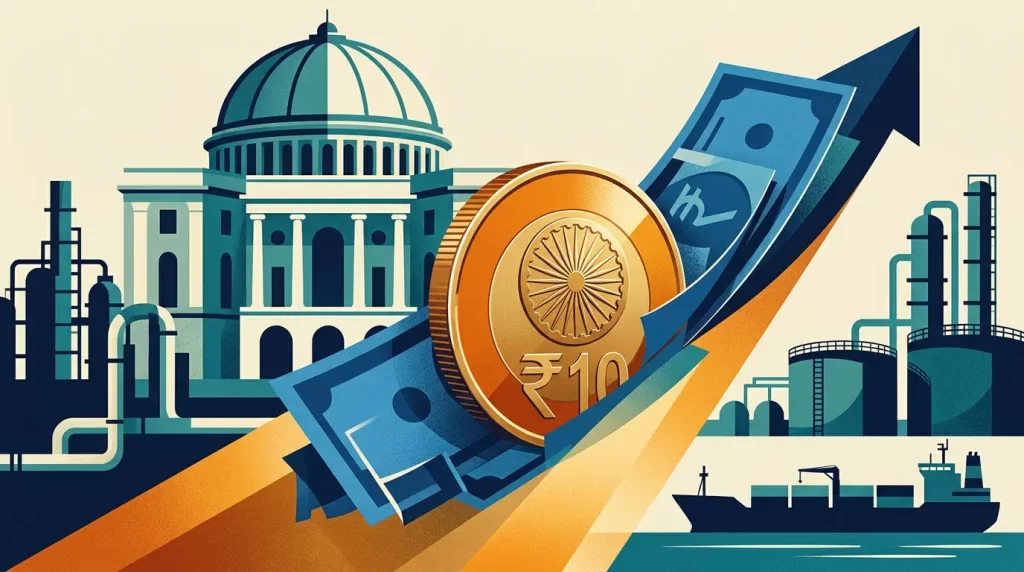
Anyone who has watched the rupee over the past few months knows the feeling: you check the exchange rate, wince, and hope tomorrow is kinder. On Tuesday morning, for once, it was. The rupee jumped nearly one per cent against the US dollar in early trade, rising 62 paise to 95.16. In a currency market where a few paise count as news, a move that size gets attention.
The trigger was a set of steps from the Reserve Bank of India. The most talked-about one is a dedicated dollar window for oil companies. It sounds technical, but the logic is easy to follow.
Why oil companies matter so much
India imports most of the crude oil it uses, and every barrel is paid for in dollars. That means oil marketing companies are among the biggest buyers of dollars in the country. When they go into the open market to buy large amounts at the same time, they push up demand for the dollar and push down the rupee. It is a bit like a crowd rushing a single ticket counter. The price of the ticket goes up simply because everyone shows up at once.
By opening a separate dollar window for these firms, the RBI is trying to take that rush out of the regular market. If a big chunk of oil-related demand is met through a dedicated channel, there is less pressure on the spot rate, and the rupee gets some breathing room. Traders seem to have read it exactly that way, which explains the sharp morning rally in the USD INR pair.
Tighter hedging rules as well
The central bank did not stop at the dollar window. It also tightened the rules around currency hedging. Hedging is how companies and investors protect themselves against sudden currency swings. When the rupee gets shaky, a lot of people rush to hedge, and that extra rush can itself add to the selling pressure. It becomes a bit of a self-fulfilling cycle: fear drives hedging, hedging drives more weakness, and weakness drives more fear.
Tighter rules could limit that extra hedging demand, which in turn takes some heat out of the market. Of course, there is a trade-off. Genuine businesses that need to manage currency risk may find the new rules more irritating, and importers or exporters with real exposures will want to see how strictly the changes are applied. But from the RBI’s point of view, calming speculative activity is worth a bit of friction.
What analysts are saying
Not everyone is ready to declare victory. Anindya Banerjee of Kotak Neo sees a working range of 94 to 97 for the rupee for now. That is a useful way of thinking about it: today’s gain is real, but it does not mean the currency is suddenly out of the woods. Banerjee also pointed to inflation as a risk. If price data comes in higher than expected, he says, the rupee could slide toward the 97 end of that range.
That link between inflation and the currency is worth understanding. Higher inflation can reduce the appeal of Indian assets for foreign investors, since their returns get eaten into. It can also force the central bank to think harder about interest rates. Either way, a surprise on the inflation front tends to make the rupee nervous.
The pressures that haven’t gone away
If you look past the headline gain, the underlying problems are still in the room. There are three main ones.
First, crude oil prices remain elevated. Since India buys so much oil from abroad, expensive crude means a bigger dollar bill. The new window helps manage how that demand hits the market, but it does not make the oil any cheaper. As long as prices stay high, the import bill will keep weighing on the currency.
Second, foreign capital has been flowing out. When overseas investors sell Indian stocks or bonds and take their money home, they have to convert rupees into dollars, which adds to the selling pressure on the rupee. Until that trend reverses, any rally is likely to face resistance.
Third, the US dollar itself is strong. This is not really about India at all. When the dollar strengthens globally, most emerging market currencies feel the squeeze, and the rupee is no exception. India can control a lot of things, but it cannot control what happens to the greenback worldwide.
What it means for ordinary people
It is easy to treat exchange rates as something that only traders and economists need to worry about, but a weak rupee reaches into everyday life. It makes imported goods costlier, from electronics to cooking oil. It raises the cost of overseas education and foreign travel. It can also feed into fuel prices, and fuel feeds into almost everything else, from vegetables on the market truck to bus tickets.
So a one per cent gain does not directly make your grocery bill smaller. But if the rupee holds steady, it can slow the rate at which prices creep up, and that matters to households already feeling the pinch.
The road ahead
The RBI’s moves look like a sensible attempt to ease immediate pressure rather than a permanent fix. The dollar window and the hedging curbs can smooth out sharp swings, but they cannot change the bigger forces of oil prices, global capital flows, and dollar strength. That is why Banerjee’s range of 94 to 97 feels like a realistic picture: some relief, but not a clean escape.
For now, the rupee has had a good morning, and that is worth noting. The real test comes over the next few weeks, when inflation numbers arrive, crude prices move, and foreign investors decide whether to stay or go. If the rupee can hold near 95 through all of that, the RBI’s gamble will look like a smart one. If not, the market will be asking what comes next.

