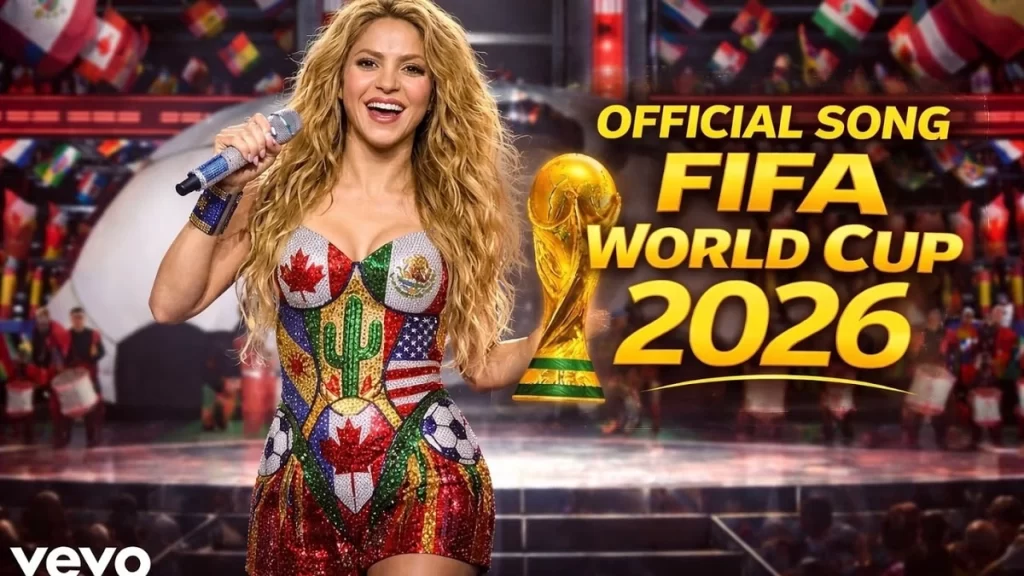
Shakira is back at the center of football music once again, and this time she has teamed up with Burna Boy for “Dai Dai,” the new official song linked to the 2026 FIFA World Cup. The release has already sparked attention because it brings together two global stars from very different musical worlds and turns that mix into a track built for stadiums, streaming, and worldwide singalongs.
A World Cup anthem with global reach
The timing matters. With the 2026 FIFA World Cup approaching, songs tied to the tournament often become part of the event’s identity long before the first whistle is blown. “Dai Dai” arrives with that kind of expectation, aiming to become more than just a promotional single. It is being positioned as a multilingual pop track that blends Afrobeats and Latin rhythms, which gives it a broad, international appeal.
That combination feels deliberate. FIFA music has often used crossover artists who can cross regions, languages and audiences and Shakira is still one of the most recognizable figures in that realm. Burna Boy, meanwhile, brings the energy and global cachet of Afrobeats, a sound that has moved from regional dominance to worldwide influence in just a few years.
Why Shakira fits this moment
Shakira is not new to the World Cup stage. Her music has long been associated with the tournament, and she has built a reputation for delivering songs that travel far beyond the football crowd. That matters because World Cup tracks are judged in a strange way: they need to work as pop records, but they also need to feel like sporting anthems, the kind of song you can imagine echoing through a packed arena.
Her involvement also gives “Dai Dai” instant recognition. For many fans, Shakira’s name alone signals a song with mass appeal and global reach. The release feels like a continuation of a long relationship between major football events and mainstream pop culture, where the anthem can sometimes become as memorable as the tournament itself.
Burna Boy’s growing footprint
Burna Boy’s role is just as important. The Nigerian artist is arguably one of the strongest global ambassadors for Afrobeats and his involvement in a FIFA World Cup song is testament to how powerful African music has become on the international stage. His style brings a rhythm, a momentum and a very contemporary sound that makes the track feel current rather than nostalgic.
This collaboration also speaks to the changing geography of global pop. A decade ago, a World Cup anthem led by a Latin superstar and an Afrobeats artist would have looked unusual. Today, it makes perfect sense. Streaming has flattened borders, and major sports events are increasingly using music that reflects a more connected world.
What “Dai Dai” sounds like
Reports describing the song say it combines Afrobeats and Latin rhythms in a multilingual pop format. Even without overexplaining the production, that detail tells you a lot about the direction of the record. It is likely designed to be rhythmic, catchy, and easy to chant in a live setting, with enough movement to work both on radio and in football arenas.
The title itself helps shape the mood. “Dai Dai” is described as an Italian expression meaning “Let’s Go!”, which gives the song a short, punchy phrase that fits the spirit of sport. That kind of title is useful in football culture, where simple words and repeated hooks can become crowd chants almost instantly.
Why this release is trending
There are a few reasons this song is drawing so much attention online. First, it combines two artists who already have global followings. Second, it connects directly to one of the biggest sporting events in the world. Third, World Cup songs tend to spread fast because they sit at the intersection of music, sport, and social media conversation.
There is also the curiosity factor. People always want to know whether a new World Cup anthem will capture the same energy as earlier tournament songs. Will it become a summer hit? Will fans embrace it in stadiums? Will it actually stick after the tournament hype fades? Those are the questions hanging over every major anthem release, and “Dai Dai” is no exception.
The bigger picture in football music
World Cup anthems are not just marketing tools. They are part of how the tournament builds memory. A good anthem can shape the emotional atmosphere around an event, giving fans a soundtrack for celebration, anticipation, and nostalgia. When a tournament ends, people often remember the music almost as clearly as the matches.
That is why FIFA and its partners keep returning to artist collaborations that can cross language and geography. In this case, the pairing of Shakira and Burna Boy makes strong strategic sense. One artist brings longstanding World Cup credibility, while the other brings the sound of a younger, globally expanding music market.
India and the global audience
For Indian listeners, this release has a familiar appeal. Football fandom in India has grown steadily, especially among younger audiences who follow the World Cup more for the atmosphere, songs, and social media moments than for the sport alone. A track like “Dai Dai” can travel quickly here because it matches the kind of global pop sound that performs well on streaming platforms and short-video apps.
There is also a practical reason it may catch on in India: multilingual hooks and dance-friendly rhythms tend to work across markets. The song’s fusion of Latin and Afrobeats influences makes it easy to market to audiences far beyond traditional football fans. That kind of crossover matters in a country where music trends often move fast and international collaborations get a lot of traction.
What it means for the 2026 World Cup
The 2026 FIFA World Cup is shaping up to be a much larger cultural event than just a football tournament. With music, digital media, and celebrity culture all feeding into its reach, the anthem will play an important role in setting the tone. “Dai Dai” appears built for that purpose, and its early buzz suggests FIFA wanted a song that could live across platforms, from stadium screens to TikTok clips.
The release also shows how sports marketing has evolved. A World Cup anthem today is not only judged on how it sounds, but on how quickly it can move through global conversation. The more instantly recognizable the artists, the better the chances of the song becoming part of the event’s wider identity. That is where Shakira and Burna Boy make sense together.
The road ahead
The real test for “Dai Dai” will come when it starts living beyond the announcement cycle. A World Cup anthem has to do more than trend for a few days. It needs to survive repeat listens, public performance, and fan reaction in crowded, high-energy moments. If the track lands the way its creators seem to intend, it could become one of those songs people associate with the 2026 tournament from the first beat.
For now, the collaboration has already done what a good anthem should do: it has made people pay attention. It has created a conversation around music, football, and cultural crossover. And it has reminded everyone that when the World Cup nears, the soundtrack matters almost as much as the game itself.
Shakira and Burna Boy’s “Dai Dai” Sets the Tone for the 2026 FIFA World Cup