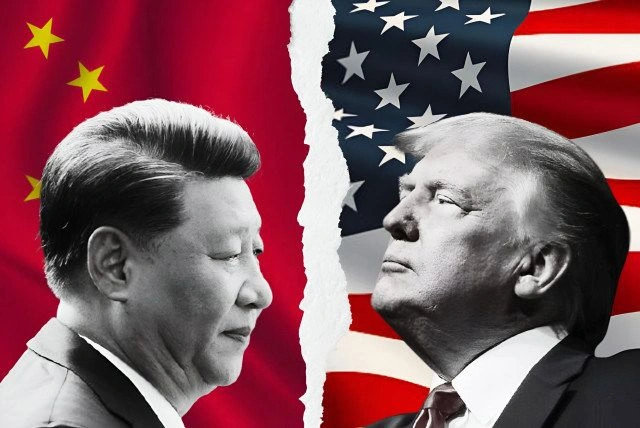
Donald Trump’s tightly choreographed talks with Chinese President Xi Jinping in Beijing have closed the latest chapter in what has become a long‑running, high‑stakes saga between the world’s two largest economies. While the atmosphere was framed as “constructive” and “forward‑looking,” the concrete trade agreements announced were far more modest than the headlines suggested. What emerged was not a sweeping new deal, but a thin yet symbolically important layer of de‑escalation—enough to lift global markets, but not enough to erase the deeper structural tensions that have defined the US–China relationship for years.
For ordinary consumers, investors, and Indian exporters sitting in between these two giants, the real question is not just what was signed in Beijing, but what remains unspoken, or merely penciled in, between Washington and Beijing for the months ahead.
The scene in Beijing: diplomacy and optics
The summit in Beijing was notable less for lightning‑bolt announcements than for the fact that it happened at all. Trump, back in the White House after a victory in the 2024 election, has long preferred high‑stakes, face‑to‑face meetings over slow, technical negotiations. Xi, for his part, has been cautious about exposing China to the kind of volatility that can come from unpredictable, media‑driven encounters.
So when the two leaders emerged from hours of talks and declared that they had “made outstanding decisions,” the phrasing was carefully chosen: optimistic, but low on specifics. Trump described the talks as “amazing” and claimed that “excellent agreements” had been reached, especially on the issue of rare earths and some agricultural purchases. Xi, by contrast, spoke in broader terms about “stability” and “mutual respect,” avoiding the kind of detailed commitments that could later be used politically against him at home.
For observers in India and across the developing world, what stood out was the contrast in style: Trump’s familiar deal‑making bravado against Xi’s more reserved, almost institutional tone. It raised an obvious question: when two leaders talk about “great achievements” while agreeing to relatively narrow measures, who is really winning—and who is being asked to wait for the next round?
What was actually agreed—and what wasn’t
Public coverage of the talks points to a few key items, but they fall short of a comprehensive trade reset. The most concrete element is a partial rollback of tariffs between the US and China, building on a broader truce that had already been announced in earlier negotiations.
The United States is set to reduce additional tariffs on a broad range of Chinese imports from around 145 percent down to 30 percent for an agreed period.
In return, China will cut its retaliatory tariffs on many American goods from about 125 percent down to 10 percent, again for a limited time.
Both sides have agreed to suspend some of the non‑tariff measures—export restrictions, licensing hurdles, and administrative barriers—that had been used in recent months as tools of economic pressure.
On agriculture, Trump said China has committed to buying “substantial amounts” of US farm products, including soybeans and corn, which could be a relief for American producers who have struggled with lost markets in recent years. Rare earths, which are critical for everything from smartphones to electric vehicles and defence systems, were also highlighted, with assurances that China would not tighten export curbs on these materials or the processing equipment linked to them.
Yet even with these steps, the trade framework remains narrow. There was no sweeping new tariff‑free zone, no detailed roadmap for resolving long‑standing disputes over intellectual property, nor any clear signal that core technology‑related restrictions—such as those on advanced semiconductors—would be rolled back. In Beijing, the emphasis was on “stability” and “managing tensions,” not on a fundamental rewrite of the economic relationship.
Is this, then, a genuine pivot toward cooperation—or simply a tactical pause in a conflict that is still very much alive beneath the surface?
Why “limited” agreements still matter
On paper, the changes look modest. In practice, they carry real weight for global markets, supply chains, and emerging economies such as India that are deeply entangled with both sides.
For US companies, the tariff reductions mean lower costs on many Chinese‑made inputs, from electronics components to certain machinery. For Chinese exporters, reduced US duties open the door to a partial recovery in demand, especially in sectors like consumer electronics and light manufactured goods. For investors, the mere prospect of a less volatile US–China trade environment has already fed into stronger stock‑market performance in recent weeks.
In India, the implications are more nuanced. If the US and China begin to smooth some of their trade friction, New Delhi may find it harder to exploit their rivalry to extract concessions or attract investment by playing them off against each other. At the same time, lower global tariff uncertainty can reduce shipping costs and stabilise prices for key raw materials, which benefits Indian manufacturers and consumers alike.
The reduction in trade hostility also affects how other countries think about economic security. If the US and China are willing to cooperate on rare earths and basic agricultural trade, does that mean they can also find middle ground on more sensitive technologies—or does it simply free them to focus their competition elsewhere?
What’s left unsaid: technology, security, and Taiwan
Behind the trade‑focused optics, the Beijing talks did not significantly ease the underlying geopolitical friction. Technology, security, and Taiwan remain flashpoints, not negotiation points, in the Trump–Xi relationship.
Reports from previous Trump–Xi encounters suggest that while both sides have discussed fentanyl and drug‑related tariffs, they have stopped short of fully dismantling the additional 10‑20 percent duties Trump had imposed on China‑linked fentanyl‑related chemicals. That leaves a lingering pressure valve that the US can use if it feels Beijing is not moving fast enough on cross‑border drug control.
On technology, the tone from Washington has remained firm: semiconductors, artificial intelligence, and certain advanced manufacturing capabilities are treated as “national security” issues, not as ordinary trade items. Beijing, in turn, has pushed back against what it sees as unfair export controls and investment restrictions on Chinese firms. In Beijing, there was little indication that these fault lines had softened, even as the two sides talked about “stability” and “cooperation.”
And then there is Taiwan—a question that rarely appears in the official trade communiqués but shadows every conversation between Washington and Beijing. Trump’s previous term was marked by a mix of tough rhetoric, arms‑sales to Taiwan, and occasional softer signals to Beijing. In the current moment, Xi continues to insist on the “one China” principle and to treat any strengthening of US–Taiwan ties as a red line. The absence of any clear breakthrough on Taiwan in the Beijing talks suggests that economic diplomacy and security politics are still operating on parallel, often divergent, tracks.
Can these two powers really separate their economic engagement from their strategic rivalry—or is the pretence of separation itself becoming harder to sustain?
What this means for India and the global economy
For India, the outcome of the Trump–Xi talks matters in several concrete ways. First, whatever reduces trade friction between the US and China tends to ease upward pressure on global inflation, which is a small but welcome relief for Indian households already dealing with food‑price volatility and energy‑cost swings. Lower tariffs and fewer export restrictions can also translate into more predictable supply chains, which benefits Indian exporters in sectors from textiles to automotive components.
Second, India’s own economic strategy has, in part, relied on positioning itself as an alternative manufacturing base to China. If US–China trade becomes slightly smoother, there may be less urgency in Washington for companies to fully “de‑risk” from China, at least in some intermediate‑tech sectors. On the other hand, any remaining uncertainty gives India a continued incentive to deepen port infrastructure, streamline customs processes, and attract investment by offering political stability and a large domestic market.
Third, the rare earths and technology‑related elements of the Beijing talks have long‑term implications for India’s ambitions in advanced manufacturing and defence. If China is willing to keep its rare‑earth exports open to the US, it may reduce the immediate pressure on Washington to build alternative supply chains in Asia. But if that cooperation looks fragile, both the US and other partners could start looking more closely at India and other countries as potential secondary sources for critical minerals and processing capacity.
In other words, India’s best bet may be less about betting on a permanent US–China breakdown and more about positioning itself as a resilient, flexible partner in whatever mixed‑signals world emerges from Beijing’s negotiating rooms.
The bigger picture: trade, trust, and timing
The real story of the Trump–Xi Beijing talks is not the thin list of tariff cuts or vague promises about agricultural purchases. It is about the fact that the two leaders met at all, and that they chose to frame the encounter as a step toward stability, even if the details are limited.
For markets, that signals a brief reprieve from the threat of sudden, escalatory moves. For policymakers around the world, it underlines how fragile trade order can be, and how easily a single meeting can shift the mood from confrontation to cautious optimism. For ordinary citizens—from New York to Shanghai to Mumbai—it raises a simple but sharp question: how much can we really count on these kinds of “limited” deals when the next election, crisis, or shock could bring everything back to the brink?
Perhaps the most realistic takeaway is this: the Beijing talks did not end the US–China trade conflict, but they did succeed in pausing it for a while. In an era of overlapping crises—from climate stress to debt strains and geopolitical volatility—a pause, however small, can still be a kind of victory. The real test will come not in the weeks after Beijing, but in the months ahead, when the world finds out whether this limited de‑escalation is just the calm before another storm—or the first step toward something more durable.
Trump‑Xi Beijing Encounter Ends with Limited Trade Gains, Big Questions for Global Markets