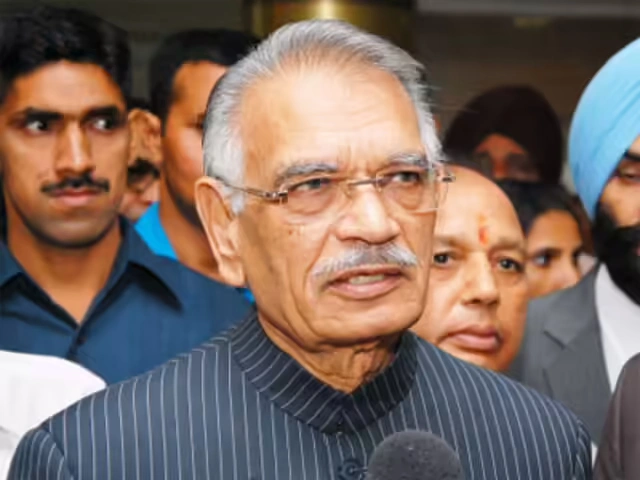
Senior Congress leader Shivraj Vishwanath Patil, a towering figure in Indian politics who served as Union Home Minister, Lok Sabha Speaker, and in several key constitutional positions, passed away on Friday at the age of 90. Patil breathed his last at his residence in Latur, Maharashtra, following a brief illness. His death marks the end of a distinguished public career spanning more than five decades.
Leaders across the political spectrum expressed deep condolences, describing his demise as a significant loss to India’s democratic institutions and parliamentary traditions.
A Distinguished Journey From Maharashtra to National Leadership
Born on October 12, 1935, in Chakur village in Latur district, Patil’s early life in rural Maharashtra shaped his grounded approach to governance and public duty. After completing degrees in arts and law, he began his political journey at the grassroots level before rising through the ranks of the Indian National Congress.
Patil was first elected to the Lok Sabha in 1980 and went on to represent the Latur constituency seven times, earning a reputation for discipline, restraint, and constitutional clarity. His election as the 10th Speaker of the Lok Sabha in 1991 placed him at the helm of India’s parliamentary affairs during a transformative era marked by economic liberalisation and the rise of coalition politics.
Leadership During Critical National Moments
Patil’s most prominent and challenging role came when he assumed charge as Union Home Minister in 2004 under the United Progressive Alliance government. His tenure saw several major internal security challenges, culminating in the 26/11 Mumbai terror attacks, a watershed moment that reshaped India’s national security framework.
In the aftermath of the attacks, Patil resigned from his position, taking moral responsibility — a move widely regarded as an assertion of democratic accountability and ministerial ethics. Throughout his years in government, he also held crucial portfolios including Defence, Commerce, and Science & Technology, demonstrating deep versatility in policy-making and administration.
Later Roles and Legacy of Statesmanship
After stepping away from the Union Cabinet, Patil continued his public service as the Governor of Punjab and Administrator of Chandigarh from 2010 to 2015. He was respected for his strict adherence to constitutional principles and his calm, methodical approach to governance.
Patil remained a guiding figure within the Congress party, known for his loyalty, measured communication, and unwavering commitment to parliamentary decorum. His career, spanning legislature, executive governance, and constitutional office, stands as a testament to his dedication to Indian democracy.
Key Highlights of Shivraj Patil’s Career
| Position | Tenure |
|---|---|
| Lok Sabha Speaker | 1991–1996 |
| Union Home Minister | 2004–2008 |
| Governor of Punjab | 2010–2015 |
| Administrator of Chandigarh | 2010–2015 |
| Member of Lok Sabha | Seven terms |
A Lasting Impact
Shivraj Patil’s passing leaves behind a legacy defined by constitutional integrity, disciplined leadership, and decades of service to the nation. As tributes continue to pour in, political leaders, lawmakers, and citizens alike remember him as a statesman who navigated some of India’s most challenging political moments with dignity and composure.
His funeral will be held in Latur, with senior leaders expected to attend and pay their respects to one of India’s most experienced parliamentarians.