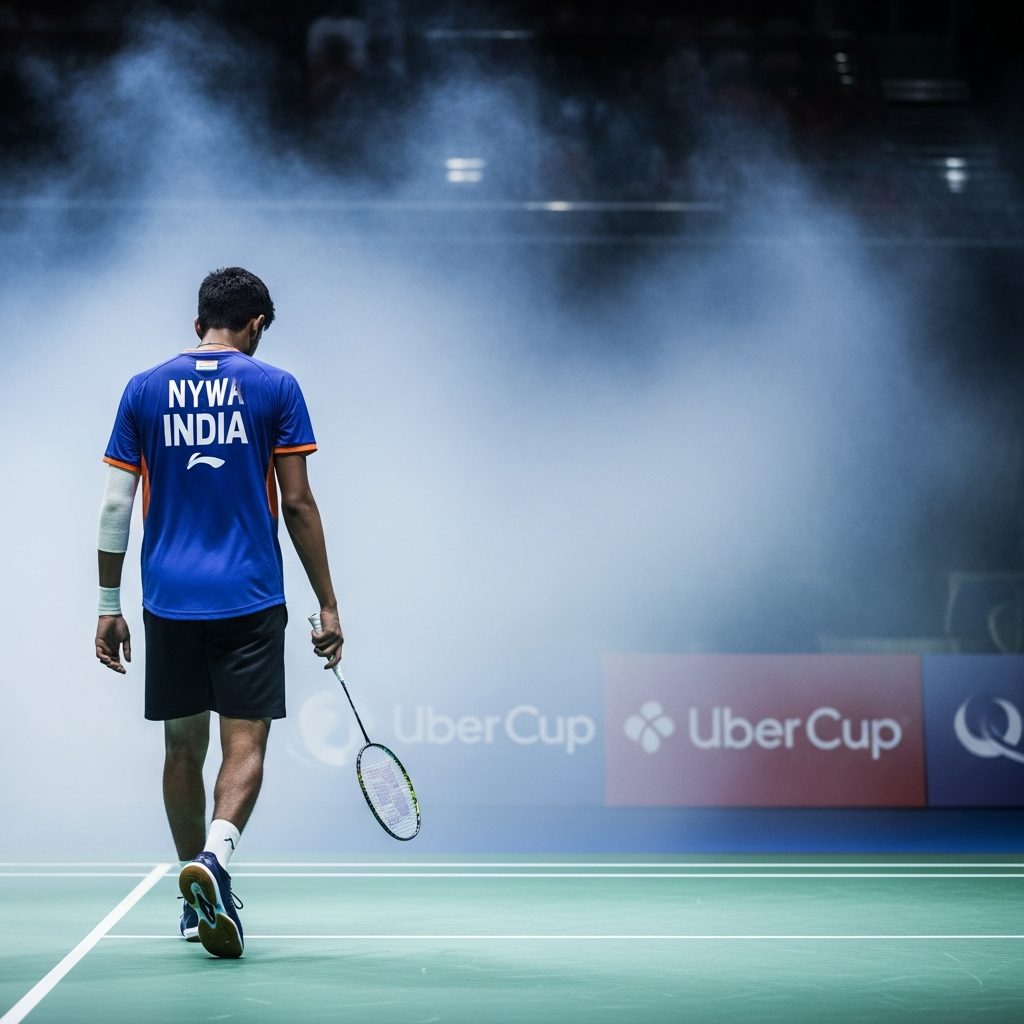
There is something about sport that has a way of stripping things bare. No amount of optimism, no pre-tournament confidence, no carefully worded expectations can paper over the gap between where a team is and where it needs to be — not when the shuttlecock hits the floor at the wrong moment, not when the scoreboard tells a story you were hoping to avoid.
India’s defeat in the Uber Cup 2026 finals hurt. It was supposed to be different this time. In the buildup to the tournament, there was genuine belief — not just hope, but belief — that this Indian women’s badminton team had the tools to go further than any Indian side had gone before. And in patches, they showed exactly that. But patches are not enough at this level, and the final result was a reminder of just how unforgiving elite international badminton can be.
What Happened on Court
The Uber Cup, for those less familiar, is the pinnacle of women’s team badminton — the equivalent of a World Cup for the sport. Countries send their best players, strategies are planned months in advance and the margins between winning and losing are often razor thin. The India badminton news going into 2026 was cautiously optimistic with many young players showing significant improvement on the international circuit.
But when the pressure of the finals came to bear, India met a team that simply executed better when it mattered most. The singles matches — always the spine of any Uber Cup campaign — were competitive but ultimately not in India’s favour. The doubles combinations, which had shown promise in earlier rounds, couldn’t hold their form through the decisive ties.
What unfolded wasn’t a collapse. It wasn’t embarrassing. But it was a defeat, and a significant one given the stakes and the expectations that had been carefully built around this squad.
The Structural Gaps That Keep Appearing
Every time India falls short in a major badminton tournament, the conversation that follows tends to circle around the same set of issues. And in 2026, those conversations are happening again — because the problems, while not unchanged, have not been fully solved either.
Depth is one of them. India has, in recent years, produced world-class singles players capable of winning titles individually. But team competitions are a different beast. The Uber Cup demands strength across five matches — three singles and two doubles — and India’s depth beyond their top two or three players remains a genuine concern. When opponents target the lower-order singles slots, India can be exposed.
Doubles, in particular, continues to be an area where India trails the best Asian sides. South Korea, Japan, and China have built doubles programs with technical sophistication and strategic clarity that India is still working toward matching. The badminton results from this tournament reflected that gap clearly.
Mental resilience under finals pressure is another conversation worth having — not as a criticism of the players, but as a recognition that handling the weight of a final, with a nation watching, is something that needs to be trained just as rigorously as footwork or smash technique.
The Players Deserve Credit, Not Just Criticism
It would be easy — and lazy — to simply catalogue India’s shortcomings after a defeat. But the players who wore the Indian jersey in the Uber Cup 2026 deserve genuine acknowledgement before the analysis takes over.
These young women have worked extraordinary hours to reach the level they’re at. Several of them come from modest backgrounds, navigating the pressure of family expectations, funding challenges, and a sporting ecosystem that, while improving, still does not give women’s sport the consistent support it deserves. Reaching an Uber Cup final is not a small thing. It is the result of years of sacrifice that most people watching from home will never fully appreciate.
Sports India performance assessments sometimes lose sight of this. Progress is real, even when the trophy doesn’t come home.
What the Road Ahead Looks Like
The defeat should prompt honest conversations, not panic. India’s badminton infrastructure has been improving — the national academy system has produced tangible results, coaching quality has risen, and international exposure has increased. But there are structural investments still needed.
More competitive domestic tournaments that genuinely stress-test players. Greater focus on doubles-specific training programs. Sports psychology integrated into preparation, not treated as an afterthought. And perhaps most importantly, a long-term national plan for women’s badminton that goes beyond simply banking on individual talent to emerge organically.
Global sports at the highest level rewards systems, not just stars. India has stars. What it needs now is the system to surround them.
The Uber Cup defeat stings today, as it should. Defeats are supposed to sting — that’s what makes them worth learning from. The question that will define the next chapter of India’s women’s badminton story is not what went wrong in 2026, but what gets fixed before 2028.
There is no denying the potential. The hunger is there. Now it needs to be matched by the structure, the strategy, and the sustained investment that turns a good team into a great one.
The shuttlecock will drop again. The question is which side of the court it lands on next time.
So Near, Yet So Far: On India’s Uber Cup Loss, and What Lies Ahead.