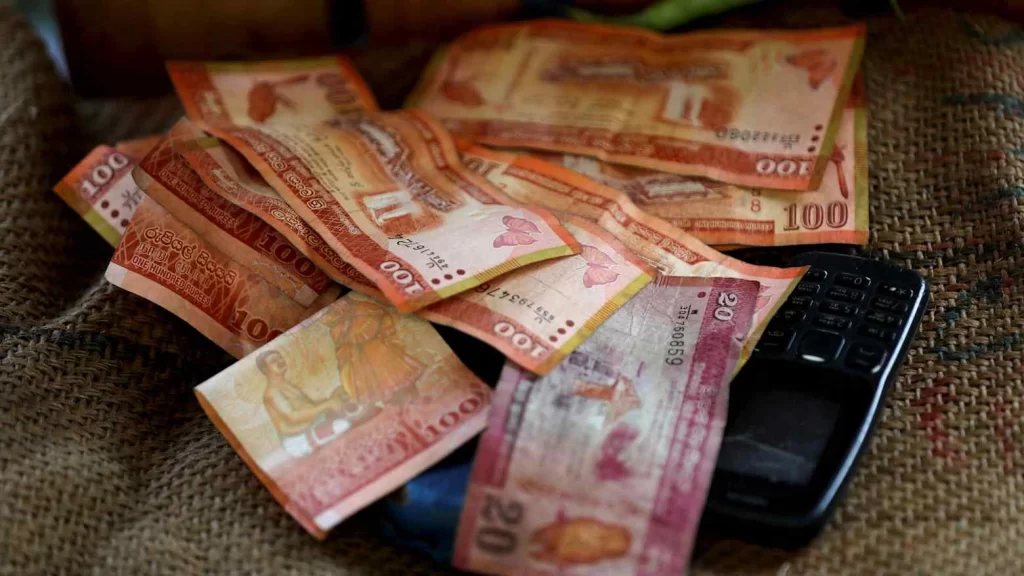
Sri Lanka’s financial system is under fresh pressure after an incident of cyber fraud that allegedly saw about 2.5 million dollars stolen from a government-related payment, forcing the Central Bank of Sri Lanka to act swiftly with a new security mandate to tighten controls across the country’s banking network. The lawsuit has become a warning shot for public institutions and commercial banks and payment service providers. If a government payment can be compromised at this magnitude, what does that indicate about the broader digital finance ecosystem?
The fallout isn’t about a stolen payment. It’s about trust, it’s about digital infrastructure, and it’s about how fast financial crime is changing. The Sri Lankan cyber-heist has revealed one uncomfortable truth in an area where internet banking, rapid transfers and digital government operations are booming: convenience often trumps security.
expensive wake-up call
The alleged fraud involving a government payment has sent alarm bells ringing in Sri Lanka’s banking and public finance space at a time when the country is seeking to regain confidence in its economy and institutions. Officials did not officially label the occurrence as a systemic failure, but the scale of the loss and the fact that a government-linked transaction was involved made the matter particularly sensitive.
There are various ways this type of cyber fraud might happen. Criminals can use phishing, credential theft, account take-over, fraudulent payment instructions or weaknesses in corporate approval systems. In other cases, attackers do not fully compromise the system. They simply exploit human error, weak verification or shortcomings in cross-checking procedures. That’s frequently enough.
The Central Bank’s response implies that regulators now see a need for increased control, better authentication mechanisms and increased coordination between banks, treasury systems and payment platforms.
What the new mandate means
The Central Bank of Sri Lanka’s resolve to impose tougher financial safeguards is likely to mean a wider range of compliance standards for banks and financial organizations. The particular technical steps may differ, but the direction is clear: more scrutiny, tougher identity verification, and a better incident response.
Likely areas to be strengthened include:
High-value transaction multi-factor authentication
Enhanced transaction monitoring to spot irregular transfers.
Speed of incident reporting and cyber-incident escalation.
Routine security audits and penetration testing.
Train staff to mitigate risk of social engineering.
Such tightening of regulation is becoming a typical feature across the globe, with cybercriminals increasingly targeting banking institutions that move money swiftly. The faster the transfer, the tougher it may be to reverse. And when public money is involved, the reputational harm can be substantially worse than the immediate loss.
Why are government payments so attractive?
The reason government payment systems are intriguing to hackers is simple: they usually involve big amounts of money, many players and convoluted approval processes. That’s a possible number of weak spots. A typical financial organization has multiple layers of fraud protections. But public-sector payments can be more piecemeal, with numerous agencies, vendors and banking partners all touching the same transaction channel.
This leaves them open to one of the oldest tactics in cyber fraud: impersonation. Sometimes a false email, faked instruction or modified payment request can sneak through if workers are under pressure or verification controls are not tight enough.
In many circumstances, fraudsters don’t even need to break into a core banking system. All they need to do is convince someone that an actual payment instruction is genuine.” Then, process discipline is as important as software security.
The digital financial problem for Sri Lanka
Sri Lanka has been growing its digital banking services for years and that growth has produced real benefits. Faster transfers, simpler access to banking and more efficient public transactions can all help economic recovery. But the digital switch turns up the heat as well.
With more transactions moving online, financial institutions are forced to guard against a larger range of dangers, including:
Phishing attempts on staff and customers.
Malicious Software and Remote Access Tools.
Insider threats.
Fake payment instructions to suppliers or vendors.
Stolen credentials account takeover.
Exploitation of weak password policy.
Delays in identifying illegal transfers.
This is not a problem peculiar to Sri Lanka. Banks are seeing a dramatic spike in cyber-enabled frauds across South Asia and elsewhere. For instance, authorities and law enforcement have repeatedly warned India about frauds in digital payments, the use of mule accounts and social engineering fraud. For governments updating their payment rails, the message is becoming hard to ignore: security can’t be an afterthought.
The reputational cost also concerns
A $2.5 million dollar loss may appear like a little price to pay inside a national banking system but the reputational cost can be significantly more expensive. When a government payment is part of a cyber-heist, the public asks tough questions. Who okayed it? Why did it not stop? Could it be repeated?
Those questions are important since confidence is a basic banking asset. People act differently when they start to doubt that their money is safe. They may delay digital adoption, be reluctant to transact online or distrust the credibility of state services. It can take years to heal that kind of trust gap.
There’s also a political element. But even if the technological error originates in a specific process or department, public sector fraud incidents typically become emblems of wider administrative failure. That is the worst thing policymakers desire in a country currently trying to balance economic recovery and institutional transformation.
A broader global trend
The Sri Lankan instance is part of a larger worldwide trend. The stakes are high and the attack surface is broad, resulting in an increase in cyberattacks on financial institutions, payment processors and public authorities. Criminal groups are more organized, more patient and better able to combine technical penetration with human deception.
The threat of modern cyber fraud is that it can look so mundane. It can seem like a mundane transfer request. A login could look normal. A payment can go through many processes before anyone sees something wrong. By the time the bells ring, the money could already be in a web of accounts designed to make it difficult to reclaim.
That’s why regulators worldwide are calling for improved fraud detection, real-time payment screening, and closer collaboration between financial institutions and law enforcement.
Which banks could have to adjust now
Banks find that the true cure after an occurrence like this, is not a single tool but a chain of controls operating together. Security needs to span technology, people and process.
Feasible practical steps include:
– independent validation of large-value government payments.
Limits on transactions and multi-step approvals.
Strengthening email and payment instructions verification.
More aggressive tracking of changes in beneficiaries.
Flagging new or suspicious recipient accounts.
Developing quick freeze and recall procedures for suspect transfers.
Conducting regular drills for fraud response teams.
Airport security is a good analogy. One checkpoint isn’t enough to make travel safe. It takes layers and layers. It is the same with banking security. If one control fumbles, another should be able to cover.
Why it matters for India and the region
For India, Sri Lanka’s cyber-heist is a near-term watch. The two countries share trade linkages, banking links and a regional ecosystem increasingly dependent on digital payments and cross-border activities. India’s own digital banking growth has been phenomenal but has also received persistent scrutiny from fraudsters.
Any incidence of a government payment compromise in a nearby market is a reminder that cyber danger does not recognize borders. Criminal networks are moving rapidly across jurisdictions and payment systems typically interact in ways that are vulnerable to similar approaches.
The message for regulators in the region is rather clear: the pace of digital transformation must be matched by similarly strong cyber governance. Are institutions investing enough to avoid, or do we still see cybercrime as an IT problem, not a financial stability problem?
Sri Lanka tightens banking security after $2.5 million cyber heist exposes weaknesses in government payments