
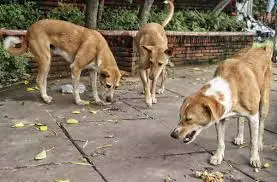
On November 7, 2025, the Supreme Court of India issued a sweeping directive calling for the immediate removal of stray animals, including both cattle and dogs, from national and state highways as well as institutional areas such as schools, hospitals, bus stands, and railway stations. The order was prompted by an alarming rise in animal-related road accidents and dog-bite incidents in public spaces across the country.
The court mandated that state governments, union territories, municipal bodies, and the National Highways Authority of India (NHAI) identify all vulnerable public locations within two weeks and take immediate steps to remove stray dogs and cattle. These include educational institutions, hospitals, sports complexes, bus terminals, railway stations, and major highway stretches.
For stray dogs, the Supreme Court directed that the animals be relocated to designated shelters after due sterilisation and vaccination in accordance with the Animal Birth Control (Dogs) Rules, 2023. The bench further stated that the dogs should not be released back into the same location from where they were picked up, as doing so would defeat the purpose of making institutional areas safe for the public.
Regarding stray cattle and other animals on highways, the court extended earlier high-court directives into a nationwide mandate. The NHAI and state transport authorities were instructed to form dedicated highway-patrol teams, set up helpline numbers for reporting stray animals, and ensure cattle are removed from national and state highways and relocated to shelters.
To ensure accountability, the Supreme Court directed Chief Secretaries of all states and union territories to file compliance affidavits within eight weeks. These reports must detail the steps taken to secure institutional areas through fencing and boundary walls, appoint nodal officers in key institutions, and guarantee the availability of anti-rabies vaccines and immunoglobulin at government medical facilities.
The order has received mixed responses from the public and animal welfare organisations. Several activists have raised concerns, calling the directive “unsustainable” and “counter-productive,” given the country’s limited number of shelters and resources for large-scale animal relocation. They argue that abrupt mass removal without proper infrastructure could lead to cruelty and neglect of animals, undermining animal-welfare principles.
From the perspective of public safety, the Supreme Court cited a significant increase in dog-bite cases near schools and hospitals, as well as media reports of frequent accidents caused by stray cattle on highways. The court also noted India’s alarming number of rabies cases and emphasised the urgent need to mitigate such risks through coordinated measures.
This order marks a decisive shift in how stray-animal management is approached in India — viewing it not only as a welfare concern but also as a matter of public safety and road security. By directing the creation of fenced premises and nodal officers, the judiciary aims to introduce a systemic and sustainable framework to address stray-animal challenges.
However, the implementation hurdles are considerable. India’s stray-dog population is estimated in the tens of millions, and stray cattle remain a common sight on highways. The availability of adequate shelters, trained personnel, and humane relocation mechanisms will determine whether the order achieves its objectives. The “no-release” clause for dogs, while intended to improve safety, may conflict with earlier policies that emphasised sterilise-vaccinate-release programs.
The Supreme Court’s directive underscores the urgent need for collaboration between government agencies, animal-welfare organisations, and local communities. Its success will depend on humane execution, efficient infrastructure, and continuous monitoring. For the public, the decision represents a step toward safer streets and institutions; for animal advocates, it highlights the importance of balancing safety with compassion.

