A regime in transition
The Ministry of Home Affairs (MHA) on 30 April, 2026 notified the Citizenship (Amendment) Rules, 2026 amending the Citizenship Rules, 2009. At first glance, the change looks like a routine tweak to a decades‑old framework. In practice, it is the most significant overhaul of India’s citizenship‑adjacent regime since the Overseas Citizen of India (OCI) scheme was first introduced in 2005. Gone are the days of postal applications and paper dossiers. In their place stands a fully digital, biometric‑enabled e‑OCI ecosystem, backed by tighter compliance norms and stricter consequences for non‑compliance.
For millions of Indians living abroad, the rules will reshape how easily they can access long‑term residence, travel, and financial rights in India. For the state, they offer a sharper lens on who is entering and exiting the country, and—critically—on who is falling short of the rules.
So what exactly has changed, and what does it mean for Indians at home and overseas who are navigating passports, OCI status, and compliance in a more scrutinised era?
The big shift: everything goes online
Under the amended rules, all OCI‑related applications—registration, renunciation, renewal, transfer to a new passport, and even cancellation—must now be filed electronically through the official OCI portal, ociservices.gov.in. That means no more printed forms, no more courier packets, and no more “in duplicate” document submissions. The need to submit hard copy documentation twice has been removed, making the system closer to a paperless experience.
For a country with a massive diaspora spread across five continents, this is both a convenience and a constraint. Filing online is faster and easier for digitally literate families, but it also raises the risk of exclusion for those with limited internet access, complex documentation, or unfamiliarity with India’s digital‑governance stack. A hopeful question lingers: how many older applicants will get stuck in a portal that assumes a certain level of tech fluency, and how will the government respond when delays and rejections start to pile up?
Birth of the e‑OCI and the paperless card
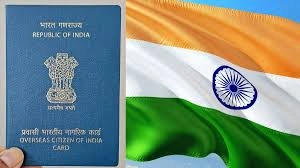
One of the most visible changes is the formal introduction of the Electronic OCI (e‑OCI). For the first time, OCI status can be issued purely in digital form, with or instead of a physical card. The rule specifies that each OCI cardholder will receive either a physical OCI card or an electronic OCI (e‑OCI), and the details of every registered person will be recorded in Form XXIX and maintained electronically in Form XXX.
This move fits squarely into the broader “Digital India” narrative: centralised records, instant verifiability, and reduced operational costs for embassies and consulates. But it also places a heavier burden on protection and privacy. Storing passport‑linked biometric and personal data on government servers means that any breach, technical glitch, or misuse becomes a far more serious issue than a lost or forged paper card.
Industry watchers note that employers and corporate mobility teams can now bulk‑upload spreadsheets of OCI holders, track travel‑readiness in real time, and avoid the administrative hassle of couriering documents. That’s a win for multinationals and Indian‑MNCs, but it also quietly nudges the state toward a more tightly integrated ecosystem where travel, work, and data flows are all on one digital leash.
Digital renunciation and cancellation: closed doors, open records
The new rules also tighten the closure of an OCI journey. If a person’s OCI registration is cancelled, they are required to submit the physical OCI card within the time specified in the written notice. If the card is not surrendered, an order can still be issued cancelling the registration, and in the case of an e‑OCI, the Central Government can treat the e‑OCI registration as cancelled.
In practical terms, this strengthens the state’s ability to claw back benefits from individuals whose status is revoked—whether for overstaying, criminal charges, or other violations. It also reduces the grey space where someone might retain a physical card as a de facto “insurance” against scrutiny, even after their status has been withdrawn.
At the same time, the rules mandate that digital renunciation be recognised and recorded. An applicant can now surrender OCI status online, and the system must acknowledge that action in the register. This is likely to be welcomed by those who have acquired citizenship elsewhere and no longer wish to straddle the OCI‑India‑foreign‑citizen triangle.
New compliance and penalty rules
The amendments are not just about convenience; they are about accountability. Under the revised regime, OCI registration can be cancelled if a cardholder is charge‑sheeted for an offence punishable with seven years or more of imprisonment, supplementing the existing ground of cancellation when a person is sentenced to two years or more.
This is a significant expansion of the state’s power to revoke OCI status. It moves the threshold from a post‑conviction basis to a pre‑conviction one, where being formally charged with a serious offence is enough to trigger a review. Critics ask: how consistently will this be applied, and what safeguards will prevent misuse against politically sensitive or high‑profile individuals?
Penalties for delays and non‑compliance are also being underlined, even if the exact quantum is not always spelled out in public summaries. Late filings, failure to notify change of address or passport, and attempts to “double‑dip” in terms of status are likely to attract financial fines or administrative de‑barment. This is part of a broader trend: India’s immigration and citizenship‑linked systems are increasingly framed as a privilege with conditions, not an automatic entitlement.
The minor passport puzzle
Perhaps the most emotionally charged change concerns minor children and dual passports. The rules now explicitly state that a minor child cannot, at any time, hold both an Indian passport and a passport issued by any other country.
This is a clear re‑assertion of India’s single‑citizenship doctrine: you cannot be both an Indian citizen and a foreign citizen at the same time. In practice, families with mixed‑citizenship backgrounds—where one parent is Indian and the other is foreign—will now have to make a sharper choice. They either give up the foreign passport or relinquish the Indian one for the child, at least until the child reaches the age of majority and can reassess their status.
For many NRIs and PIOs, this will feel like a loss of flexibility. Dual passports used to be a way to keep options open for education, healthcare, and future settlement. Now, the state is nudging such families toward a more decisive stance on nationality. One wonders how this will play out in emotionally complex, globally mobile families: will parents feel forced to choose between their child’s right to Indian roots and the practical benefits of a foreign passport?
Biometrics and fast‑track immigration
The new rules also embed biometrics into the citizenship‑adjacent workflow. OCI applicants must now consent to biometric capture so that their data can be integrated with the Fast Track Immigration Programme (FTIP), which powers e‑gates and automated immigration lanes at Indian airports.
In other words, an OCI application is no longer just about status on paper; it can also be a pre‑approval for touchless, biometric‑based entry and exit. Supporters hail this as a win for convenience and security: faster queues, smoother arrivals, and fewer opportunities for document fraud.
But biometrics also raise legitimate privacy questions. Whose data is stored, how long is it retained, and how is it shared with other agencies or with private players? The rules are not always transparent about these granular safeguards. As the e‑OCI‑linked biometric layer becomes more entrenched, one has to ask: at what point does an “immigration convenience” become a de facto surveillance infrastructure?
New appellate and review mechanisms
Amid the tightening of rules, the government has also introduced stronger procedural safeguards. If an OCI or citizenship‑related application is rejected or reviewed unfavourably, the applicant now has the right to be heard before a decision is finalised. Appeals or revisions can be filed before an authority one rank higher than the original decision‑maker, and there is also a separate review‑by‑Central‑Government route where the central government can revisit decisions after giving a fair hearing.
This is a welcome, if overdue, nod to principles of natural justice. Earlier iterations of the OCI regime were often criticised for opaque rejections and long‑winded grievance processes. By mandating a hearing‑right and a clear hierarchy of appeals, the 2026 rules try to balance the state’s authority with the individual’s right to challenge.
Yet, in practice, the effectiveness of these mechanisms will depend on how quickly hearings are conducted, how transparently reasons for rejection are communicated, and whether the system is truly insulated from political or bureaucratic pressure.
What this means for India’s diaspora
For the Indian diaspora, the Citizenship (Amendment) Rules, 2026 are a mixed bag. On one hand, the fully online, e‑OCI‑enabled system makes life easier for many: no more waiting months for a physical card, no more courier hassles, and faster processing for renewals and passport transfers. On the other hand, the stricter minority‑passport rule, expanded cancellation grounds, and biometric integration mean that the relationship between India and its overseas citizens is becoming more formalised, more conditional, and less forgiving.
From a global‑migration perspective, India is aligning itself with other major economies that combine digital identity, biometric screening, and risk‑based immigration rules. But the political and cultural context matters: India’s emotional ties to its diaspora are unusually strong, and any policy that feels “too hard” can trigger backlash among communities that still see India as a home, even if they live under another flag.
The bigger picture: citizenship, security and digital mastery
The 2026 rules are not made out of thin air. They sit alongside earlier reforms such as the Citizenship Amendment Act (CAA) and its implementing rules, which have already sharpened debates over inclusion, exclusion, and access to Indian citizenship. The Citizenship (Amendment) Rules, 2026 are less overtly political; they are more about procedure, technology, and compliance. But they still contribute to the same overarching narrative: India is tightening its gates, digitising its records, and reshaping who can move freely, for how long, and under what conditions.
As the e‑OCI system rolls out fully by the end of 2026, the test will not just be technical—whether the portal works, or whether biometric lanes function smoothly—but also social and ethical. Will the new regime genuinely serve the interests of ordinary Indians abroad, or will it become a tool that disproportionately penalises those who cannot navigate a complex, digitised bureaucracy? And as digital records grow ever more central to citizenship‑adjacent rights, how will India protect privacy, prevent misuse, and retain the trust of its global diaspora?
Those are questions the rules themselves do not answer. But they will define how the Citizenship (Amendment) Rules, 2026 are remembered in the years ahead—not just as a technical update, but as a quiet, far‑reaching shift in how India thinks about who belongs, and how they prove it.
The Citizenship (Amendment) Rules 2026: India’s new digital-first OCI system is redefining compliance, access and accountability