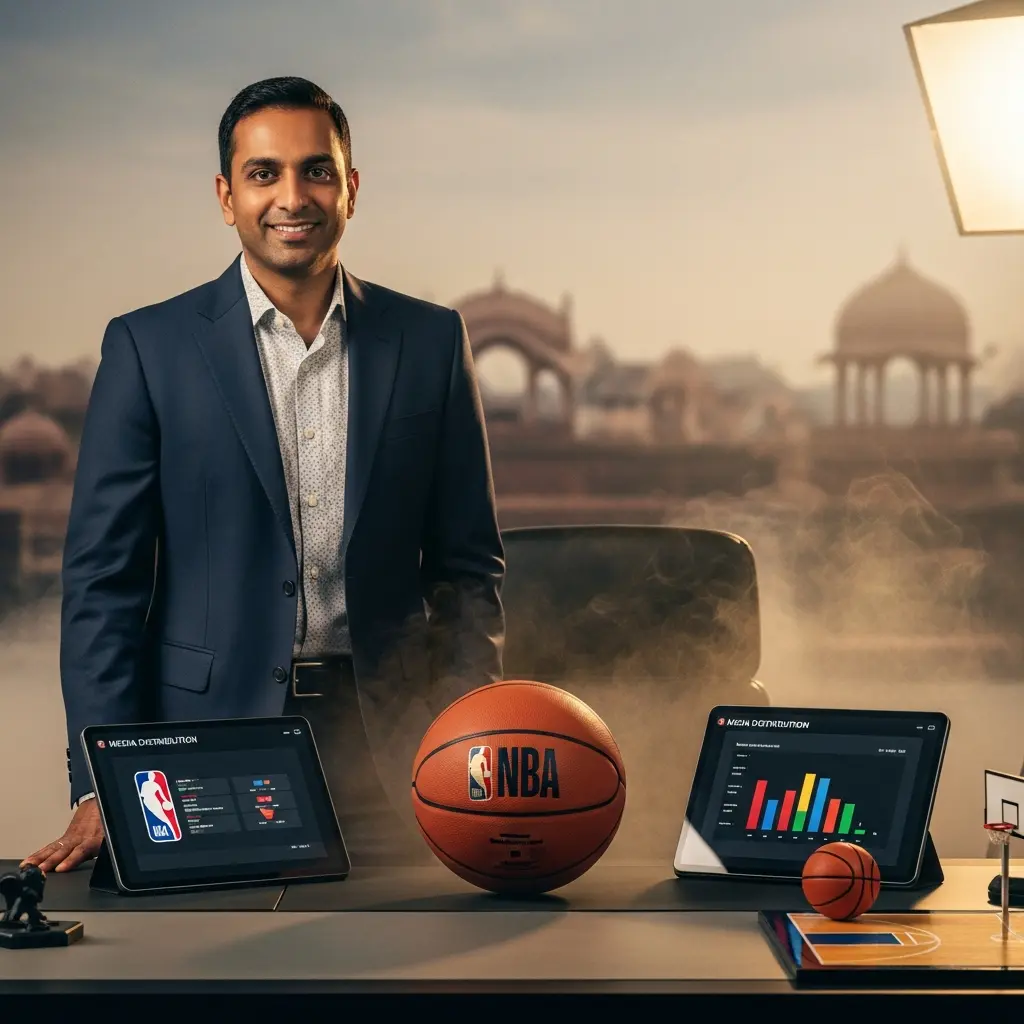
With Sunny Malik now leading its India operations, the NBA is making its most deliberate bet yet on a market that blends 1.4 billion potential fans with a sports economy quietly coming into its own.
Sunny Malik probably didn’t need much convincing. When the NBA came looking for someone to lead its India operations as the league’s newly appointed India Country Head, the job description wasn’t exactly a hard sell: take one of the world’s most recognisable sports brands into one of the fastest-growing sports markets on the planet, and build something that lasts. For a league that has spent two decades quietly laying groundwork in India — running academies, cultivating media deals, watching with interest as the country’s appetite for basketball slowly but unmistakably grew — this appointment feels less like a new beginning and more like an acceleration of something that has been building for a long time.
NBA India has never quite been a side project, but it hasn’t always had the dedicated senior leadership to match the scale of its stated ambitions either. That changes with Malik’s arrival. His mandate, as understood by those close to the league’s India operations, is broad and deliberately so: deepen commercial partnerships, expand media distribution, grow grassroots engagement, and — perhaps most critically — develop the local talent pipeline in ways that could eventually deliver an Indian-born player to an NBA roster. That last goal remains the holy grail of India expansion strategy, the moment that analysts believe would unlock a fan engagement unlike anything the league has experienced outside of North America.
“India doesn’t need to be sold basketball. It needs to be given serious, sustained infrastructure — and that’s precisely what this appointment signals.”
The timing reflects something real about where India sits in the global sports market right now. For years, the country was viewed through the narrow lens of cricket — a sport so dominant it seemed to leave no oxygen for anything else. That reading was always too simplistic, and it is increasingly outdated. Football viewership has surged. Combat sports have found passionate audiences. And basketball, while still far from cricket’s cultural monopoly, has carved out genuine communities across urban India, particularly among younger demographics who are consuming sport through smartphones and streaming platforms rather than through the traditional broadcast channels that cricket has historically controlled.
It is that digital shift that makes sports business in India so compelling for global leagues right now. The India expansion opportunity isn’t primarily about filling arenas — it’s about capturing attention at scale in a market where digital sports consumption is growing faster than almost anywhere else in the world. The NBA understands this. Its India media distribution strategy has increasingly leaned into streaming partnerships and social media content, meeting Indian fans where they actually are rather than waiting for them to come to a sport they weren’t raised on. Malik’s appointment signals a commitment to deepening that approach with local knowledge and relationship capital that a headquarter-level strategy alone can’t replicate.
On the partnerships front, the opportunities are substantial. Indian conglomerates are increasingly willing to spend on sports sponsorship as a way of building brand awareness among young, aspirational consumers. Telecoms companies, consumer electronics brands and fintech players have all been ramping up their sports marketing spend, and the NBA – with its global brand cachet and the association with the kind of cool, urban, youth-oriented identity that many of these companies want to project – is well placed to attract serious commercial interest. Building and managing those relationships on the ground, with the nuance that Indian business culture requires, is exactly the kind of work that demands someone with Malik’s profile.
The grassroots dimension is equally important and arguably more foundational. The NBA has run development programmes in India for over two decades — coaching clinics, school leagues, the Jr. NBA initiative — but scaling these into something that can genuinely identify and develop elite talent requires infrastructure, institutional partnerships, and consistent local leadership. There are talented young basketball players in cities like Mumbai, Delhi, Bengaluru, and Hyderabad. The challenge has always been connecting raw talent to professional-grade development pathways before it dissipates into other pursuits or career pressures. Malik’s role will involve working with schools, state basketball associations, and emerging private academies to make those pathways more coherent and accessible.
None of this happens overnight, and the NBA, to its credit, has never pretended otherwise. The league’s approach to India has been characterised by patience — a recognition that building genuine sporting culture takes longer than building a marketing campaign, and that the shortcuts that might goose short-term numbers tend to undermine long-term credibility. What Malik’s appointment suggests is that the league now believes the groundwork is solid enough to push harder, to invest more deliberately, and to chase the kind of meaningful India presence that its most optimistic internal projections have always pointed toward.
India is not a market that rewards half-measures in sports. The competition for fan attention is fierce, the consumer is increasingly sophisticated, and the sporting landscape is shifting rapidly enough that today’s advantage can evaporate quickly without committed, intelligent leadership on the ground. The NBA has recognised all of that. In appointing Sunny Malik, the league is signalling that it is done treating India as a promising footnote and ready to write it as a proper chapter. The question now is just how big that chapter gets.
The NBA Has a New Man in India — and a Very Big Opportunity to Match.