
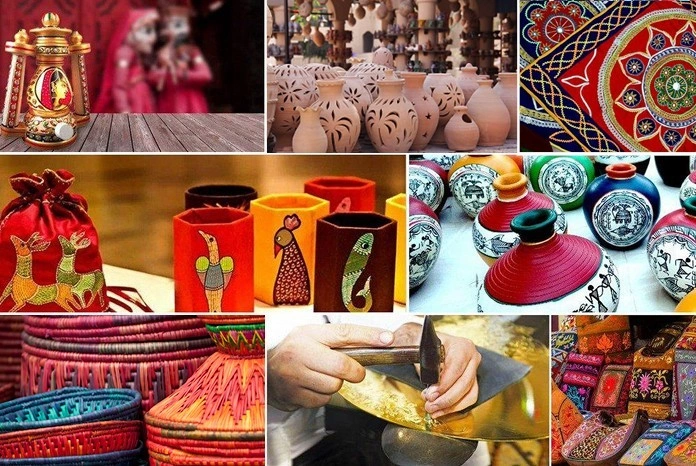
As cities grow and the world becomes more connected, India’s beautiful tapestry of traditional crafts, from beautiful handlooms to antique pottery, is coming apart at an alarming rate. People in rural areas used to make money and connect with their culture mostly through these crafts. But today, they are going to go away. Artisans, non-profits, and government organizations are all working hard to get them back. This is part of a wider problem: how to conserve intangible heritage in a country that is changing swiftly.
The End of Handwoven Textiles
India boasts thousands of textile weaving clusters that manufacture saris, shawls, and other items that reflect how different the areas are. However, many of these clusters are about to close. The number of Banarasi silk saree weavers in Varanasi has dropped from thousands to only a few hundred because there are so many inexpensive machine-made goods on the market. Artisans say that demand has gone down a lot in the previous few decades since synthetic replacements that look like antique designs are cheaper.
Weavers of Kanchipuram silk in Tamil Nadu have the same challenges because their pit looms are harder to use and the things they make cost a lot more than products made in factories. Young individuals who appreciate rapid fashion in cities don’t like Phulkari needlework from Punjab as much. It has gold-thread patterns with flowers on them for celebrations. These old crafts that are dying out are taking away abilities that have been passed down through the years and putting millions of jobs at jeopardy.
UNESCO states that many new weavers are quitting the Banarasi brocade business. Not as many people employ Pochampally ikat, which is a tie-dye process from Telangana. Power looms are taking the place of Chanderi and Maheshwari weaves from Madhya Pradesh. People who know a lot about cooperatives argue that e-commerce sites care more about how many sales they make than how real they are. This makes the problem even worse.
Pottery and Terra Cotta Under Attack: Pottery from the Indus Valley Towns are taken over by plastic and metalware, and civilization goes off. There are only a few potters in Molela village in Rajasthan who produce clay plaques for folk gods and goddesses. Khurja pottery in Uttar Pradesh is known for its blue-glazed designs, but it has to close its kilns since there isn’t enough clay and pollution is not allowed.
In Gujarat and Maharashtra, Kumbhar communities saw craftsmen quit their jobs to work in construction for more money. As more young people move to cities, Manipur’s black pottery, which is made without wheels and burned in a certain method, is at risk of dying out. These crafts are connected to traditions like Diwali diyas. They show that things will stay the same, but cheap Chinese ceramics could hurt them.
Environmental rules for wood-fired kilns make things worse by making electric options prohibitively expensive and revealing how weak raw materials are.
Fewer metalworking and wood carving
Bidriware from Karnataka is made of blackened zinc with silver inlay. Only a few dozen people still know how to create it. Bastar’s lost-wax dhokra metal casting is utilized to manufacture tribal figures, but the price of copper is growing higher. Cutting down trees and using machines affected wood carving in Jammu & Kashmir and painted panels in Odisha.
These crafts are vital for temples and decorations because they tell epic stories through patterns. According to UNESCO, most metalworkers are older and don’t have many apprentices. When people wish to keep traditional Indian crafts alive, they sometimes enjoy replicas better than the real thing because they are easier to find.
Why the Drop Happened
Moving to the city breaks the lines of guru-shishya, which are particularly crucial for learning new skills. Because of globalization, it’s easier to get cheap imports that lower the prices of handmade goods. A lot of people don’t know about government projects like Handloom Mark, and designs that don’t change don’t fare well against fusions that are fashionable right now.
A recent poll suggests that millions of artisan homes are under danger, and the epidemic has made things worse by lowering their income. since of climate change, dyes and clays are less stable. Also, rural merchants can’t sell online since the internet isn’t always available.
Grassroots efforts to bring things back to life
Kuthampully Handloom in Kerala brought back looms through cooperatives, which boosted the pay of many people. In Srikalahasti, young people learn how to merge ancient and new designs from Kalamkari printers. Dastkar and other non-profits hold fairs to sell Kutch embroidery.
Bandhani tie-dye lives on thanks to Fabindia partners. Goonj makes Phulkari products out of trash. Platforms connect businesses and focus on artisan tourism to assist cities and towns gain money. The Crafts Revival Mission of 2024 grants money to talent clusters, and GI tags keep special goods safe.
The “Vocal for Local” government policy is against SFURTI clusters and ODOP, which are both focused on toys and brassware. E-portals are helping export councils develop, they say. Skill India certifies thousands of people every year, thanks to organizations like UNESCO.
You can tell that big companies are serious about being more environmentally friendly, even when the government makes it hard.
New tech
AI makes computer-generated copies of designs for things like hybrid Banarasi footwear. Blockchain makes sure that things are real. Apps let people work out in a virtual world, and VR puts them in the action. But story and texture are still very important.
Things that keep happening
The weather is still bad, men and women still make different amounts of money, and there is still bogus news. India’s size, like Japan’s Ainu crafts, can help creative economies gain soft power.
Cultural Effects: Loss hurts the budgets of temples and festivals, but it also keeps them open by using low-water handlooms.
The Next Step
Trends like slow fashion, shopping ethically, corporate social responsibility (CSR), new legislation, and education are all excellent for business. Keeping crafts alive keeps the community’s spirit alive and moves the past forward.
India’s ancient crafts show off hundreds of years of inventiveness, from the rhythmic clacking of looms in Varanasi to the earthy spinning of potter’s wheels in Khurja. As technology moves faster, these arts may fade away, yet strong artists and new projects indicate that there is a way to bring them back. Taking care of this past will help keep cultural richness alive even as things change.

