
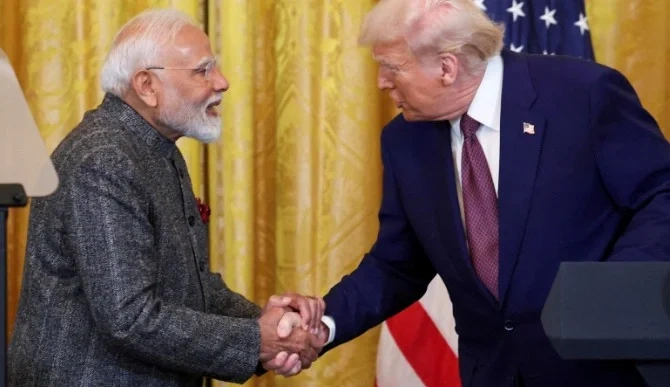
On January 5, 2026, U.S. President Donald Trump issued a sharp warning to India, stating that the United States could raise tariffs “very quickly” if New Delhi fails to curb its continued purchase of Russian oil. Speaking to reporters aboard Air Force One, Trump directly linked India’s energy procurement strategy to future trade consequences, signaling a potential escalation in U.S.–India trade tensions. The remarks underscore Washington’s growing frustration with countries maintaining energy ties with Moscow amid ongoing geopolitical strains.
President Trump’s comments came amid renewed global scrutiny of Russia’s energy exports and the countries that continue to rely on them. India, one of the world’s largest energy importers, has significantly increased its intake of discounted Russian crude oil over the past few years to safeguard domestic energy security and manage inflationary pressures.
According to Trump, Prime Minister Narendra Modi was fully aware of Washington’s displeasure. “He knew I was not happy,” Trump said, emphasizing that strategic partnerships require alignment not only on defense and diplomacy but also on critical economic decisions such as energy sourcing. The statement reflects a broader U.S. policy stance that seeks to use trade measures, including tariffs, as leverage to influence allies’ economic behavior.
Key Issues Highlighted by the U.S. Warning:
- Continued Indian imports of Russian oil despite Western pressure
- Potential tariff hikes on Indian exports to the United States
- The intersection of energy security and trade policy
- Strain on the strategic U.S.–India partnership
The United States has increasingly framed energy trade as a geopolitical issue rather than a purely commercial one. Trump’s warning suggests that India’s access to the U.S. market could be affected if it does not reassess its oil import strategy. Such a move could have significant economic implications, given that the U.S. is one of India’s largest trading partners, particularly in sectors such as pharmaceuticals, information technology, textiles, and manufactured goods.
From India’s perspective, officials have consistently defended Russian oil purchases as a matter of national interest. Lower-cost crude has helped stabilize fuel prices in a rapidly growing economy, benefiting both consumers and industry. New Delhi has also maintained that its foreign policy decisions are independent and driven by pragmatic considerations rather than external pressure.
Potential Economic Impact if Tariffs Are Raised:
| Area Affected | Possible Consequences |
|---|---|
| Indian Exports | Reduced competitiveness in the U.S. market |
| U.S. Importers | Higher costs for Indian goods |
| Bilateral Trade | Slower growth and increased uncertainty |
| Strategic Ties | Diplomatic strain despite defense cooperation |

