
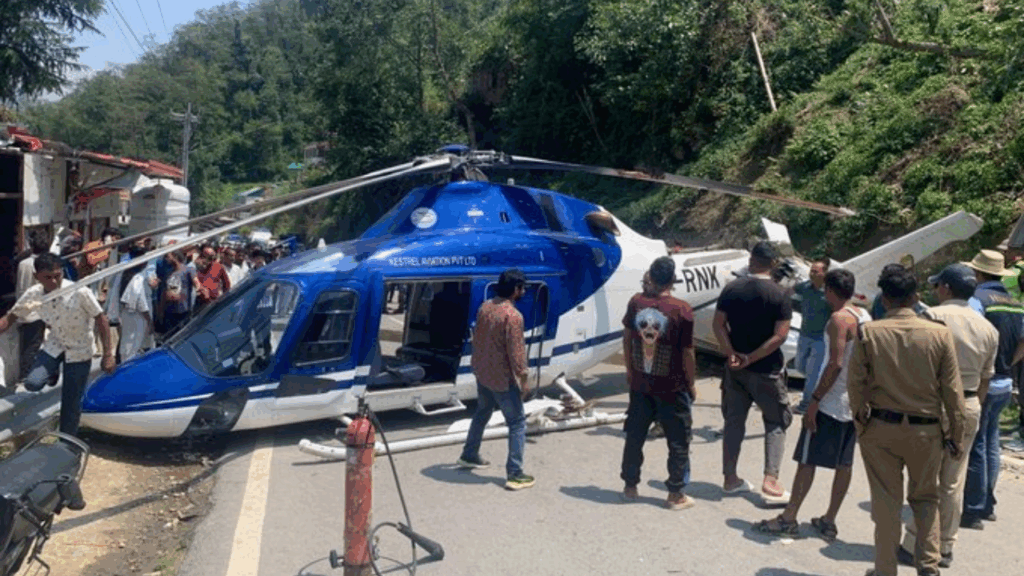
Dehradun, June 17 – The Directorate General of Civil Aviation (DGCA) has temporarily suspended two pilots following a recent helicopter crash in Uttarakhand’s Rudraprayag district. The move comes as the aviation regulator begins a detailed investigation to determine the cause of the incident.
The crash occurred during a chartered flight operation in a hilly region of the state. While no casualties were reported, the aircraft sustained significant damage upon landing. Both pilots, employed by a private aviation firm, were on duty when the incident took place.
According to DGCA officials, the suspension is a standard interim measure during the course of an inquiry. It allows investigators to thoroughly examine all aspects of the flight, including pilot decisions, mechanical systems, and compliance with aviation protocols.
Preliminary information indicates that the helicopter may have encountered challenges related to terrain or weather. However, a comprehensive review of the flight data, audio communication, and technical parameters is underway to verify the exact sequence of events.
Aviation experts point out that flying in mountainous terrain, such as that found in Uttarakhand, presents added risks. These include sudden weather changes, narrow flight corridors, and limited emergency landing options. Pilots require specialized training and experience to operate safely in such environments.
The helicopter was reportedly operating as part of a high-altitude service route, commonly used for pilgrimage and transport in the region. Officials have not confirmed whether the aircraft faced mechanical failure or environmental obstructions, but these factors are being considered as part of the ongoing analysis.
In response to the crash, the Uttarakhand Civil Aviation Development Authority (UCADA) has urged all aviation operators to review their safety procedures and ensure strict adherence to flight norms, especially during the current Char Dham Yatra season, when helicopter traffic in the region is at its peak.
The DGCA is expected to release its findings after the investigation concludes. Based on the results, corrective measures or policy updates may follow to improve operational safety and reduce risks associated with flying in high-altitude areas.
This incident highlights the growing need for strengthened oversight in helicopter operations across India’s mountainous regions, particularly as demand increases during religious and tourist seasons.

